

Protected Areas Reduce Global Deforestation but Fall Short of Fully Preventing It
A survey of more than 18,000 land parcels spanning 2 million square miles across 63 countries shows that a “protected area” designation reduces the rate of deforestation but does not prevent it.
Published on February 11, 2021, in Nature Ecology and Evolution, the findings are important because most terrestrial species live in forests and because the study suggests that just 6.5% of the Earth’s woodlands are truly protected, well below the 2020 target of 17% set by the United Nations’ Convention on Biological Diversity.
Biodiversity and Climate Goals
The findings are also timely given President Biden’s recent executive order on climate change, which calls for protecting 30% of the United States’ land and waters, up from the current 12%, and developing “a plan for promoting the protection of the Amazon rainforest and other critical ecosystems that serve as global carbon sinks.”
“Evidence indicates that we’re in the middle of a mass extinction event the likes of which the planet has seen only five times before,” said study leader Christopher Wolf, a postdoctoral researcher in the Oregon State University College of Forestry. “Formally protected areas have been proposed as a primary tool for reducing deforestation, and therefore stemming species extinctions and slowing reductions in carbon storage.”
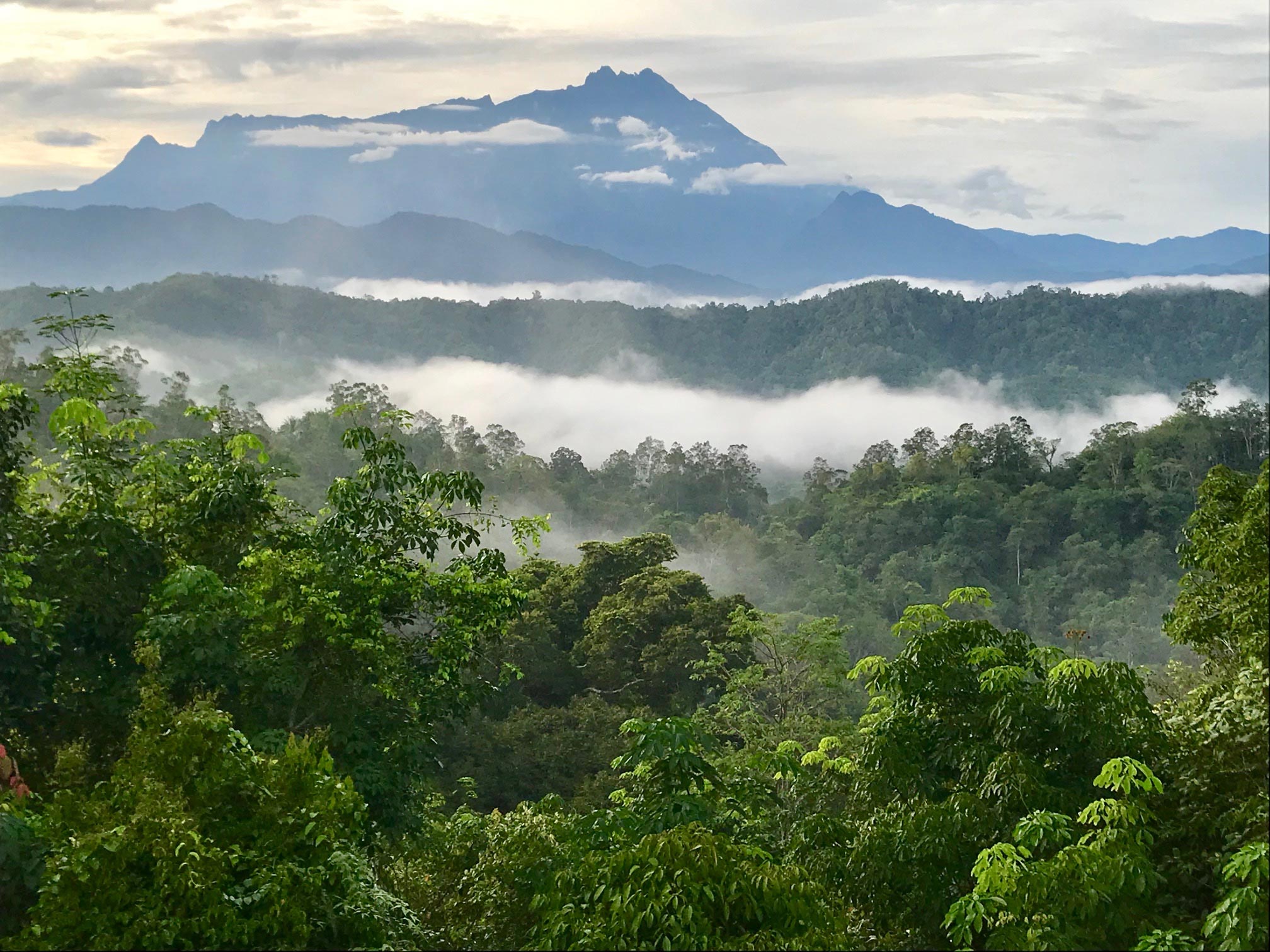
In research believed to be the first comprehensive look at how effective protected areas are at limiting forest loss, Wolf and collaborators used the World Database on Protected Areas and forest change maps to estimate rates of change within protected areas. The rates were then compared to those of control areas with similar characteristics such as elevation, slope and proximity to densely populated areas.
They found protected areas’ deforestation rate is 41% lower than that of unprotected areas. They also found that earlier estimates suggesting 15.7% of the Earth’s forest were protected from deforestation were much too optimistic.
“It’s clearly not enough just to call a forest area ‘protected’ and assume that it really is,” Wolf said. “When you look at conservation effectiveness, you can’t simply rely on the amount of officially protected land as a metric. Nearly one-third of all protected areas are actually under intense human pressure.”
Regional & National Effectiveness Varies
Protected area deforestation rates were highest in Africa, Europe, and South America and lowest in Oceania – Australia, New Zealand, Papua New Guinea, and nearby island chains.
Among the 63 nations studied, 34 have at least 17% of their forest area protected – i.e., are in line with the target percentage established by the Convention on Biological Diversity.
New Zealand ranked No. 1 in percentage of area protected when effectiveness was factored in, and China ranked last. South Africa’s protected areas were the most effective, with deforestation rates eight times lower than those of control sites. Sierra Leone, Malaysia, and Cambodia were the three nations losing their forest cover the fastest.
Monitoring and Size Affect Outcomes
“Protected area effectiveness is limited by varying levels of monitoring and enforcement and the money available for them,” Wolf said. “Unfortunately, our research shows that protected areas rarely if ever do more than slow down deforestation. And in general, the larger the protected area, the higher the rate of forest loss.”
That has important implications for the 17% target set by the Convention on Biological Diversity, says co-author Matt Betts, director of the Forest Biodiversity Research Network in OSU’s Department of Forest Ecosystems and Society.
“If you take into account imperfect protected areas’ effectiveness, it could require a near doubling of this original target,” he said.
Reference: “A forest loss report card for the world’s protected areas” by Christopher Wolf, Taal Levi, William J. Ripple, Diego A. Zárrate-Charry and Matthew G. Betts, 11 February 2021, Nature Ecology & Evolution.
DOI: 10.1038/s41559-021-01389-0
Collaborating with Wolf and Betts were College of Forestry colleague William Ripple plus Taal Levi of OSU’s College of Agricultural Sciences and Diego Zarrate-Charry of Bogota, Chile’s Proyecto de Conservación de Aguas y Tierras (Water and Land Conservation Project), who earned a Ph.D. in the College of Forestry.
Never miss a breakthrough: Join the SciTechDaily newsletter.
Follow us on Google and Google News.