
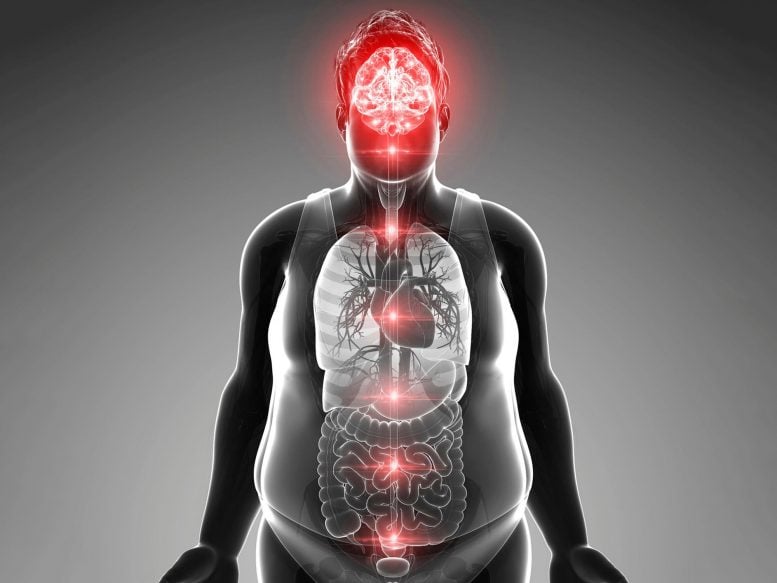
High-fat diets impair astrocytes, disrupting brain-stomach signaling and delaying digestion, potentially driving overeating and obesity.
A high-fat diet may hinder the brain’s regulation of calorie intake. New rat research in The Journal of Physiology found that short-term exposure to high-fat, high-calorie meals resulted in brain adaptation and a reduction in food intake to balance calorie intake.
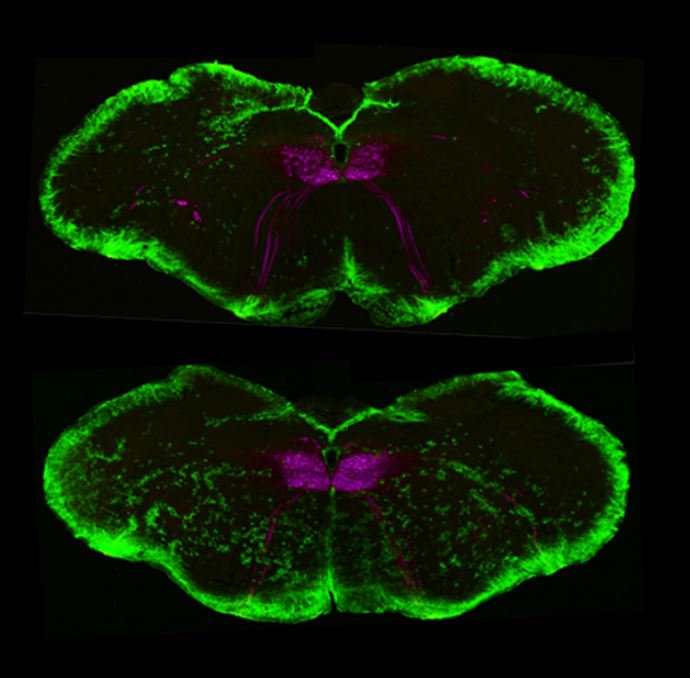
The Penn State College of Medicine researchers suggest that astrocytes (large star-shaped cells in the brain that regulate many different functions of neurons in the brain) regulate short-term calorie intake. These cells control the signaling pathway between the brain and the gut. Continuously eating a high-fat/calorie diet seems to disrupt this signaling pathway.
Understanding the brain’s role and the complex mechanisms that lead to overeating, a behavior that can lead to weight gain and obesity, could help develop therapies to treat it. Obesity is a global public health concern because it is associated with an increased risk of cardiovascular diseases and type 2 diabetes. In England, 63% of adults are considered above a healthy weight, and around half of these are living with obesity. One in three children leaving primary school is overweight or obese.
How High-Fat Diets Impact the Brain
Dr. Kirsteen Browning, Penn State College of Medicine, US, said, “Calorie intake seems to be regulated in the short-term by astrocytes. We found that a brief exposure (three to five days) of a high fat/calorie diet has the greatest effect on astrocytes, triggering the normal signaling pathway to control the stomach. Over time, astrocytes seem to desensitize to the high-fat food. Around 10-14 days of eating a high fat/calorie diet, astrocytes seem to fail to react and the brain’s ability to regulate calorie intake seems to be lost. This disrupts the signaling to the stomach and delays how it empties.”
Astrocytes initially react when high-fat/calorie food is ingested. Their activation triggers the release of gliotransmitters, chemicals (including glutamate and ATP) that excite nerve cells and enable normal signaling pathways to stimulate neurons that control how the stomach works. This ensures the stomach contracts correctly to fill and empty in response to food passing through the digestive system. When astrocytes are inhibited, the cascade is disrupted. The decrease in signaling chemicals leads to a delay in digestion because the stomach doesn’t fill and empty appropriately.
The vigorous investigation used behavioral observation to monitor food intake in rats (N=205, 133 males, 72 females) which were fed a control or high fat/calorie diet for one, three, five, or 14 days. This was combined with pharmacological and specialist genetic approaches (both in vivo and in vitro) to target distinct neural circuits. Enabling the researchers to specifically inhibit astrocytes in a particular region of the brainstem (the posterior part of the brain that connects the brain to the spinal cord), so they could assess how individual neurons behaved to studying rats’ behavior when awake.
Human studies will need to be carried out to confirm if the same mechanism occurs in humans. If this is the case, further testing will be required to assess if the mechanism could be safely targeted without disrupting other neural pathways.
The researchers have plans to further explore the mechanism.
Dr. Kirsteen Browning said, “We have yet to find out whether the loss of astrocyte activity and the signaling mechanism is the cause of overeating or that it occurs in response to the overeating. We are eager to find out whether it is possible to reactivate the brain’s apparent lost ability to regulate calorie intake. If this is the case, it could lead to interventions to help restore calorie regulation in humans.”
Reference: “Brainstem astrocytes control homeostatic regulation of caloric intake” by Courtney Clyburn, Kaitlin E. Carson, Caleb R. Smith, R. Alberto Travagli and Kirsteen N. Browning, 25 January 2023, The Journal of Physiology.
DOI: 10.1113/JP283566
Never miss a breakthrough: Join the SciTechDaily newsletter.
Follow us on Google and Google News.