

Scientists may have found a hidden chemical signature that could help reveal alien life.
Scientists searching for life beyond Earth have long focused on finding the right molecules on distant planets and moons. But a new study suggests the most important clue may not be the molecules themselves, but the hidden patterns in how they are organized.
The research, published in Nature Astronomy, found that living systems produce distinctive statistical patterns in certain organic molecules that differ from those created through nonbiological chemistry.
“We’re showing that life does not only produce molecules,” said Fabian Klenner, UC Riverside assistant professor of planetary sciences and co-author of the study. “Life also produces an organizational principle that we can see by applying statistics.”
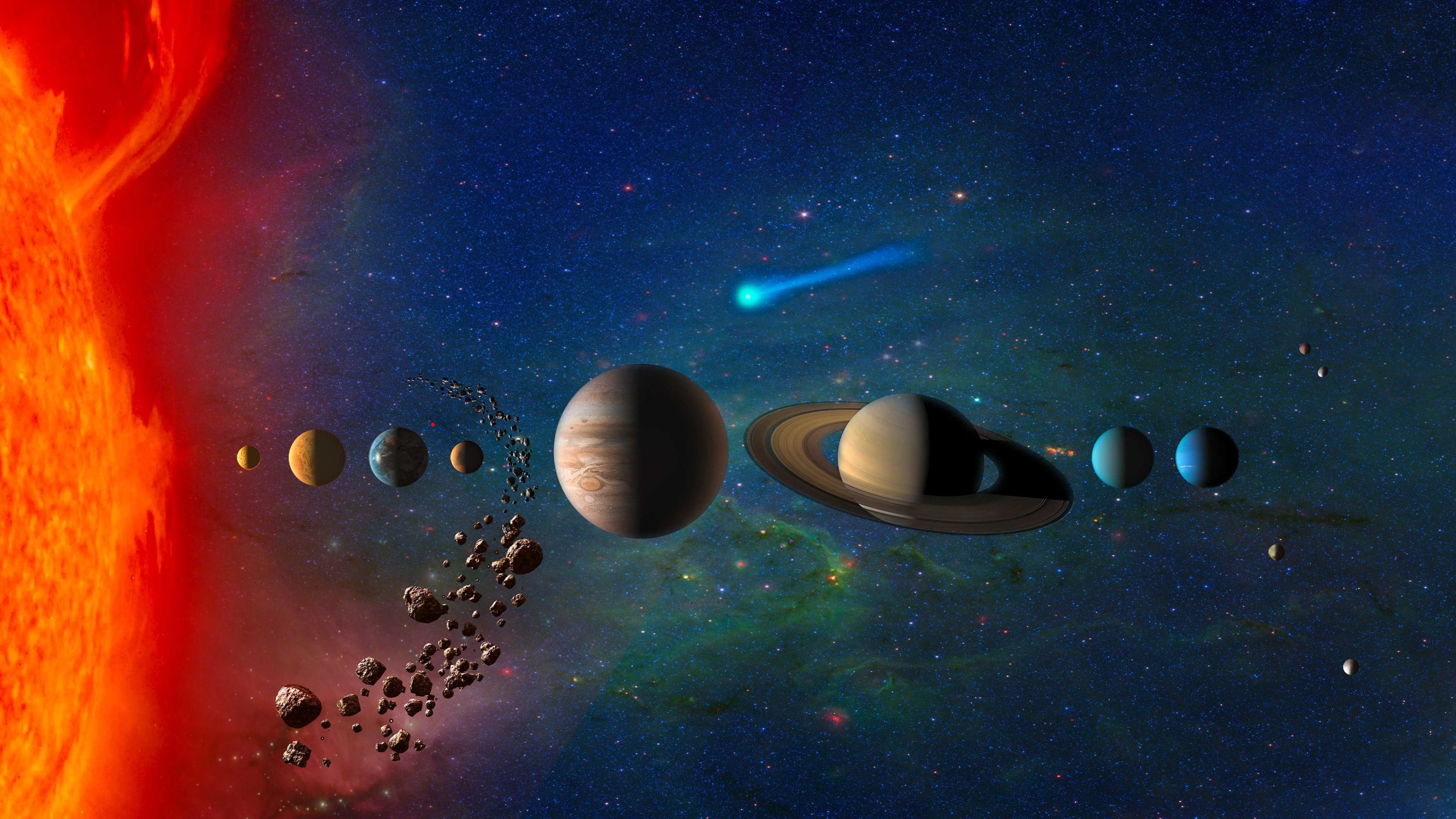
Hidden Chemical Patterns Linked to Life
The researchers discovered that amino acids in biological materials are generally more diverse and more evenly distributed than amino acids produced through abiotic, or nonliving, processes. Fatty acids showed the reverse trend, with nonbiological chemistry producing more even distributions than living systems.
According to the team, this is the first study to demonstrate that this broader organizational feature of life can be identified using statistical analysis rather than relying on a single specialized instrument. That means the approach could potentially work with data already being gathered by existing and future space missions.
The findings come as planetary exploration enters a period of increasingly sophisticated chemical analysis. Missions investigating Mars, Europa, Enceladus, and other worlds are collecting growing amounts of data about organic compounds. However, understanding what those measurements actually mean remains difficult.
Many molecules associated with life on Earth, including amino acids and fatty acids, can also form naturally through nonbiological processes. Scientists have detected them in meteorites and created them in laboratory experiments designed to simulate conditions in space. Because of this, simply finding these molecules is not enough to confirm the presence of life.
“Astrobiology is fundamentally a forensic science,” said Gideon Yoffe, postdoctoral researcher at the Weizmann Institute of Science in Israel and first author of the study. “We’re trying to infer processes from incomplete clues, often with very limited data collected by missions that are extraordinarily expensive and infrequent.”

Using Ecology Statistics to Search for Alien Life
To tackle the problem, the researchers borrowed a statistical framework commonly used in ecology. Ecologists often measure biodiversity using two concepts: richness, which refers to the number of species present, and evenness, which measures how uniformly they are distributed.
Yoffe first encountered the method while studying statistics and data science during doctoral research. Diversity metrics were used there to uncover hidden patterns in complicated datasets, including research on ancient human cultures.
The scientists applied the same statistical reasoning to extraterrestrial chemistry.
Using roughly 100 previously collected datasets, the team analyzed amino acids and fatty acids from microbes, soils, fossils, meteorites, asteroids, and synthetic laboratory samples. Biological materials consistently displayed distinctive organizational patterns that separated them from nonliving chemistry.
Ancient Fossils Still Carried Signs of Life
One of the biggest surprises was how reliable the method proved to be despite its simplicity.
The researchers were repeatedly able to distinguish biological samples from abiotic ones with strong consistency. They also found that biological materials formed a continuum ranging from well-preserved samples to heavily degraded ones.
“That was genuinely surprising,” Klenner said. “The method captured not only the distinction between life and nonlife, but also degrees of preservation and alteration.”
Even samples that had significantly degraded over time still retained traces of this organizational structure. Fossilized dinosaur eggshells included in the study, for example, continued to show detectable statistical signatures linked to ancient biological activity.
A Potential New Tool for Future Space Missions
The researchers stress that no single technique will be enough on its own to prove the existence of extraterrestrial life.
“Any future claim of having found life would require multiple independent lines of evidence, interpreted within the geological and chemical context of a planetary environment,” Klenner said.
Still, the team believes this statistical framework could become a valuable addition to future missions searching for evidence of life beyond Earth.
“Our approach is one more way to assess whether life may have been there,” Klenner said. “And if different techniques all point in the same direction, then that becomes very powerful.”
Reference: “Molecular diversity as a biosignature” by Gideon Yoffe, Fabian Klenner, Barak Sober, Yohai Kaspi and Itay Halevy, 11 May 2026, Nature Astronomy.
DOI: 10.1038/s41550-026-02864-z
Never miss a breakthrough: Join the SciTechDaily newsletter.
Follow us on Google and Google News.