
Exoplanet Hunters Should Check for Nitrous Oxide — a Possible Biosignature
Something is missing from the typical roster of chemicals that astrobiologists use to search for life on planets around other stars, according to scientists at the University of California, Riverside (UCR). Namely, laughing gas, also known as nitrous oxide (N2O).
Called chemical biosignatures, compounds in a planet’s atmosphere that could indicate life typically include gases found in abundance in Earth’s atmosphere today.

Nitrous Oxide and Biosignatures in Exoplanet Atmospheres
“There’s been a lot of thought put into oxygen and methane as biosignatures. Fewer researchers have seriously considered nitrous oxide, but we think that may be a mistake,” said Eddie Schwieterman, an astrobiologist in UCR’s Department of Earth and Planetary Sciences.
This conclusion, and the modeling work that led to it, are detailed in an article published in the Astrophysical Journal on October 4, 2022.
A biosignature is any characteristic, element, molecule, substance, or feature that can be used as evidence for past or present life. It can be something like a leaf or a feather, but could also be fossils stored away in the rocks, organic molecules made by life, and even differences in the chemistry of an atmosphere or a body of water. Chemical biosignatures include a huge range of possible ways that life can leave its mark within the chemistry of rocks, bodies of water, and even atmospheres.
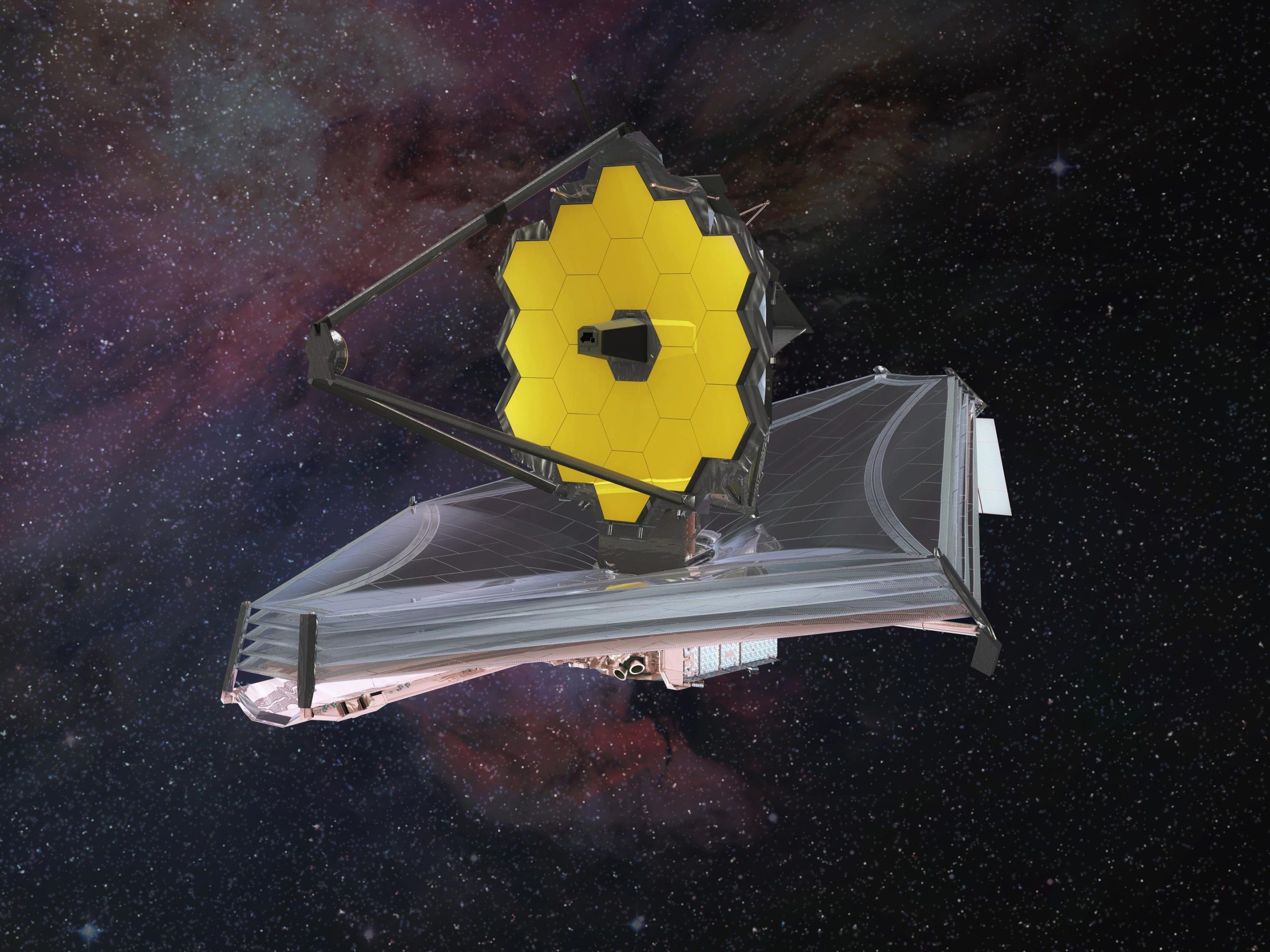
To reach this conclusion, Schwieterman led a team of scientists who calculated how much nitrous oxide living things on a planet similar to Earth could possibly produce. After that, they constructed models simulating that planet around different kinds of stars and calculated the quantities of N2O that could be detected by an observatory like the James Webb Space Telescope.
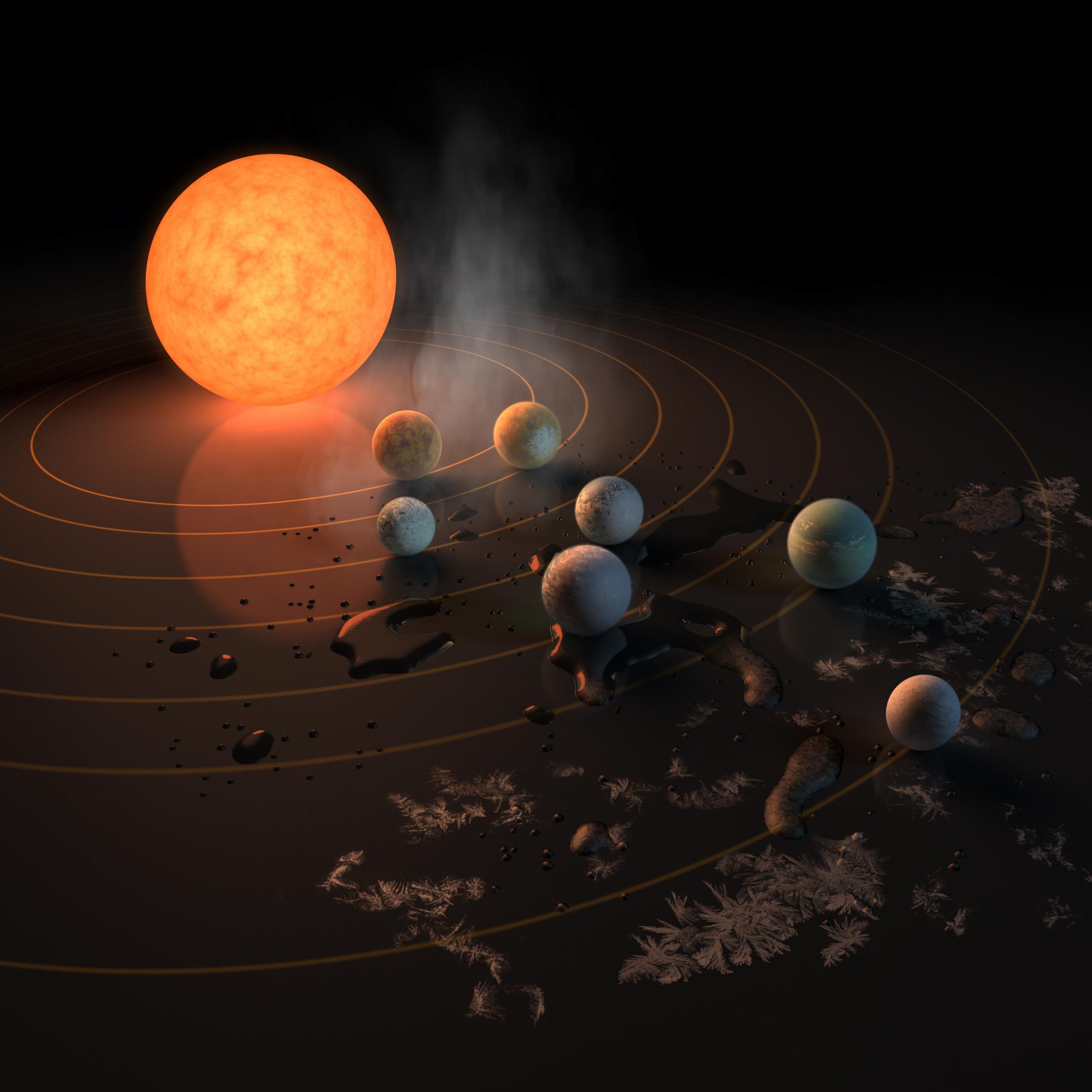
“In a star system like TRAPPIST-1, the nearest and best system to observe the atmospheres of rocky planets, you could potentially detect nitrous oxide at levels comparable to CO2 or methane,” Schwieterman said.
Biological Production of Nitrous Oxide
There are multiple ways that living things can produce nitrous oxide. For example, microorganisms are constantly transforming other nitrogen compounds into N2O, a metabolic process that can yield useful cellular energy.
“Life generates nitrogen waste products that are converted by some microorganisms into nitrates. In a fish tank, these nitrates build up, which is why you have to change the water,” Schwieterman said.
“However, under the right conditions in the ocean, certain bacteria can convert those nitrates into N2O,” Schwieterman said. “The gas then leaks into the atmosphere.”
Under certain circumstances, nitrous oxide could be detected in an atmosphere and still not indicate life. This was accounted for by Schwieterman’s team in their modeling. For example, a small amount of nitrous oxide is created by lightning. But alongside N2O, lightning also creates nitrogen dioxide, which would offer astrobiologists a clue that non-living weather or geological processes created the N2O.
Potential for Nitrous Oxide Detection in Exoplanet Atmospheres
Other astrobiologists who have considered nitrous oxide as a biosignature gas often conclude it would be difficult to detect from so far away. Schwieterman explained that this conclusion is based on N2O concentrations in Earth’s atmosphere today. Because there isn’t very much of it on this planet, which is teeming with life, some people believe it would also be hard to detect elsewhere.
“This conclusion doesn’t account for periods in Earth’s history where ocean conditions would have allowed for much greater biological release of N2O. Conditions in those periods might mirror where an exoplanet is today,” Schwieterman said.
Schwieterman added that common stars like K and M dwarfs produce a light spectrum that is less effective at breaking up the N2O molecule than our sun is. These two effects combined could greatly increase the predicted amount of this biosignature gas on an inhabited world, which would make it much easier to detect.
According to the team of researchers, now is the time for astrobiologists to consider alternative biosignature gases like nitrous oxide because the James Webb telescope may soon be sending information about the atmospheres of rocky, Earth-like planets in the TRAPPIST-1 system.
“We wanted to put this idea forward to show it’s not out of the question we’d find this biosignature gas, if we look for it,” Schwieterman said.
Reference: “Evaluating the Plausible Range of N2O Biosignatures on Exo-Earths: An Integrated Biogeochemical, Photochemical, and Spectral Modeling Approach” by Edward W. Schwieterman, Stephanie L. Olson, Daria Pidhorodetska, Christopher T. Reinhard, Ainsley Ganti, Thomas J. Fauchez, Sandra T. Bastelberger, Jaime S. Crouse, Andy Ridgwell and Timothy W. Lyons, 4 October 2022, The Astrophysical Journal.
DOI: 10.3847/1538-4357/ac8cfb
The research team included UCR astrobiologists Daria Pidhorodetska, Andy Ridgwell, and Timothy Lyons, as well as scientists from Purdue University, the Georgia Institute of Technology, American University, and the NASA Goddard Space Flight Center.
Never miss a breakthrough: Join the SciTechDaily newsletter.
Follow us on Google and Google News.
1 Comment
… give me a break!
Where are the aliens. Who see them, but it has some evidence. Those planes are not evidence, expecially now when one can create great animations with those awesome API-s…
… The most interesting one is Area 51, I heard so many theories, which don’t hold even to a drunk person… Oh, yeah there is another one, in which there are different aliens species and then, one which is nasty one, has taken down the other one… Funny on so many levels,,, the real truth is out there!