
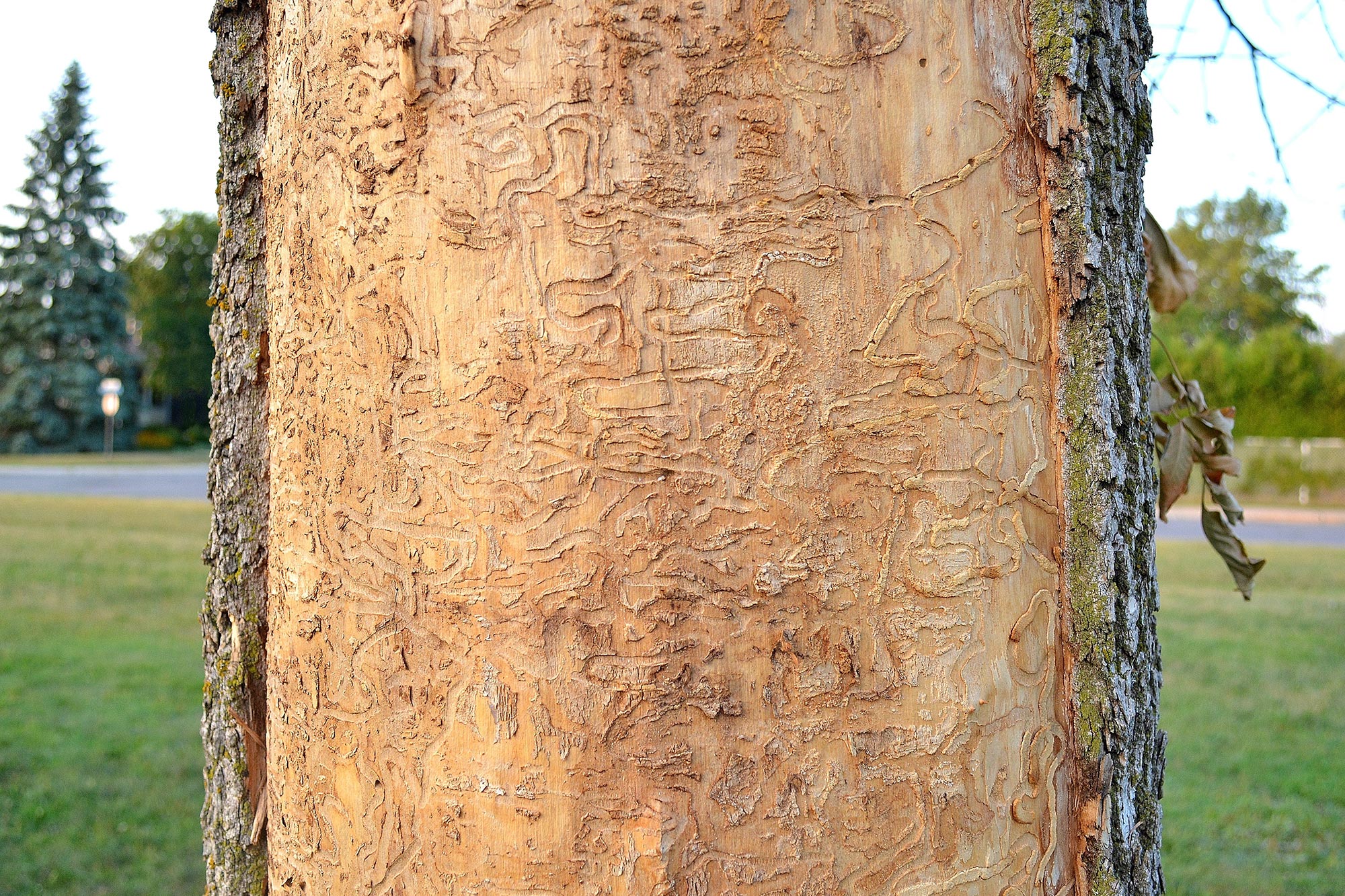
An international team of scientists have identified candidate resistance genes that could protect ash trees from the Emerald Ash Borer (EAB), a deadly pest that is expected to kill billions of trees worldwide.
In the new study, published recently in Nature Ecology & Evolution, researchers from Queen Mary University of London and the Royal Botanic Gardens, Kew, sequenced the genomes of 22 species of ash tree (Fraxinus) from around the world and used this information to analyze how the different species are related to each other.
Meanwhile, collaborators from the United States Department of Agriculture Forest Service in Ohio tested resistance of over 20 ash tree species to EAB by hatching eggs attached to the bark of trees, and following the fate of the beetle larvae. Resistant ash trees generally killed the larvae when they burrowed into their stems, but susceptible ones did not.
The research team observed that several of the resistant species were more closely related to susceptible species than to other resistant species. This meant the UK-based genome scientists were able to find resistance genes, by looking for places within the DNA where the resistant species were similar, but showed differences from their susceptible relatives.
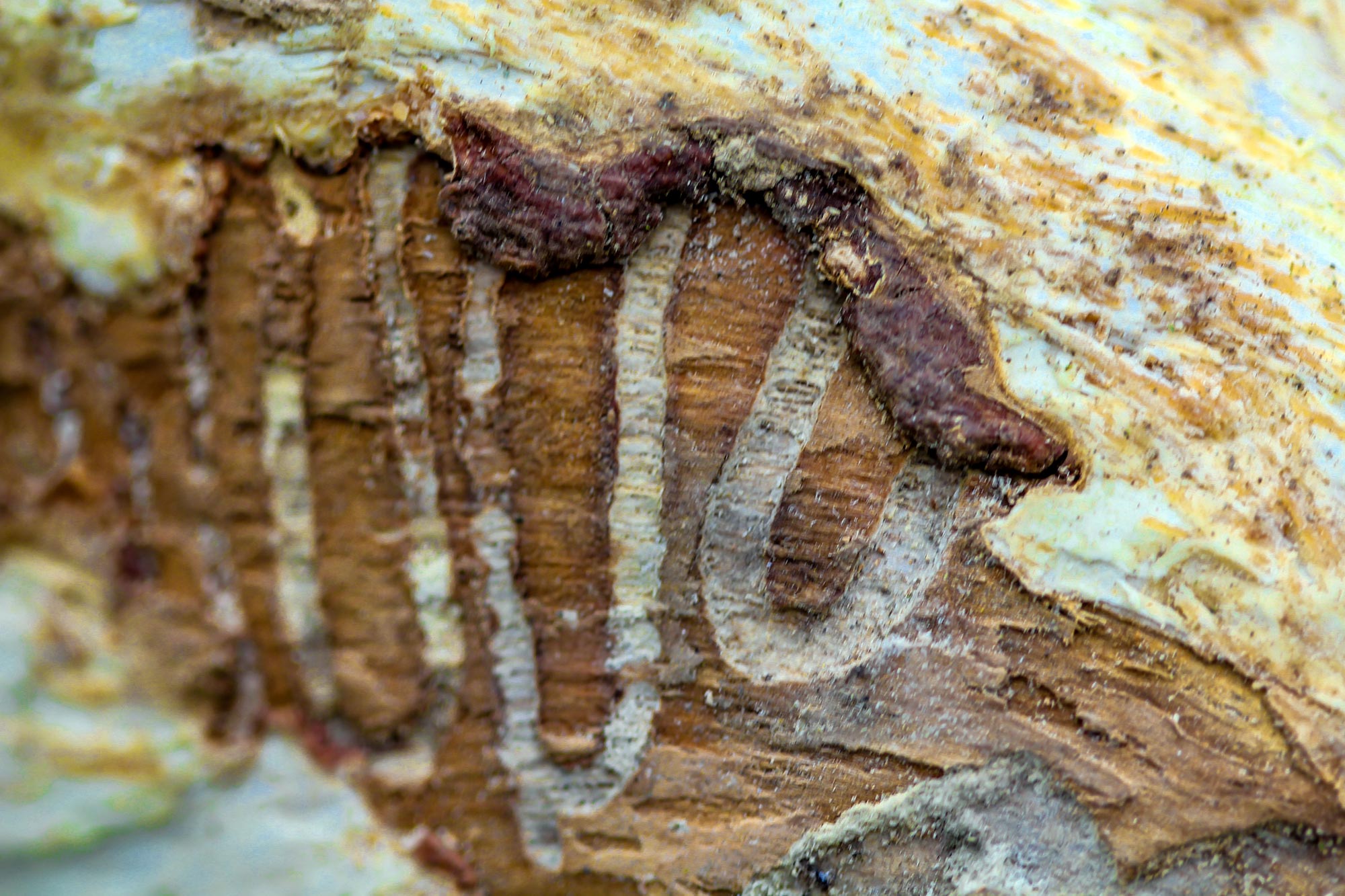
Using this novel approach, the scientists revealed 53 candidate resistance genes, several of which are involved in making chemicals that are likely to be harmful to insects.
The findings suggest that breeding or gene editing could be used to place these resistance genes into ash species currently affected by EAB.
EAB has killed hundreds of millions of ash trees in North America over the last 10 years. Whilst individual ash trees can be protected by using insecticides, the only long-term solution for saving American ash populations is to breed trees with resistance to EAB.
The beetle is also a threat to European ash populations. It was discovered near Moscow around 15 years ago and has now spread into Ukraine.
In the study, the US researchers found that European ash was more resistant to EAB than the North American species. However, European ash trees are already affected by an epidemic of the fungal disease, ash dieback, and experts are yet to understand how the two threats might interact.
The study also involved colleagues from the United States Department of Agriculture’s Agricultural Research Service and the Teagasc Forestry Development Department, Dublin, Republic of Ireland.
Dr. Laura Kelly, an academic visitor at Queen Mary, Research Leader in Plant Health at the Royal Botanic Gardens, Kew, and first author of the study, said: “Ash trees are key components of temperate forest ecosystems and the damage caused by EAB also puts at risk the many benefits that these forests provide. Our findings suggest that it may be possible to increase resistance in susceptible species of ash via hybrid breeding with their resistant relatives or through gene editing. Knowledge of genes involved in resistance will also help efforts to identify trees that are able to survive the ongoing threat from EAB, and in turn, could facilitate the restoration of ash woodlands in areas which have already been invaded.”
Professor Richard Buggs, Professor of Evolutionary Genomics at Queen Mary and Senior Research Leader in Plant Health at the Royal Botanic Gardens, Kew, said: “The emerald ash borer has killed hundreds of millions of ash trees in North America since it was accidentally imported to Detroit from Asia in wooden packaging. The beetle is now spreading across Europe, where we don’t yet know how it will interact with the invasive fungal pathogen causing the ash dieback epidemic. We need to be prepared to take decisive action to stop the spread of pests and pathogens that damage trees and the natural environment, as well as pathogens that attack humans.”
Dr. Jennifer Koch, Research Biologist with the United States Department of Agriculture Forest Service, said: “These candidate resistance genes, once validated, have the potential to greatly expedite the breeding process and the production of improved planting stock for restoration of forests and landscapes decimated by EAB.”
Professor Melanie Welham, BBSRC’s Executive Chair, said: “These significant research findings demonstrate the importance of international collaboration to further fundamental knowledge of pathogen biology. By having a better understanding of the implications of tree diseases globally we are able to ensure appropriate approaches to their management.”
Reference: “Convergent molecular evolution among ash species resistant to the emerald ash borer” by Laura J. Kelly, William J. Plumb, David W. Carey, Mary E. Mason, Endymion D. Cooper, William Crowther, Alan T. Whittemore, Stephen J. Rossiter, Jennifer L. Koch and Richard J. A. Buggs, 25 May 2020, Nature Ecology & Evolution.
DOI: 10.1038/s41559-020-1209-3
Never miss a breakthrough: Join the SciTechDaily newsletter.
Follow us on Google and Google News.