
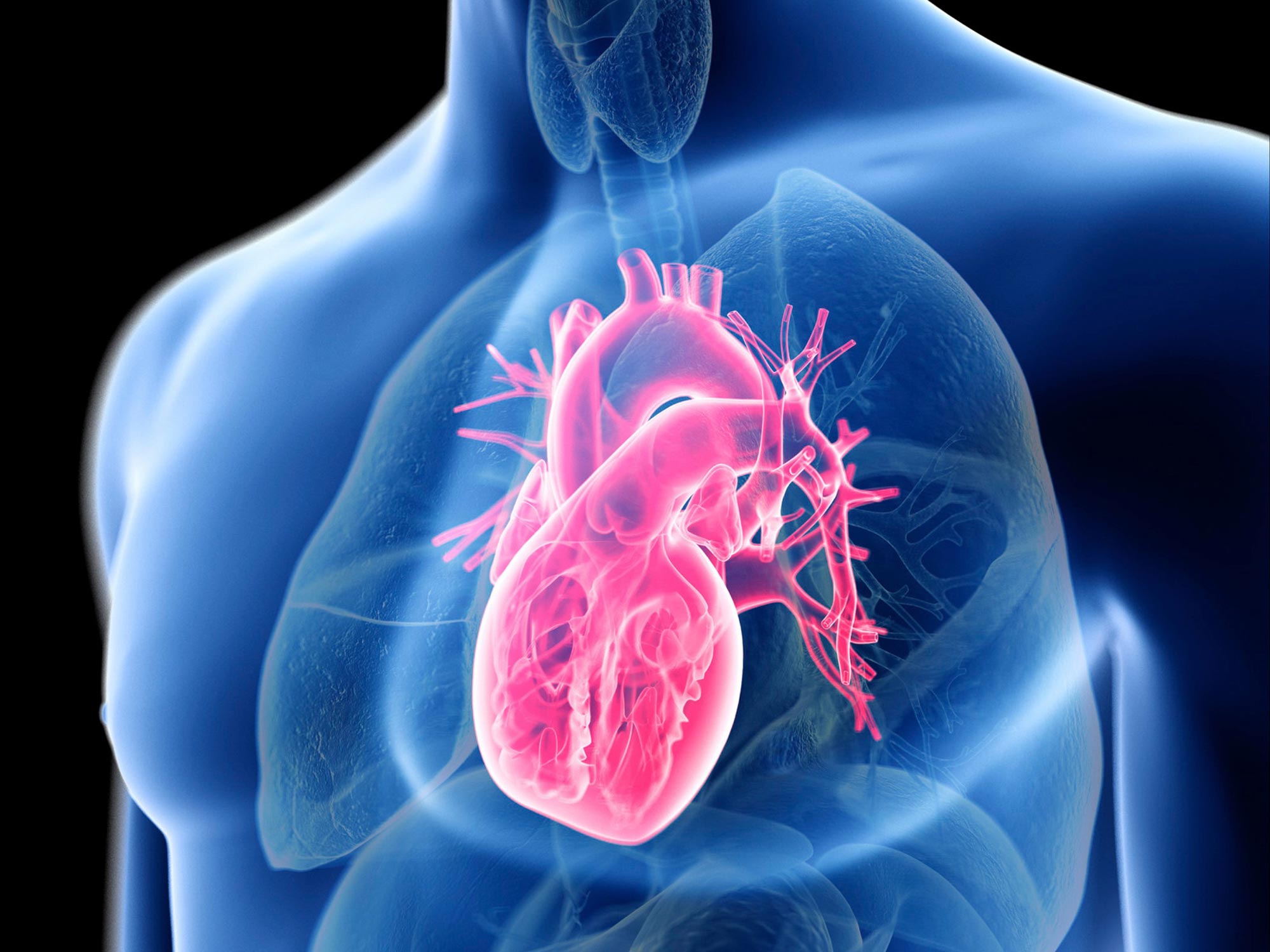
Heart pumps can dramatically boost muscle cell regeneration in damaged hearts, offering new hope for heart failure recovery.
Following severe heart failure, the heart’s ability to regenerate new cells is minimal. However, a new study from Karolinska Institutet in Sweden, published in the journal Circulation, reveals that treatment with a supportive heart pump significantly enhances the heart’s capacity to repair itself by generating new muscle cells—surpassing even the regenerative ability of a healthy heart.
The ability of the human heart to renew itself by regenerating its muscle cells, myocytes, is very limited. But what happens to this capability when the heart is damaged by severe heart failure is unknown.
Researchers at Karolinska Institutet have now discovered that after an injury, the rate of cell renewal is even lower than in a healthy heart. Standard-of-care for patients with advanced heart failure is a surgically implanted pump that helps propel blood, a so-called left ventricular assist device (LVAD).
Kick-start the repair mechanism
Surprisingly, the researchers found that patients with such a heart pump, who have shown significant improvement in their heart function, can regenerate heart muscle cells at a rate more than six times higher than in healthy hearts.
“The results suggest that there might be a hidden key to kick-start the heart’s own repair mechanism”, says Olaf Bergmann, senior researcher at the Department of Cell and Molecular Biology at Karolinska Institutet and last author of the paper.
The mechanism behind the effect is still unknown and there is not yet any hypothesis to explain it.
“It is difficult to say. In the existing data, we cannot find an explanation for the effect, but we will now continue to study this process at a cellular and molecular level,” says Olaf Bergmann.
The findings open the possibility of developing new therapies for patients with serious heart conditions that stimulate the heart’s ability to repair itself after damage. This way, patients wouldn’t have to rely only on heart transplants or other kinds of long-term mechanical support.
“This offers some hope that the recovery after a heart incident can somehow be boosted,” says Olaf Bergmann.
Determine the age of cells
It is generally difficult to determine the age of cells in the human body and to decide which cells are new and which are old. However, by using a method earlier devised by Jonas Frisén, professor of stem cell research at Karolinska Institutet, the group has been able to count the rate of renewal of myocytes in the heart. The method is based upon the fact that the percentage of radioactive carbon in the atmosphere, and subsequently in our cells, has steadily decreased since the nuclear test ban in 1963. For every following year, there is a little less radioactivity in newly formed cells, which means that they can be ‘dated’.
Reference: “A Latent Cardiomyocyte Regeneration Potential in Human Heart Disease” by Wouter Derks, Julian Rode, Sofia Collin, Fabian Rost, Paula Heinke, Anjana Hariharan, Lauren Pickel, Irina Simonova, Enikő Lázár, Evan Graham, Ramadan Jashari, Michaela Andrä, Anders Jeppsson, Mehran Salehpour, Kanar Alkass, Henrik Druid, Christos P. Kyriakopoulos, Iosif Taleb, Thirupura S. Shankar, Craig H. Selzman, Hesham Sadek, Stefan Jovinge, Lutz Brusch, Jonas Frisén, Stavros Drakos and Olaf Bergmann, 21 November 2024, Circulation.
DOI: 10.1161/CIRCULATIONAHA.123.067156
The study was done in close collaboration with Stavros Drakos at the University of Utah, USA, and was mainly financed by the Swedish Research Council, LeDucq Foundation, and the Ragnar Söderberg Foundation. There are no reported conflicts of interest.
Never miss a breakthrough: Join the SciTechDaily newsletter.
Follow us on Google and Google News.
1 Comment
What about healing of the valves? please enlighten.