
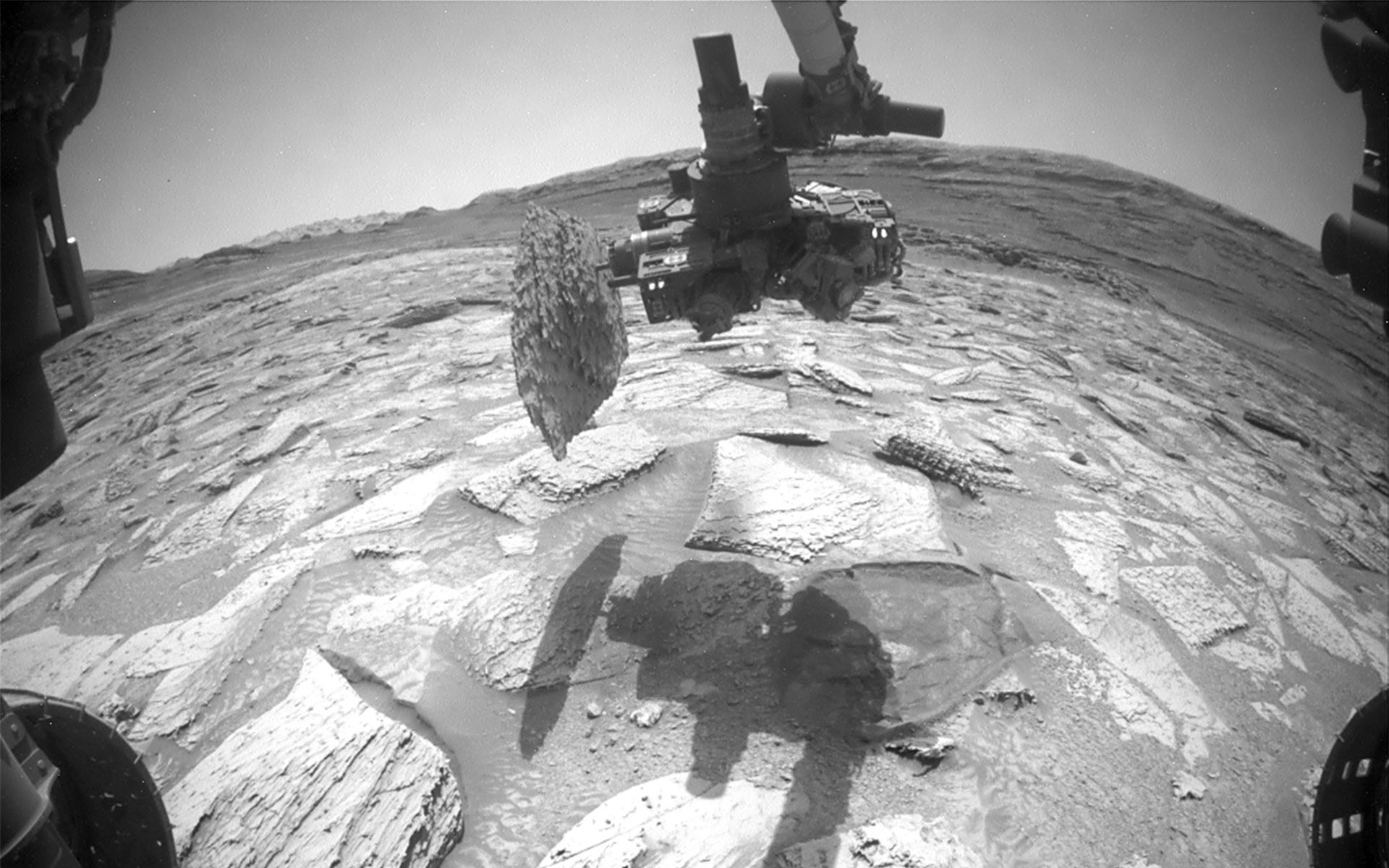
Curiosity accidentally yanked a rock out of Mars and spent days trying to shake it loose.
A newly released set of images shows NASA’s Curiosity rover dealing with an unusual problem on Mars after a rock became lodged on the drill attached to its robotic arm. After several attempts involving arm movements and repeated drill activity, the rover finally managed to dislodge the rock.
The full sequence was recorded by Curiosity’s black and white hazard cameras mounted on the front of the rover’s chassis, along with navigation cameras located on the rover’s mast, or head.
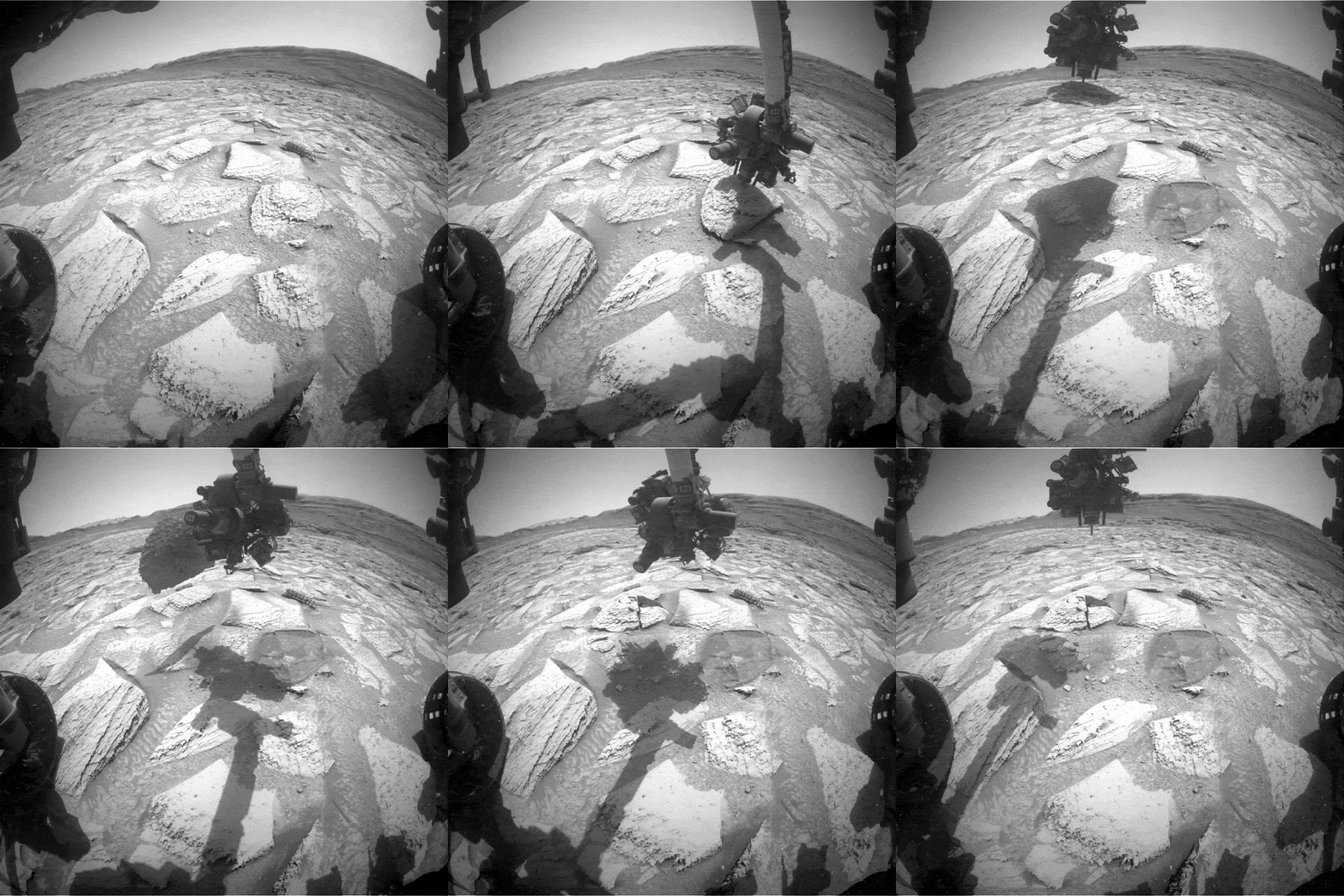
Curiosity Accidentally Pulls Rock From Martian Surface
On April 25, 2026, Curiosity collected a drill sample from a rock called “Atacama.” The rock is estimated to be about 1.5 feet wide at its base, roughly 6 inches thick, and weighs approximately 28.6 pounds (13 kilograms).
As the rover pulled back its robotic arm after drilling, the entire rock unexpectedly lifted out of the ground. The rock remained attached to the fixed sleeve surrounding the rotating drill bit.
While Curiosity has previously fractured or separated layers of Martian rock during drilling operations, NASA said this marked the first time a rock stayed attached to the drill sleeve itself. Engineers first attempted to free it by vibrating the drill, but the rock did not move.
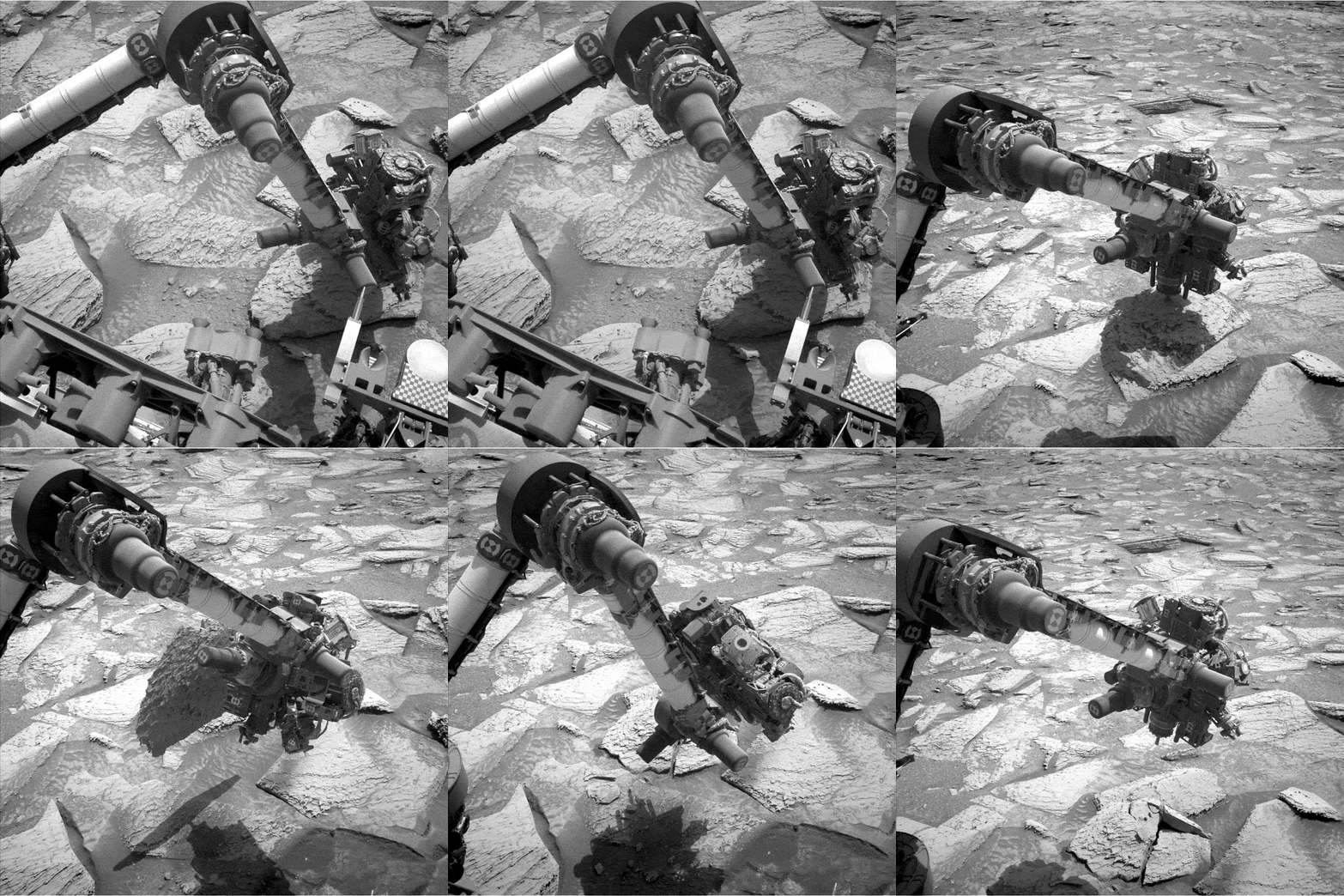
NASA Engineers Spend Days Trying To Free the Rock
On April 29, the mission team made another attempt by repositioning Curiosity’s robotic arm and activating the drill vibration again. Images in the GIF show sand pouring from the “Atacama” rock during the effort, though the rock continued clinging to the rover.
The team tried once more on May 1 using a combination of steeper drill angles, drill rotation, vibration, and spinning of the drill bit. Engineers expected they might need several rounds to remove the rock, but it detached during the very first attempt. The rock fractured when it struck the Martian surface.
Curiosity Mission Continues on Mars
Curiosity was designed and built by NASA’s Jet Propulsion Laboratory, which is managed by Caltech in Pasadena, California. JPL operates the mission for NASA’s Science Mission Directorate in Washington as part of the agency’s Mars Exploration Program.
Never miss a breakthrough: Join the SciTechDaily newsletter.
Follow us on Google and Google News.
2 Comments
Yes. Bang the stuck rock on the surface; maybe on another rock in the area. Not rocket science. Like mud stuck on one’s shoe. Just give it a decisive thump. Just saying.
Anyone else notice the Caterpillar in the first picture.