
Close Menu
    Facebook X (Twitter) Instagram
    SciTechDaily
    • Biology
    • Chemistry
    • Earth
    • Health
    • Physics
    • Science
    • Space
    • Technology
    Facebook X (Twitter) Pinterest YouTube RSS
    SciTechDaily
    Home»Space»What Left This Long, Winding Trail Across Mars? NASA’s Orbiter Has the Answer
    Space

    What Left This Long, Winding Trail Across Mars? NASA’s Orbiter Has the Answer

    By Jet Propulsion LaboratoryApril 27, 20251 Comment4 Mins Read
    Facebook Twitter Pinterest Telegram LinkedIn WhatsApp Email Reddit
    Share
    Facebook Twitter LinkedIn Pinterest Telegram Email Reddit
    NASA Curiosity Rover Mars Trail
    NASA’s Curiosity rover appears as a dark speck in this contrast-enhanced view captured on February 28, 2025, by the HiRISE camera aboard NASA’s Mars Reconnaissance Orbiter. Trailing Curiosity are the rover’s tracks, which can linger on the Martian surface for months before being erased by the wind. Credit: NASA/JPL-Caltech/University of Arizona

    NASA’s Curiosity rover just made history with its first-ever mid-drive photo snapped from orbit, captured by the HiRISE camera aboard the Mars Reconnaissance Orbiter.

    The image shows Curiosity trucking across the Martian surface, leaving a dramatic trail of tracks as it heads toward a mysterious region that could reveal ancient groundwater activity.

    Curiosity Caught in Action From Orbit

    NASA’s Curiosity Mars rover is no stranger to the camera, often appearing in selfies and images taken from orbit. But on February 28, the 4,466th Martian day, or sol, of its mission, Curiosity was captured in what is believed to be the first orbital image of the rover actively driving across the Red Planet.

    The photo, taken by the HiRISE (High-Resolution Imaging Science Experiment) camera aboard NASA’s Mars Reconnaissance Orbiter, shows Curiosity as a small dark speck at the front of a long trail of rover tracks. Stretching about 1,050 feet (320 meters), these tracks are expected to remain visible for months before being erased by Martian winds. They mark roughly 11 separate drives beginning on February 2, as Curiosity moved at a top speed of 0.1 mph (0.16 kph) from the Gediz Vallis channel toward its next science target — a region thought to feature “boxwork” rock formations, possibly created by ancient groundwater activity billions of years ago.
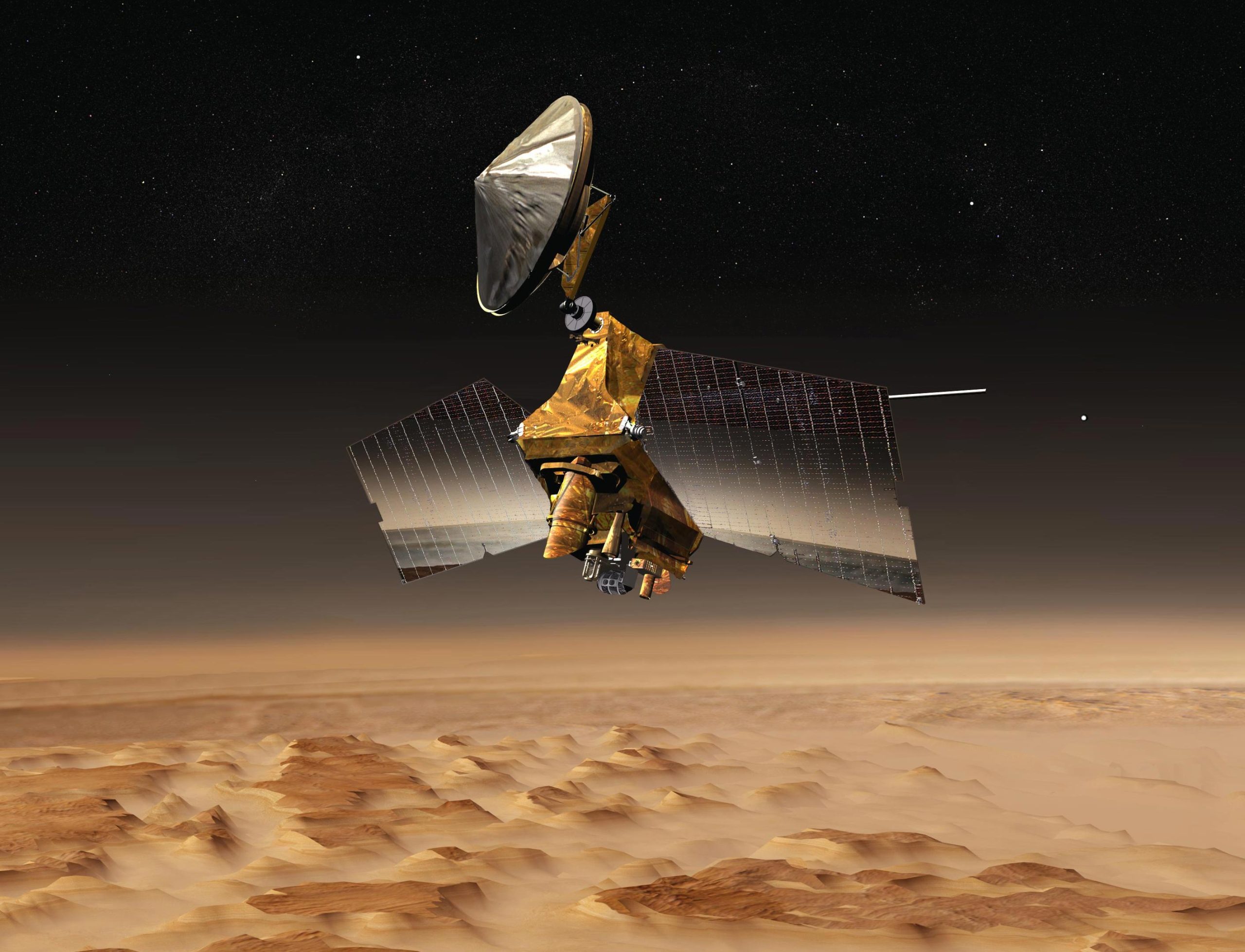
    Mars Reconnaissance Orbiter Over Nilosyrtis
    NASA Mars Reconnaissance Orbiter passes above a portion of the planet called Nilosyrtis Mensae in this artist concept illustration. Credit: JPL/NASA

    Navigating Mars: Curiosity’s Daily Challenges

    How quickly the rover reaches the area depends on a number of factors, including how its software navigates the surface and how challenging the terrain is to climb. Engineers at NASA’s Jet Propulsion Laboratory in Southern California, which leads Curiosity’s mission, work with scientists to plan each day’s trek.

    “By comparing the time HiRISE took the image to the rover’s commands for the day, we can see it was nearly done with a 69-foot drive,” said Doug Ellison, Curiosity’s planning team chief at JPL.
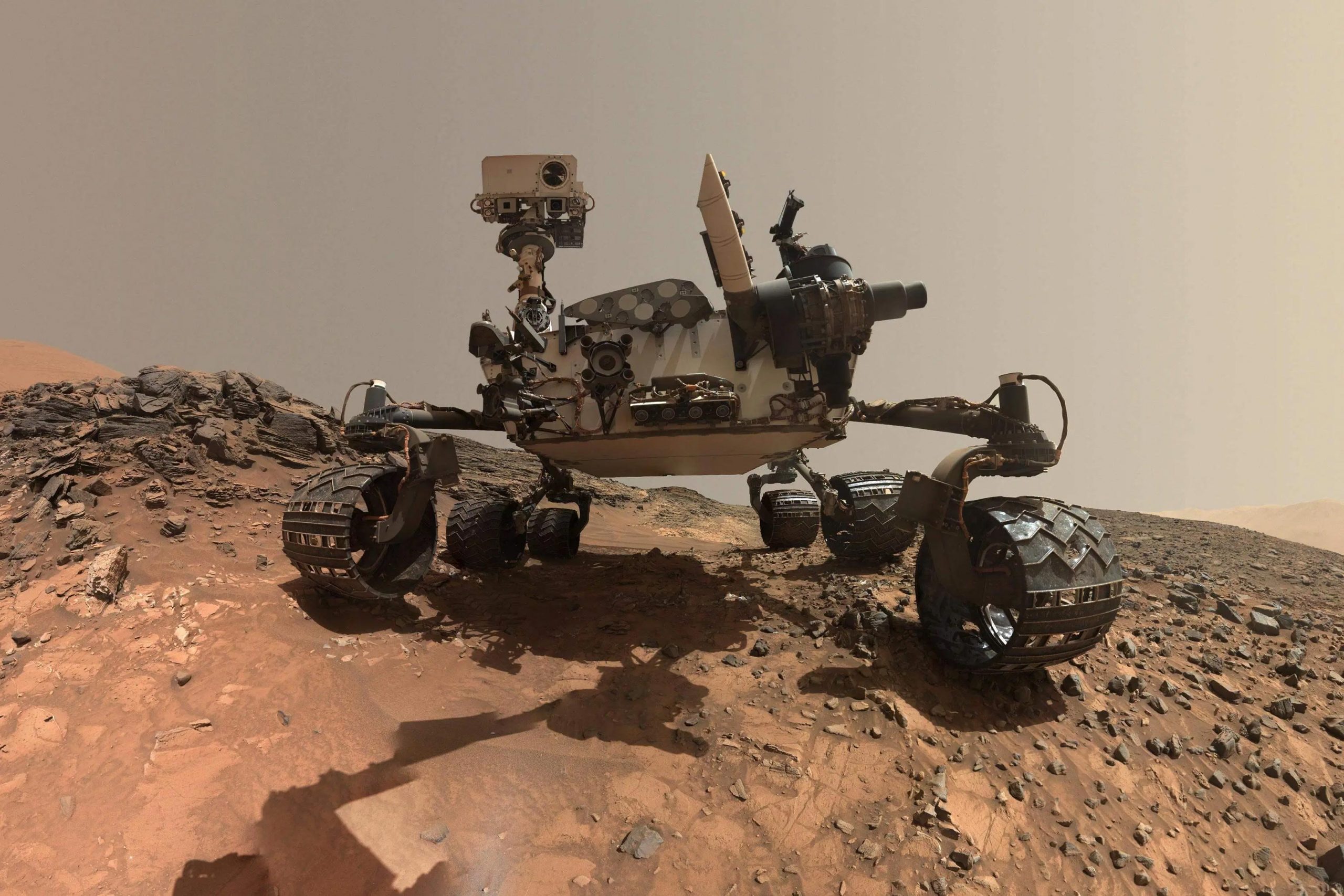
    NASA Curiosity Mars Rover
    This low-angle self-portrait of NASA’s Curiosity Mars rover shows the vehicle at the site from which it reached down to drill into a rock target called “Buckskin” on lower Mount Sharp. Credit: NASA/JPL-Caltech/MSSS

    Black-and-White Surprise in Latest Snapshot

    Designed to ensure the best spatial resolution, HiRISE takes an image with the majority of the scene in black and white and a strip of color down the middle. While the camera has captured Curiosity in color before, this time the rover happened to fall within the black-and-white part of the image.

    In the new image, Curiosity’s tracks lead to the base of a steep slope. The rover has since ascended that slope since then, and it is expected to reach its new science location within a month or so.

    More About Curiosity and MRO

    NASA’s Curiosity rover is a car-sized robotic explorer designed to study the geology, climate, and potential habitability of Mars. Built at NASA’s Jet Propulsion Laboratory (JPL) — which is managed by Caltech in Pasadena, California — Curiosity has been investigating the Red Planet since its dramatic landing in 2012. Managed by JPL for NASA’s Science Mission Directorate, the rover is part of the broader Mars Exploration Program portfolio, contributing critical insights into Mars’ ancient environment and helping to pave the way for future human missions.

    NASA’s Mars Reconnaissance Orbiter (MRO) has been orbiting Mars since 2006, using its suite of powerful instruments to study the planet’s atmosphere, surface, and underground layers. Operated by JPL for NASA’s Science Mission Directorate, MRO supports the Mars Exploration Program by relaying data for surface missions and capturing high-resolution imagery. One of its key instruments, the HiRISE (High-Resolution Imaging Science Experiment) camera, is operated by the University of Arizona and was built by BAE Systems in Boulder, Colorado. HiRISE has provided some of the most detailed views of Mars ever obtained from orbit.

    Never miss a breakthrough: Join the SciTechDaily newsletter.
    Follow us on Google and Google News.

    Curiosity Rover JPL Mars Mars Reconnaissance Orbiter NASA Planets Popular
    Share. Facebook Twitter Pinterest LinkedIn Email Reddit

    Related Articles

    “Strange and Unexpected” – NASA’s Curiosity Rover Stumbles Upon Yellow Crystals on Mars

    Shadow Play: NASA’s Curiosity Mars Rover Captures a Martian Day, From Dawn to Dusk

    Sun’s Curtain Call: Mars Missions Go Rogue During Solar Conjunction

    Welcome to Mars! Caltech’s Jaw-Dropping, 5.7 Terapixel Virtual Expedition Across the Red Planet

    NASA’s Curiosity Rover Views First Dazzling “Sun Rays” on Mars

    NASA’s Curiosity Rover Discovers Surprise Clues to Ancient Water on Mars

    Tantalizing Science and Dangerous Hazards: NASA’s Curiosity Mars Rover Reaches Long-Awaited Salty Region

    NASA Mars Reconnaissance Orbiter Releasing Spectacular 5.6-Gigapixel Map of the Red Planet

    NASA’s Curiosity Rover Spots a “Doorway” on Mars

    1 Comment

    1. Hugo Marin on July 10, 2025 9:52 am

      Not to change the subject but why does NASAput a camera on a nearby space object

      Reply
    Leave A Reply Cancel Reply

    • Facebook
    • Twitter
    • Pinterest
    • YouTube

    Don't Miss a Discovery

    Subscribe for the Latest in Science & Tech!

    Trending News

    One of the Universe’s Largest Stars May Be Getting Ready To Explode

    Scientists Discover Enzyme That Could Supercharge Ozempic-Like Weight Loss Drugs

    Popular Sweetener Linked to DNA Damage – “It’s Something You Should Not Be Eating”

    Ancient “Rock” Microbes May Reveal How Complex Life Began

    Researchers Capture Quantum Interference in One of Nature’s Rarest Atoms

    “A Plague Is Upon Us”: The Mass Death That Changed an Ancient City Forever

    Scientists Discover Game-Changing New Way To Treat High Cholesterol

    This Small Change to Your Exercise Routine Could Be the Secret to Living Longer

    Follow SciTechDaily
    • Facebook
    • Twitter
    • YouTube
    • Pinterest
    • Newsletter
    • RSS
    SciTech News
    • Biology News
    • Chemistry News
    • Earth News
    • Health News
    • Physics News
    • Science News
    • Space News
    • Technology News
    Recent Posts
    • Natural Compounds Boost Bone Implant Success While Killing Bacteria and Cancer Cells
    • After 60 Years, Scientists Uncover Unexpected Brain Effects of Popular Diabetes Drug Metformin
    • New Research Uncovers Hidden Side Effects of Popular Weight-Loss Drugs
    • Scientists Rethink Extreme Warming After Surprising Ocean Discovery
    • The Surprising Role of Asteroids in the Origin of Life
    Copyright © 1998 - 2026 SciTechDaily. All Rights Reserved.
    • Science News
    • About
    • Contact
    • Editorial Board
    • Privacy Policy
    • Terms of Use

    Type above and press Enter to search. Press Esc to cancel.