
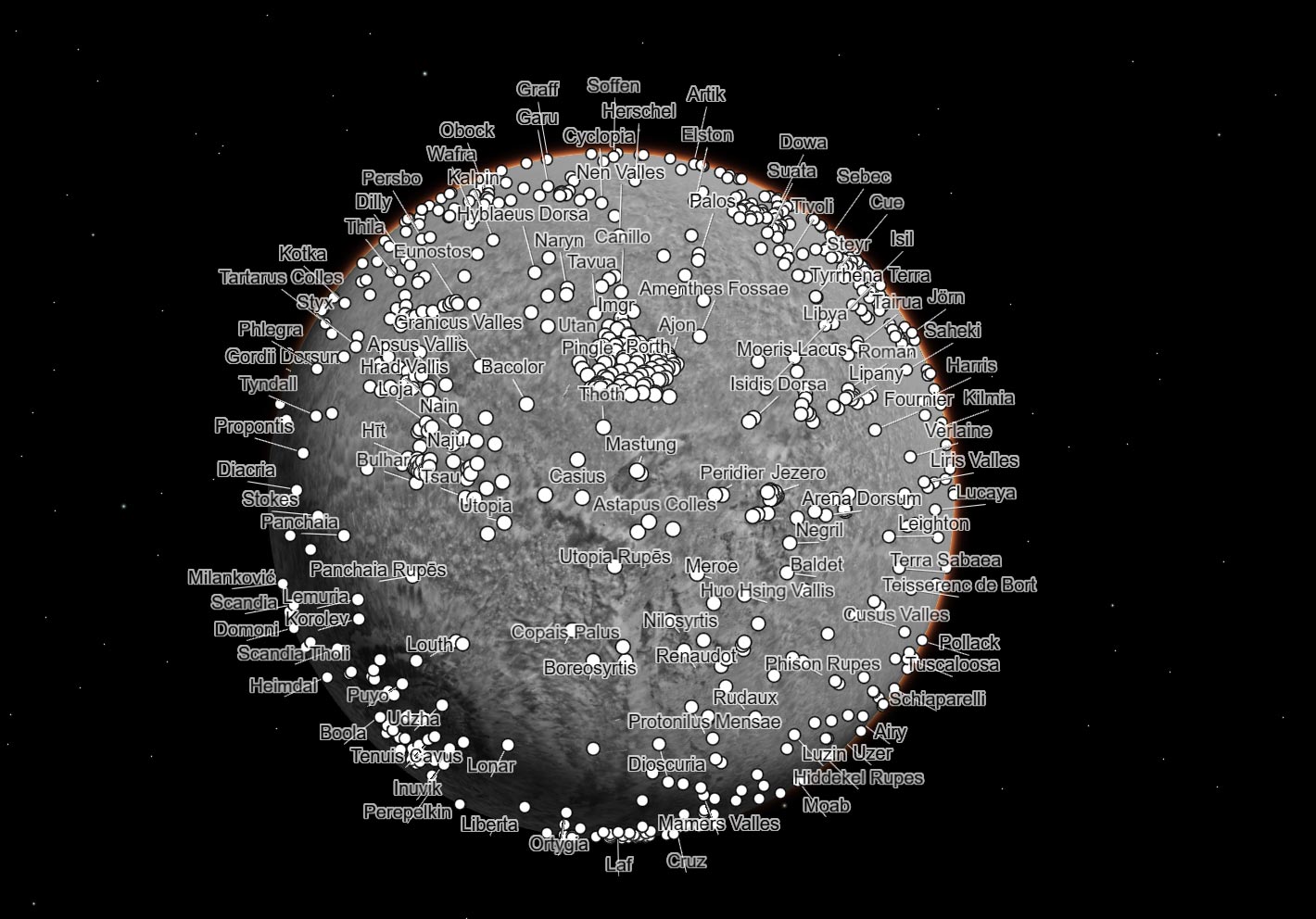
Both scientists and the public can navigate a new global image of the Red Planet that was made at Caltech using data from NASA’s Mars Reconnaissance Orbiter.
Caltech has used data from NASA’s Mars Reconnaissance Orbiter to create the highest-resolution global image of Mars ever, a 5.7 terapixel mosaic. The mosaic is designed to be accessible to everyone, from scientists to schoolchildren and the general public, and captures cliffsides, impact craters, and dust devil tracks in stunning detail.
Cliffsides, impact craters, and dust devil tracks are captured in mesmerizing detail in a new mosaic of the Red Planet composed of 110,000 images from NASA’s Mars Reconnaissance Orbiter (MRO). Taken by the veteran spacecraft’s black-and-white Context Camera, or CTX, the images cover nearly 270 square feet (25 square meters) of surface per pixel.
That makes the Global CTX Mosaic of Mars the highest-resolution global image of the Red Planet ever created. If it were printed out, this 5.7 trillion pixel (or 5.7 terapixel) mosaic would be large enough to cover the Rose Bowl Stadium in Pasadena, California.
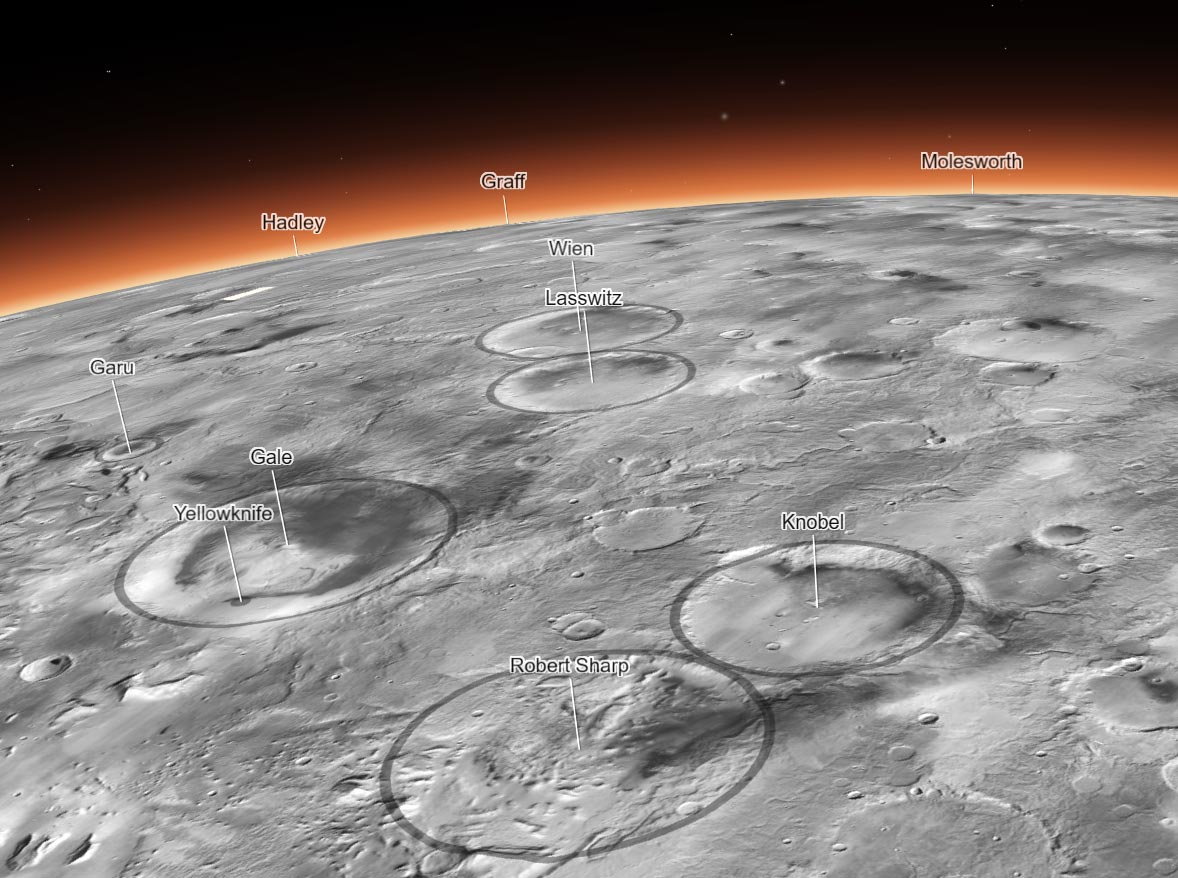
The product of Caltech’s Bruce Murray Laboratory for Planetary Visualization, the mosaic took six years and tens of thousands of hours to develop. It is so detailed that more than 120 peer-reviewed science papers have already cited a beta version. But the mosaic is also easy enough for anyone to use.
“I wanted something that would be accessible to everyone,” said Jay Dickson, the image processing scientist who led the project and manages the Murray Lab. “Schoolchildren can use this now. My mother, who just turned 78, can use this now. The goal is to lower the barriers for people who are interested in exploring Mars.”
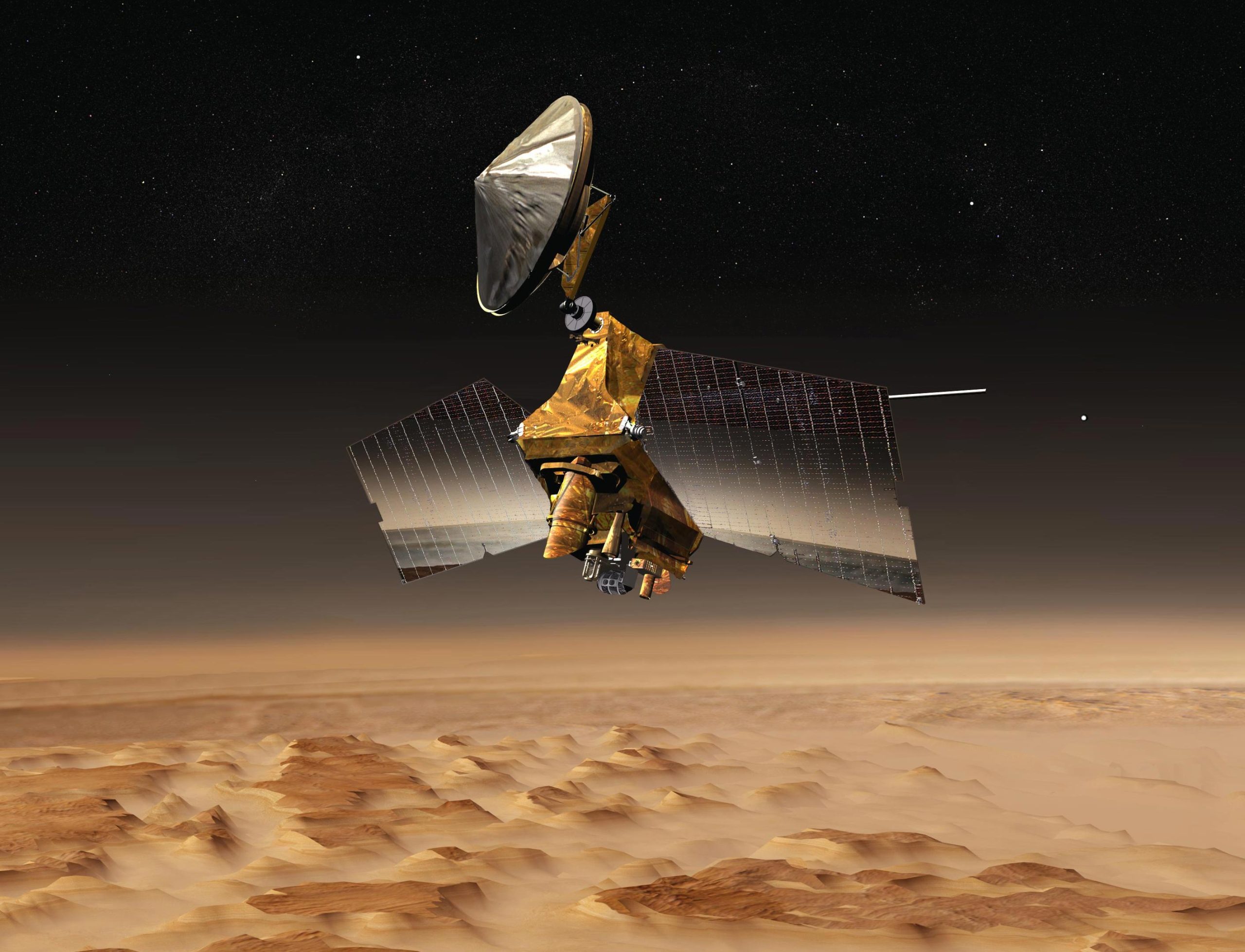
CTX is among three cameras aboard MRO, which is led by NASA’s Jet Propulsion Laboratory in Southern California. One of those cameras, the High-Resolution Imaging Science Experiment (HiRISE) provides color images of surface features as small as a dining room table. In contrast, CTX provides a broader view of terrain around those features, helping scientists understand how they’re related. Its ability to capture larger expanses of the landscape has made CTX especially useful for spotting impact craters on the surface. A third camera, the Mars Color Imager (MARCI), led by the same team that operates CTX, produces a daily global map of Mars weather at much lower spatial resolution.
Mars Up Close
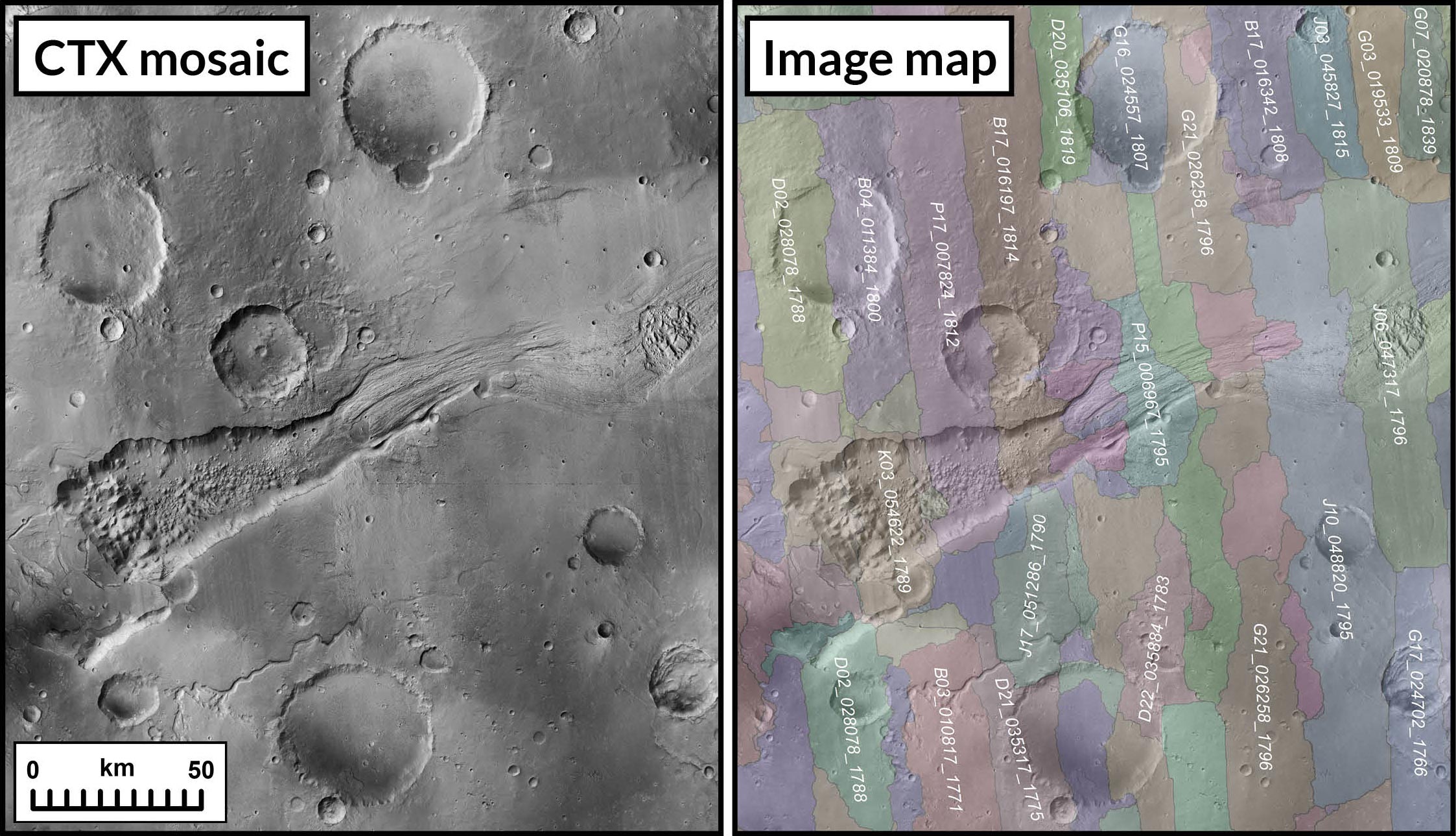
Snapping away since MRO arrived at Mars in 2006, CTX has documented nearly all of the Red Planet, making its images an optimal starting point for scientists when they’re creating a map. A bit like hunting for a needle in a haystack and putting together a puzzle at the same time, mapmaking requires downloading and sifting through a large selection of images to find those with the same lighting conditions and clear skies.
To create the new mosaic, Dickson developed an algorithm to match images based on the features they captured. He manually stitched together the remaining 13,000 images that the algorithm couldn’t match. The remaining gaps in the mosaic represent parts of Mars that hadn’t been imaged by CTX by the time Dickson started working on this project, or areas obscured by clouds or dust.
Laura Kerber, a Mars scientist at JPL, provided feedback on the new mosaic as it took shape. “I’ve wanted something like this for a long time,” Kerber said. “It’s both a beautiful product of art and also useful for science.”
Kerber recently used the image to visit her favorite spot on Mars: Medusae Fossae, a dusty region about the size of Mongolia. Scientists are unsure exactly how it formed; Kerber has proposed it might be a pile of ash from a nearby volcano. At the click of a button on the CTX mosaic, she can zoom in and admire ancient river channels, now dry, winding through the landscape there.
Users can also jump to regions like Gale Crater and Jezero Crater – areas being explored by NASA’s Curiosity and Perseverance rovers – or visit Olympus Mons, the tallest volcano in the solar system, adding topographic data from NASA’s Mars Global Surveyor mission. One of the mosaic’s coolest features highlights impact craters across the entire planet, allowing viewers to see just how scarred Mars is.
“For 17 years, MRO has been revealing Mars to us as no one had seen it before,” said the mission’s project scientist, Rich Zurek of JPL. “This mosaic is a wonderful new way to explore some of the imagery that we’ve collected.”
The mosaic was funded as part of NASA’s Planetary Data Archiving, Restoration and Tools (PDART) program, which helps develop new ways to use existing NASA data. The scientific products of extended missions like MRO are exactly what the program was designed to make more accessible.
More About MRO
MRO is managed by JPL on behalf of NASA’s Science Mission Directorate in Washington, with Caltech acting as JPL’s managing agent for NASA. The University of Arizona in Tucson operates HiRISE, which was constructed by Ball Aerospace & Technologies Corp in Boulder, Colorado. Malin Space Science Systems, headquartered in San Diego, constructed and operates the Context Camera.
Never miss a breakthrough: Join the SciTechDaily newsletter.
Follow us on Google and Google News.
1 Comment
Well thank you, Laura Kerber, a Mars scientist at JPL, for impressing me with this. THANK YOU, THANK YOU…