
In the journal Circulation, the authors reveal an exciting new avenue of study for repairing damaged hearts.
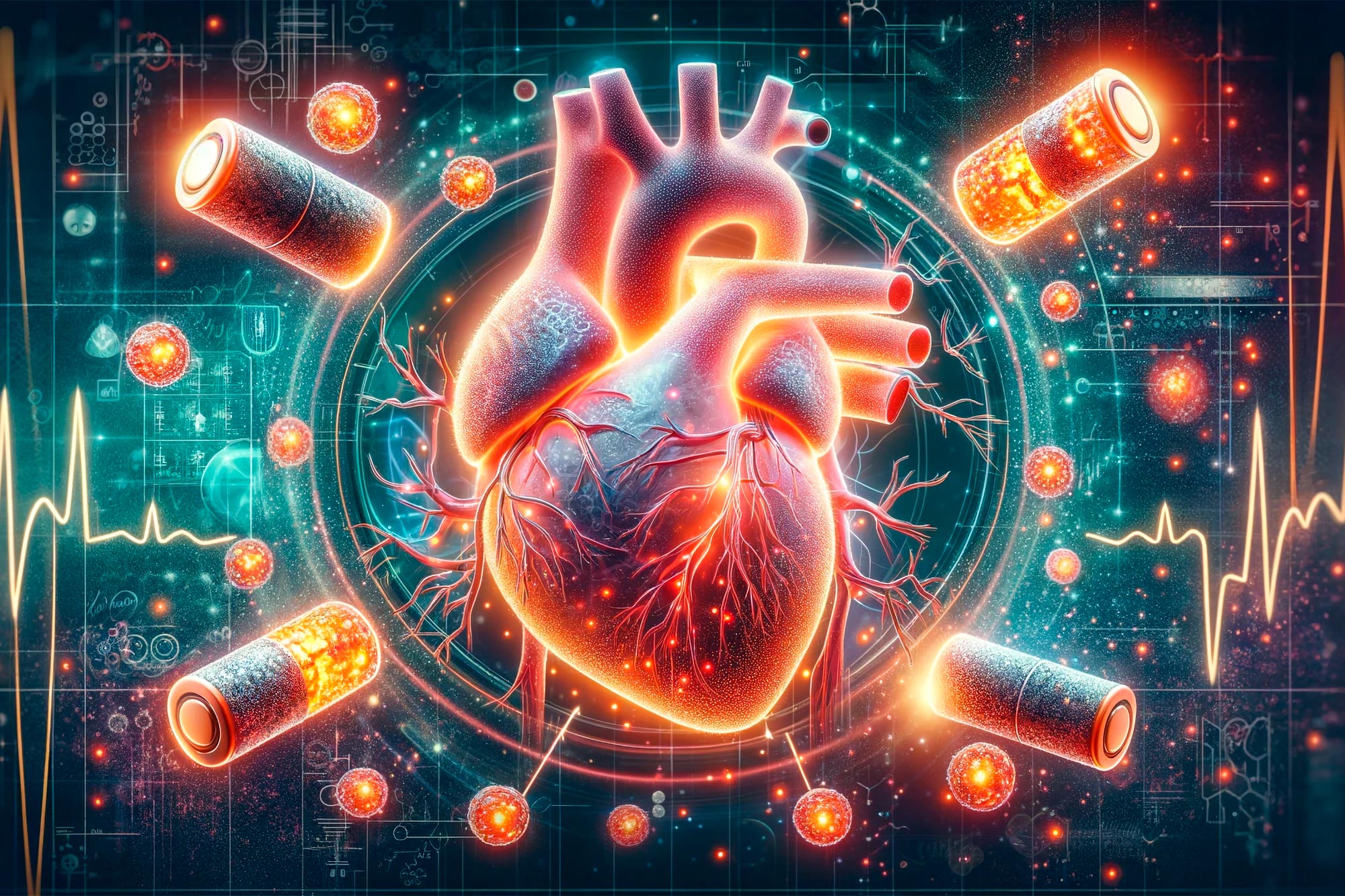
Think of them as the Energizer Bunnies of the heart, tiny natural batteries that keep this vital organ beating 100,000 times a day as it pumps 2,000 gallons of blood throughout the human body.
But when those batteries – heart muscle cells called cardiomyocytes − short circuit and die, the damage can be devastating. The damage to the heart muscle is usually permanent, leaving the heart unable to pump the way it should.
That’s the subject of a new study by a team that includes two University of South Florida (USF) Health doctors who reported their findings in Circulation, the flagship journal of the American Heart Association.
“An injury like a heart attack creates a massive loss of cardiomyocytes, and you can’t renew them,” said Da-Zhi Wang, PhD, director of the Center for Regenerative Medicine in the USF Health Heart Institute and Morsani College of Medicine. “So, the question is how to make the heart repair itself.”
Advancements in Heart Regeneration Research
The study of heart repair has been a consistent theme of Dr. Wang’s research lab, which recently relocated to USF from Harvard Medical School where he was a professor working at Boston Children’s Hospital. Dr. Wang, now a professor of Internal Medicine and Molecular Pharmacology and Physiology in the Morsani College of Medicine, is a senior author of the study, “Reduced Mitochondrial Protein Translation Promotes Cardiomyocyte Proliferation and Heart Regeneration.” The paper addresses how the activities of mitochondria, which reside inside cardiomyocyte cells, is vital in repairing a damaged heart and even in preventing future heart attacks or coronary disease.
“The key element of this study is the link to cardiac regeneration,” said John Mably, PhD, another author of the study. “If you want to have your heart functioning into your 90s, this will be of interest to you, or anyone who has heart disease or had a heart attack.”
Dr. Mably is an associate professor of Internal Medicine in the Morsani College of Medicine and a member of the Center for Regenerative Medicine and USF Health Heart Institute. The USF Health team is supported by the USF Health Heart Institute in the Morsani College of Medicine and grants from the National Institutes of Health. Dr. Jinghai Chen (who trained with Dr. Wang) and members of his lab at the Zhejiang University School of Medicine in China were also authors on the paper.
Understanding Mitochondria’s Role in Cardiac Function
Cardiomyocytes are the building blocks of cardiac tissue and essential to the normal function of the heart. Because the heart is constantly contracting, it requires an immense amount of energy, which is produced by the mitochondria, the tiny sub-cellular structures often referred to as the powerhouse of the cell. Since mitochondrial protein synthesis is critical to its structure, as well as normal cardiac function, the authors focused much of their study on how alteration of the mitochondrial protein balance affects heart health.
“The heart muscle contracts from early development to the day you die, so it requires a huge amount of energy to run,” Dr. Mably added. “That’s what mitochondria provide; it’s like the gasoline you need to run your car.”
The importance of mitochondria in normal heart function is well recognized and recent studies have implicated changes in mitochondrial metabolism with some forms of heart disease. This work evolved from a previous study performed by this group. They showed that loss of a protein called MRPS5 in the developing heart leads to cardiac defects and embryonic death; loss of this gene at stages after birth led to enlargement of the heart and eventual failure. The cause of these cardiac abnormalities was shown to stem from an imbalance in the communication between the mitochondria and the nucleus of the cell.
In this new study, the authors examine the effects of decreased MRPS5, rather than its complete loss, on cardiomyocyte proliferation. Major damage from injury to the heart, often as a result of a severe heart attack, can lead to heart failure because the heart is no longer able to contract normally. This is because the damaged tissue in the adult myocardium, the muscle layer of the heart, is unable to repair itself after injury. These scientist found that a slight reduction of mitochondrial activity in the adult heart could facilitate heart regeneration after injury to the heart, which could lead to a new avenue of treating heart attack and other heart disease.
“We hope to be working with the pharmaceutical industry and learn how to better protect or repair hearts from damage,” Dr. Wang said. “Currently, clinicians can only do so much for a heart attack. This approach could help the heart grow back to normal. We might be able to regrow or repair the heart by using a gene therapy approach.”
Like the Energizer Bunny, this could lead to a new way of treating heart disease to allow older hearts “to keep on going and going…”
Reference: “Reduced Mitochondrial Protein Translation Promotes Cardiomyocyte Proliferation and Heart Regeneration” by Feng Gao, Tian Liang, Yao Wei Lu, Linbin Pu, Xuyang Fu, Xiaoxuan Dong, Tingting Hong, Feng Zhang, Ning Liu, Yuxia Zhou, Hongkun Wang, Ping Liang, Yuxuan Guo, Hong Yu, Wei Zhu, Xinyang Hu, Hong Chen, Bin Zhou, William T. Pu, John D. Mably, Jian’an Wang, Da-Zhi Wang and Jinghai Chen, 31 October 2023, Circulation.
DOI: 10.1161/CIRCULATIONAHA.122.061192
Never miss a breakthrough: Join the SciTechDaily newsletter.
Follow us on Google and Google News.
2 Comments
The wizard of oz
Dora the explorer