
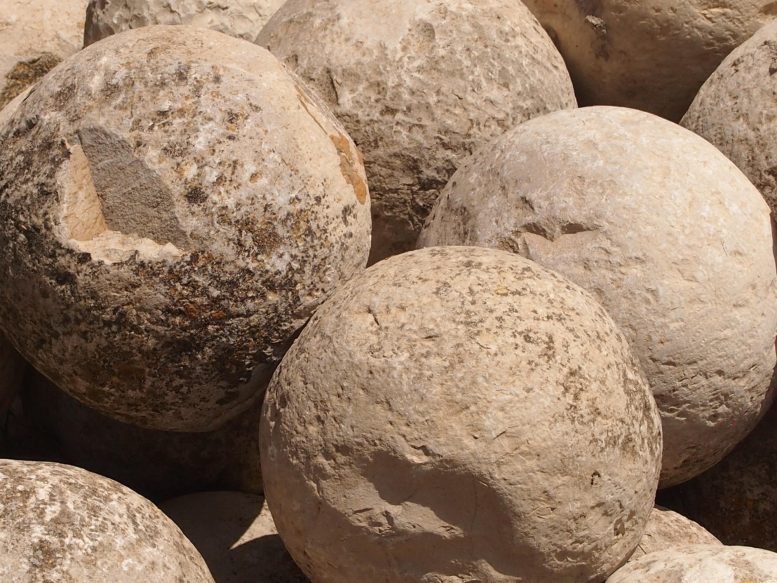
The Stone Spheres Are Believed To Be From an Ancient Greek Board Game
According to archaeologists from the University of Bristol, mysterious stone spheres discovered in several ancient settlements in the Aegean and Mediterranean could be game pieces from the oldest board games ever created.
These spheres were reportedly discovered at sites in Santorini, Crete, Cyprus, and other Greek Islands. There have been several theories about their potential uses, including sling stones, throwing balls, counting/record-keeping systems, or as counters/pawns.
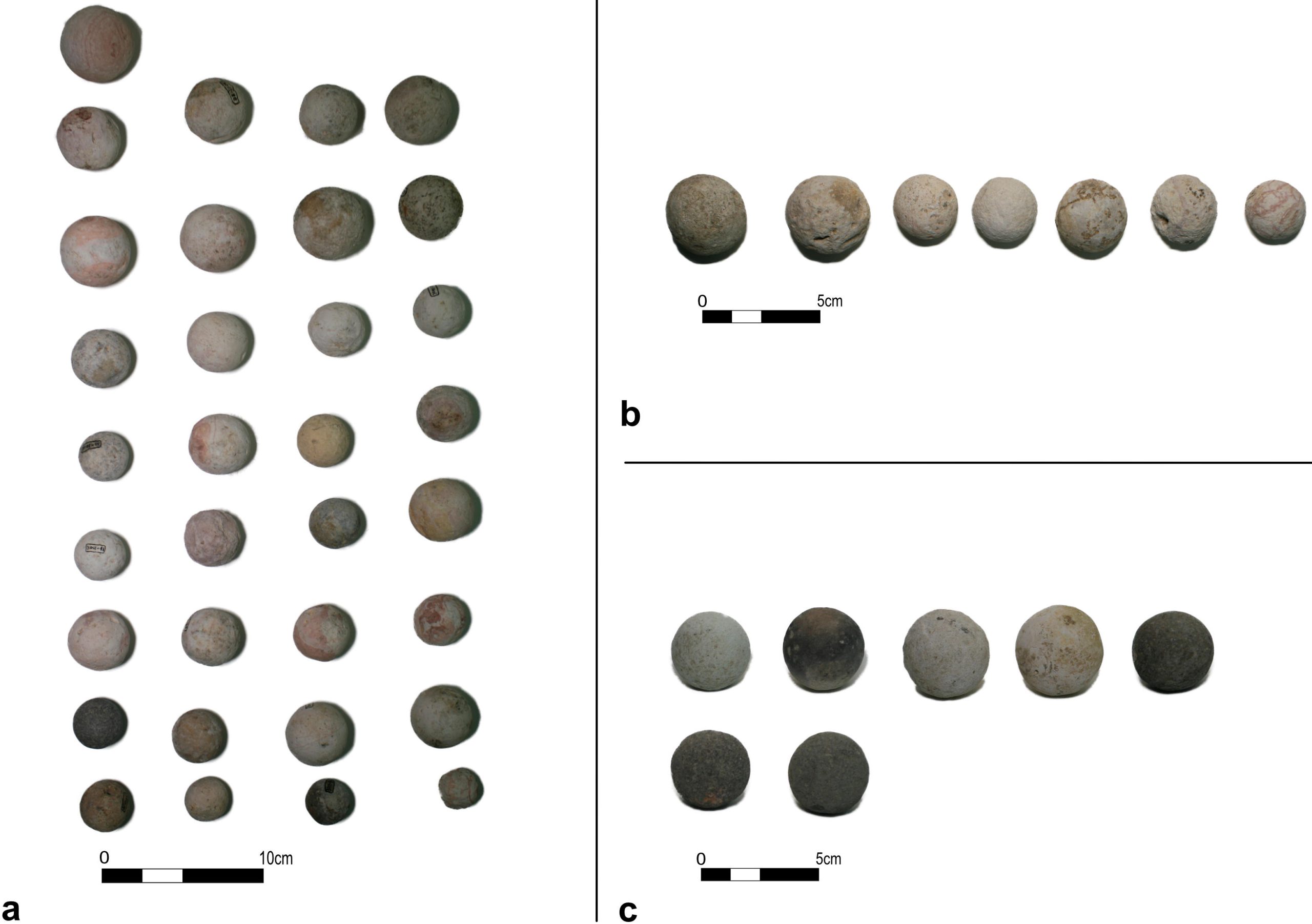
The same team from the University of Bristol previously conducted research that indicated there was size variation among certain clusters and collections of spheres. The researchers then intended to investigate any possible patterns within these sphere concentrations to help shed light on their potential use.
Dr. Christianne Fernée and Dr. Konstantinos Trimmis of the University of Bristol’s Department of Anthropology and Archaeology recently published a study that examined common characteristics on 700 stones that were discovered at the Bronze Age town of Akrotiri on the island of Santorini. The stones’ ages ranged from roughly 4,500 to 3,600 years old.
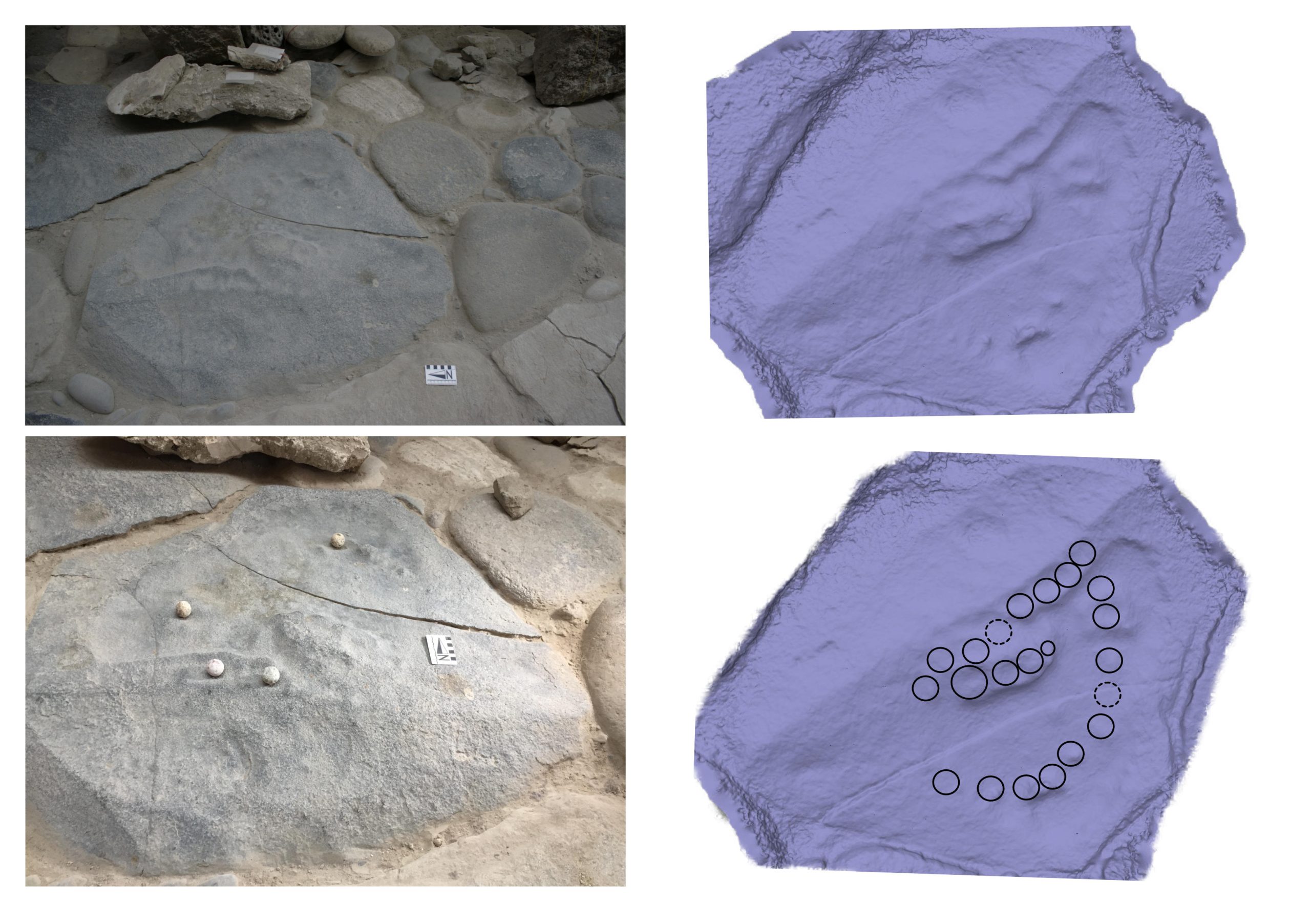
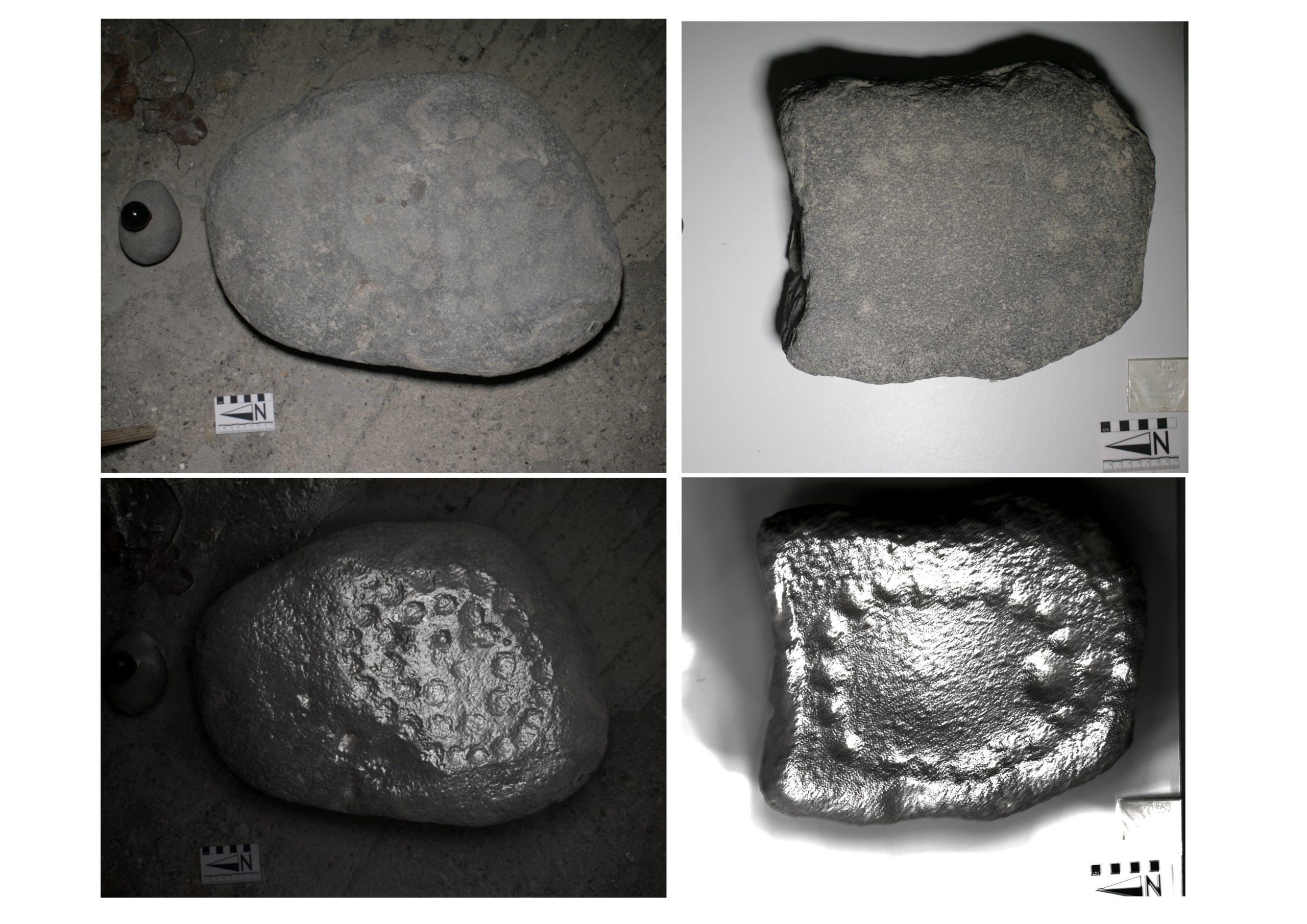
The stones, which are smaller than golf balls, are in various colours and made from different materials. The analysis put the stones into two groups of larger stones and smaller. In addition, in Akrotiri and in other settlements across the Aegean there are stone slabs with shallow cup marks where the spheres could have sat or been placed.
Dr Ferneé said: “The most important finding of the study is that the speres fit two major clusters (one of smaller and one of larger stones). This supports the hypothesis that they were used as counters for a board game with the spheres most possibly have been collected to fit these clusters rather than a counting system for which you would expect more groupings.”
If these spheres are in-fact part of a boardgame, they will be one of the earliest examples, along with similar examples from the Levant and Egypt, such as the Egyptian Mehen and Senet.
Dr Trimmis added: “The social importance of the spheres, as indicated by the way they were deposited in specific cavities, further supports the idea of the spheres being part of a game that was played for social interaction. This gives a new insight into the social interaction in the Bronze Age Aegean.”
The next stage of the research is to apply a similar methodology to the slabs to see if there is clustering in the cup marks and trying to associate the spheres and slabs together. The team also hope to use artificial intelligence techniques to determine how the game was actually played.
Reference: “The rolling stones of Bronze Age Aegean: Applying machine learning to explore the use of lithic spheres from Akrotiri, Thera” by Christianne L. Fernée, and Konstantinos P. Trimmis, 9 September 2022, Journal of Archaeological Science: Reports.
DOI: 10.1016/j.jasrep.2022.103615
Never miss a breakthrough: Join the SciTechDaily newsletter.
Follow us on Google and Google News.
2 Comments
Marble sized spheres. Some larger, some smaller, in two sets. Various compositions. Did anybody point out to these scholars that children all over the world have played marbles with objects having these features? Too obvious for them to notice?
I was thinking about Dung Beetles in the context of early humanity and their relationship to the animal kingdom. Their observation of the behavior of other creatures was a kin to our modern relationship to teachers. Hence the reverence and homage they eventually paid to animals in their temple (university) relief carvings. sculpture and 2 dimensional art as exemplified in gobleki tepe.
It could be inferred from observation that humanity learned the concept of the wheel, in its original spherical form, from observing Dung Beetles and the balls they rolled across the ground. They might have extrapolated this learned behavior to a use like ball bearings, to their own needs such as moving heavy loads across terrain to a planed location.
The stone spheres we see today are a part of the historical record because they are stone. But it is also possible they could have been made from carved wood which would have been easier to make and make more perfectly spherical. But they would have decayed over time. I can imagine this as an answer to the question of how the Egyptians moved tons of stone to build their architectural structures.