
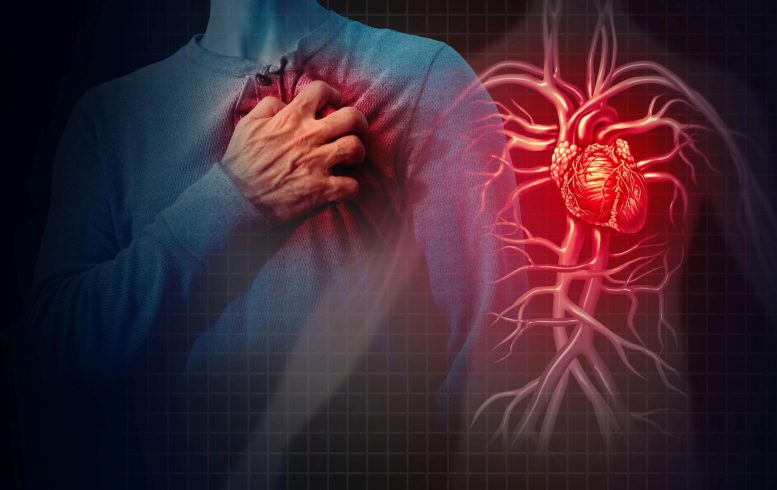
Following a Heart Attack, Cardiac Progenitor Cells Produce Healthy Tissue
A heart attack, also known as a myocardial infarction, occurs when a part of the heart muscle does not get enough blood. The longer it goes without restoring blood flow, the more damage is done to the heart muscle.
The most common cause of a heart attack is coronary artery disease. A strong spasm, or abrupt constriction, of a coronary artery, which may cut off blood supply to the heart muscle, is another, although less frequent reason.
The human body is incapable of rebuilding damaged tissue following a heart attack due to the heart’s incapacity to produce new muscle. Treatment with cardiac progenitor cells, however, could result in the production of functional heart cells in injured regions. A global team introduced this new treatment method in Nature Cell Biology on May 12th. Clinical trials should begin within the next two years.
How can heart function be restored after a heart attack? With an estimated 18 million deaths worldwide from cardiovascular diseases each year, according to the World Health Organization (WHO), this is a focus of worldwide research. Treatment using an enhanced pool of human pluripotent stem cell-derived ventricular progenitors, or HVPs for short, might be one viable approach. In a study published in the journal Nature Cell Biology, an international team comprised of the Technical University of Munich (TUM) and its university hospital Klinikum Rechts der Isar, the Swedish Karolinska Institutet, the Swedish biotech startup Procella Therapeutics, and the biopharmaceutical company AstraZeneca evaluated this approach.
Heart muscle cells and blood vessels die as a result of many heart diseases. They are replaced by fibrotic scar tissue, which worsens cardiac function. Some animals, particularly amphibians and fish, can heal such injury — a talent that an adult human’s heart lacks almost entirely. Stem cell treatment is one experimental strategy for regenerating missing cardiac tissue. Previous research used heart cells derived from stem cells, specifically cardiomyocytes. However, numerous side effects occurred, including abnormal heartbeats and deadly arrhythmia.
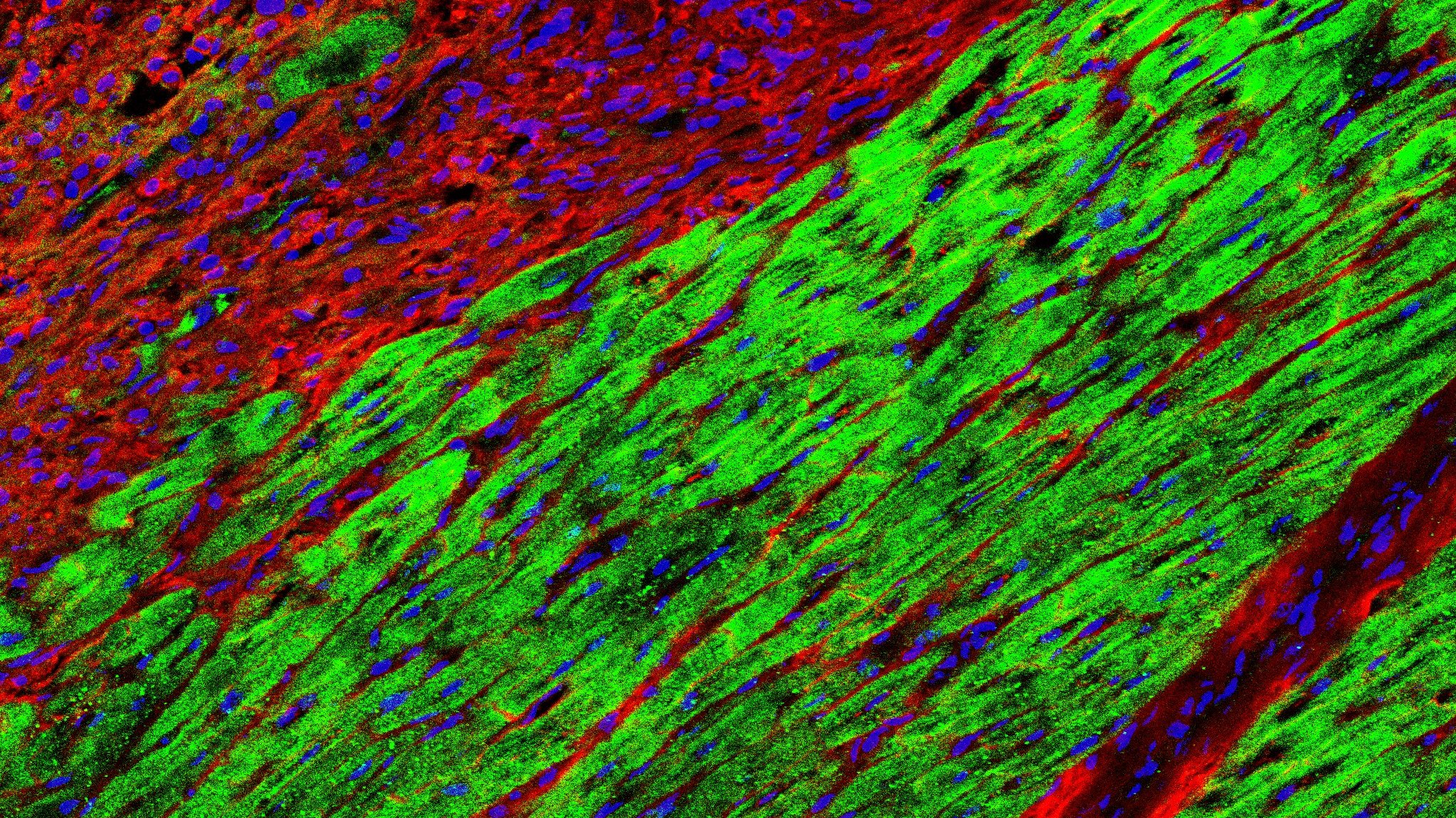
Cardiac Progenitor Cells Instead of Differentiated Heart Cells
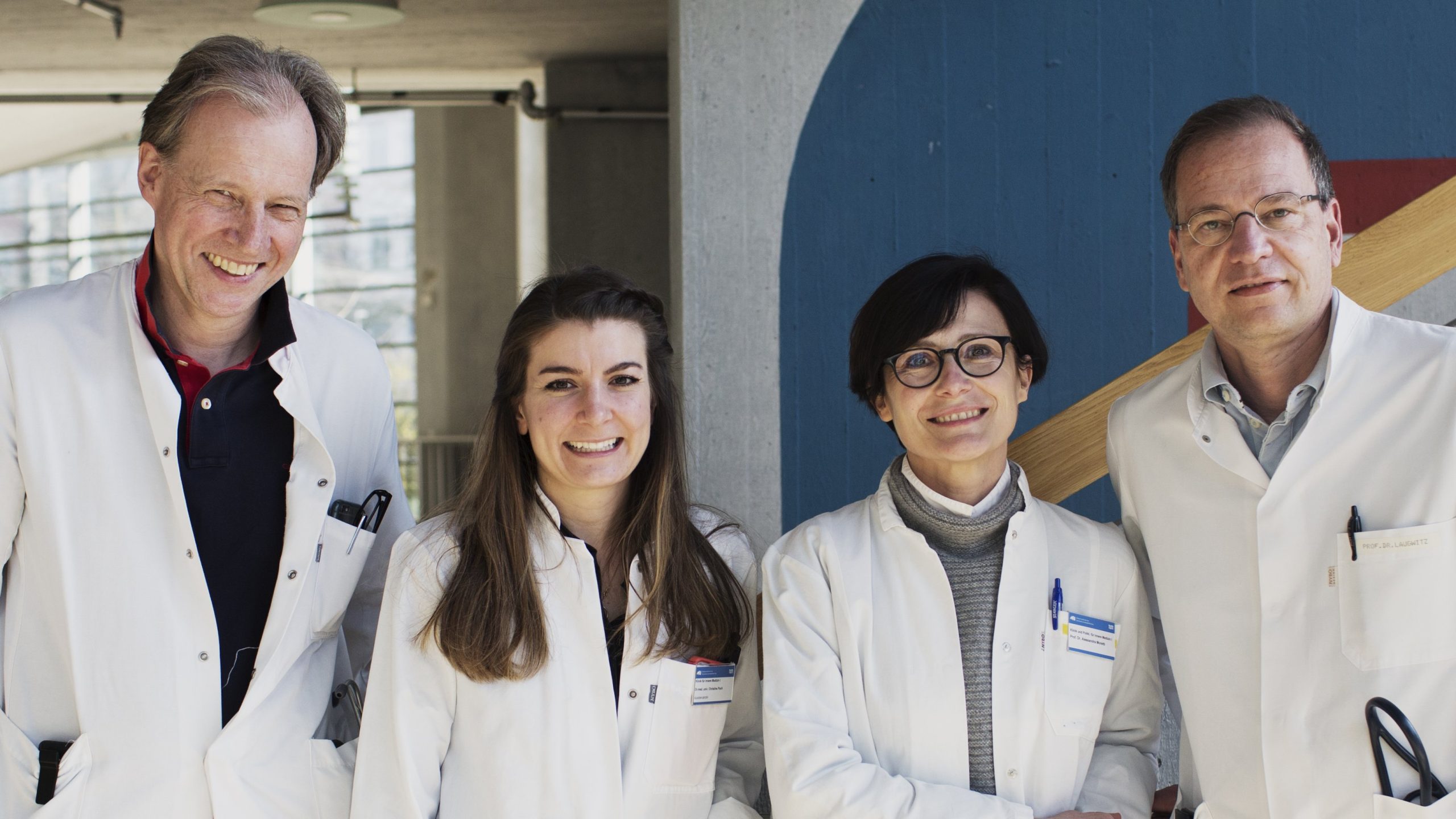
In contrast, the team working with Karl-Ludwig Laugwitz, Professor of Cardiology at TUM, is investigating human ventricular progenitor cells. These cells play a crucial role in the formation of the heart during development. Over time, they differentiate into the various cell types in the heart, including cardiomyocytes. The team has succeeded in producing large numbers of such HVPs from human embryonic pluripotent stem cells. “This represents the culmination of two decades of our work trying to find the ideal cell to rebuild the heart,” says Kenneth R. Chien, Professor of Cardiovascular Research at Karolinska Institutet.
Complex Molecular Mechanisms
With these cells, the scientists studied the complex molecular processes involved in the repair of damaged areas of the heart muscle. “In laboratory investigations, we were able to show how HVPs can, in a sense, track down damaged regions in the heart, migrate to injury sites, and mature into working heart cells. They also actively prevent the formation of scar tissue by cross-talking with fibroblasts, as we call the cells that form the structural framework for the non-functional connective tissue,” says Prof. Laugwitz, who heads the First Medical Department of TUM’s Klinikum Rechts der Isar.
Successful Treatment of Pig Hearts
As the next step, the interdisciplinary team used pigs to study the effectiveness of treating a damaged heart with HVPs. Physiologically, pig hearts are quite similar to those of humans. As a result, experiments with pigs are often conducted shortly before the start of studies in human patients. The results show that damage to the heart can be reliably repaired even in large animals with no serious side effects observed. “The treatment successfully demonstrated the formation of new cardiac tissue and importantly, improved cardiac function and reduced scar tissue,” says Dr. Regina Fritsche-Danielson, Head of Research and Early Development at AstraZeneca.
Researchers Aim at Starting Clinical Studies Within the Next Two Years
In the coming months and years, the scientists plan to translate their current research findings to develop a treatment for heart patients. An important intermediate step in the development of hypoimmunogenic lines of HVPs. Currently, it is necessary to inactivate the recipient’s immune system to prevent it from destroying the cell treatment. Hypoimmunogenic cells would eliminate the need for this step because they would not be identified as foreign bodies to the recipient. Further research will be conducted on hypoimmunogenic cells and possible side effects. The aim is to start clinical studies on the therapeutic use of HVPs within the next two years.
“The new insights on the therapeutic use of HVPs represent a milestone in the treatment of diverse patients with serious heart failure,” says Prof. Karl-Ludwig Laugwitz. “Especially older patients with coexisting conditions, for whom major heart surgery would represent an excessive strain, would benefit from treatment with HVPs.”
Reference: “Migratory and anti-fibrotic programmes define the regenerative potential of human cardiac progenitors” by Christine M. Poch, Kylie S. Foo, Maria Teresa De Angelis, Karin Jennbacken, Gianluca Santamaria, Andrea Bähr, Qing-Dong Wang, Franziska Reiter, Nadja Hornaschewitz, Dorota Zawada, Tarik Bozoglu, Ilaria My, Anna Meier, Tatjana Dorn, Simon Hege, Miia L. Lehtinen, Yat Long Tsoi, Daniel Hovdal, Johan Hyllner, Sascha Schwarz, Stefanie Sudhop, Victoria Jurisch, Marcella Sini, Mick D. Fellows, Matthew Cummings, Jonathan Clarke, Ricardo Baptista, Elif Eroglu, Eckhard Wolf, Nikolai Klymiuk, Kun Lu, Roland Tomasi, Andreas Dendorfer, Marco Gaspari, Elvira Parrotta, Giovanni Cuda, Markus Krane, Daniel Sinnecker, Petra Hoppmann, Christian Kupatt, Regina Fritsche-Danielson, Alessandra Moretti, Kenneth R. Chien, and Karl-Ludwig Laugwitz, 12 May 2022, Nature Cell Biology.
DOI: 10.1038/s41556-022-00899-8
Never miss a breakthrough: Join the SciTechDaily newsletter.
Follow us on Google and Google News.
21 Comments
I wonder how long it had been since the heart attack occurred, minutes? Hours? Days? Years? Could this method treat a heart when the attack occurred 10 years earlier?
I certainly would be interested in this procedure. I have tried to remodel my heart by plant based diet and plenty of exercise to increase EF, as well as medications. I’ve added years to my life but would like to look beyond
I’m a survivor of 8 heart attacks. Wonder what it would do for me?
How do we find out more about how to be in a trial?
I had to read it a few times to make sure I had it right. But they are pulling these cells from aborted babies. That’s where you get embryonic stem cells. This treatment will never be available in the US, God willing, because it will require killing children to do it.
It mentions embryonic in the paragraph right above the picture of the doctors.
If they can somehow replace embryonic stem cells with other stem cells that people provide then maybe. But it’s hard to justify killing a child to save an adult.
That’s amazing. I’ve always wondered if we could repair our parts like we can our cars.
Wonder where they are getting the stem cells from? Dead babies?
“human embryonic pluripotent stem cells”; so more dead baby poachers finding ways to perform their Frankenstein experiments, while being promoted as heroes.
My husband who is 66yrs old and being treated with chemotherapy for NSCL cancer, just had his 1st heart attack last week. Could he participate in a clinical trial? Great article
My husband had a heart attack four years ago.
Can the scar tissue in his heart regenerate again with this treatment?
Are you crazy? What dead babies are talking about? The material would be taken from the umbilical cord… no dead babies needed 😉
Am interested
Would love to learn more and interested
i sure would be interested in the study. i currently have a pacemaker/defibralator implanted so not sure if that would stop me from taking part in a study or not.
I’ve
Survived several heart attacks and have several co-existing conditions.at 75 years old I’m very interested in these studies.
Strauss heart Drops will also help
Stem cells are also taken from the placenta and discarded cord afterbirth. Abortion is ugly, but parts preserved for medical advancement makes sense.
These stem cells come from embryos that are 3 to 5 days old. At this stage, an embryo is called a blastocyst and has about 150 cells. These are pluripotent stem cells, meaning they can divide into more stem cells or can become any type of cell in the body.
Word has it that the WHO wants to reduce world population to 500 million, so what the point. I’m sure they’re not interested in saving lives. IMHO
My husband also left side heart failure pumping is 25 I am interested this
Arvind Sonawane
I’m 34 yr old, I got my first heart attack 2 years ago, my EF is Now 30-35%, I’m interested for this.