
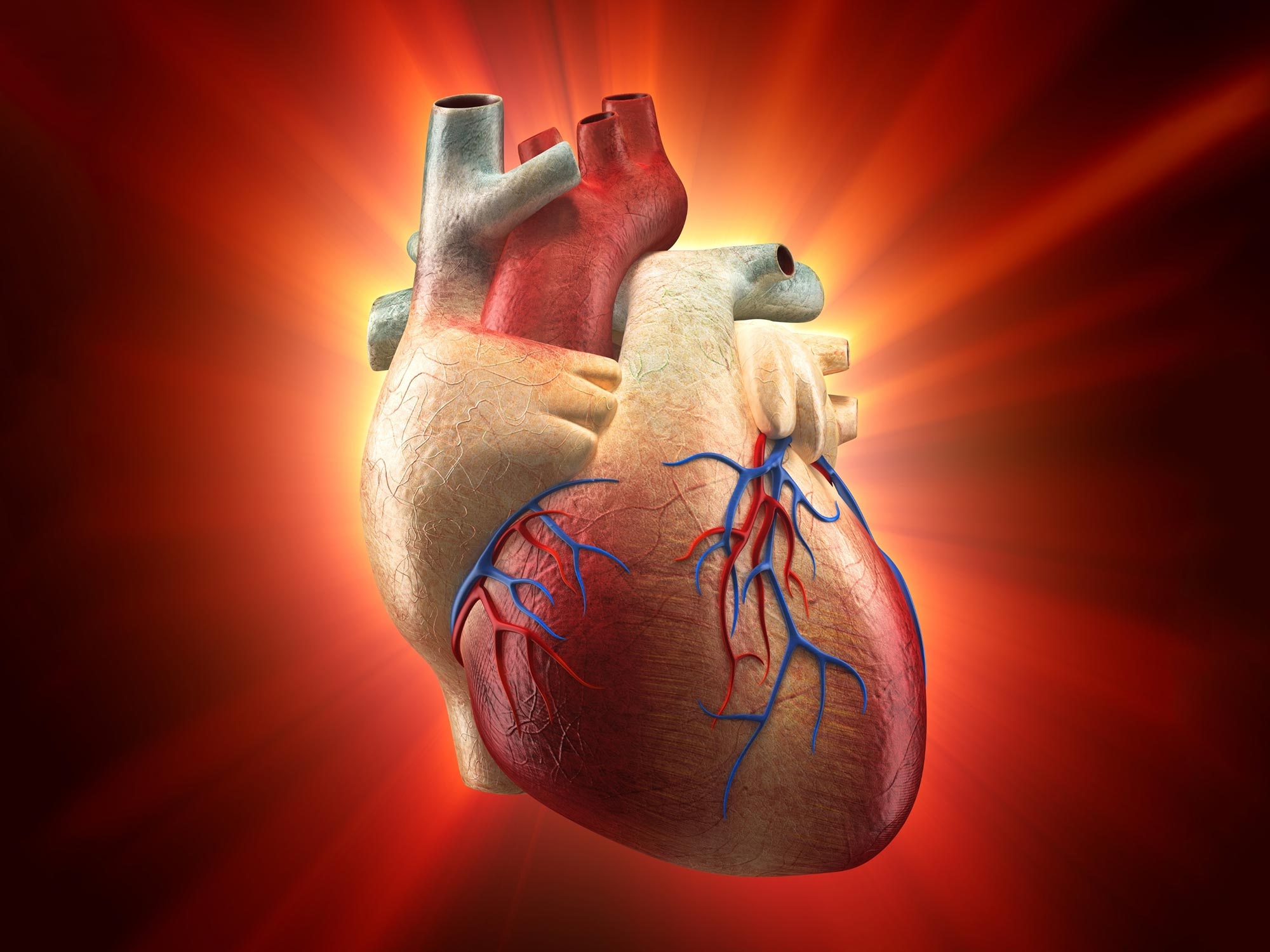
In a pioneering study at the University of Arizona, researchers discovered that some patients with artificial hearts show significant heart muscle regeneration.
This breakthrough suggests new treatment pathways for heart failure, potentially leading to cures. The study’s excitement hinges on how artificial hearts might allow the heart muscle to “rest,” similar to how a body recovers from other types of muscle injuries, promoting regeneration.
Groundbreaking Discoveries in Heart Regeneration
A groundbreaking study, co-led by a physician-scientist from the University of Arizona College of Medicine – Tucson’s Sarver Heart Center, has revealed that some artificial heart patients can regenerate heart muscle. This discovery could pave the way for innovative treatments and, potentially, a cure for heart failure. The findings were published in the medical journal Circulation.
Heart failure affects nearly 7 million adults in the U.S. and accounts for 14% of deaths annually, according to the Centers for Disease Control and Prevention (CDC). While there is no cure, medications can slow its progression. For advanced heart failure, the primary treatment options are heart transplants or the use of artificial devices, such as left ventricular assist devices (LVADs), which help the heart pump blood.
Investigating Heart Muscle Regeneration
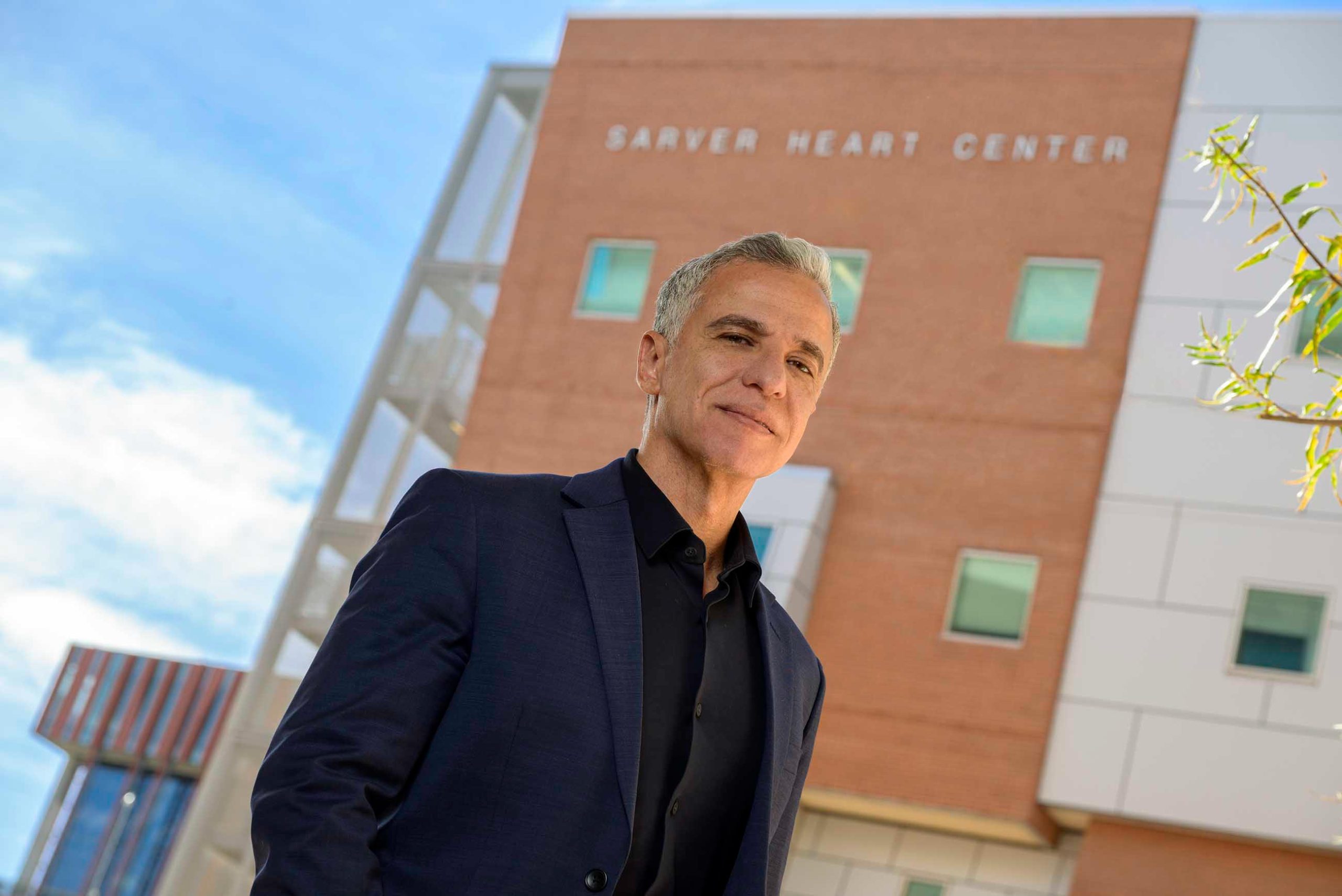
“Skeletal muscle has a significant ability to regenerate after injury. If you’re playing soccer and you tear a muscle, you need to rest it, and it heals,” said Hesham Sadek, MD, PhD, director of the Sarver Heart Center and chief of the Division of Cardiology at the U of A College of Medicine – Tucson’s Department of Medicine. “When a heart muscle is injured, it doesn’t grow back. We have nothing to reverse heart muscle loss.”
Sadek led a collaboration between international experts to investigate whether heart muscles can regenerate. The study was funded through a grant awarded to Sadek by the Leducq Foundation Transatlantic Networks of Excellence Program, which brings together American and European investigators to tackle big problems.
Advancements in Heart Muscle Cell Regeneration
The project began with tissue from artificial heart patients provided by colleagues at the University of Utah Health and School of Medicine led by Stavros Drakos, MD, PhD, a pioneer in left ventricular assist device-mediated recovery.
Jonas Frisén, MD, PhD, and Olaf Bergmann, MD, PhD, of the Karolinska Institute in Stockholm, led teams in Sweden and Germany and used their own innovative method of carbon dating human heart tissue to track whether these samples contained newly generated cells.
The investigators found that patients with artificial hearts regenerated muscle cells at more than six times the rate of healthy hearts.
“This is the strongest evidence we have, so far, that human heart muscle cells can actually regenerate, which really is exciting, because it solidifies the notion that there is an intrinsic capacity of the human heart to regenerate,” Sadek said. “It also strongly supports the hypothesis that the inability of the heart muscle to ‘rest’ is a major driver of the heart’s lost ability to regenerate shortly after birth. It may be possible to target the molecular pathways involved in cell division to enhance the heart’s ability to regenerate.”
Future Directions in Heart Failure Treatment
Finding better ways to treat heart failure is a top priority for Sadek and the Sarver Heart Center. This study builds on Sadek’s prior research into rest and heart muscle regeneration.
In 2011, Sadek published a paper in the journal Science showing that while heart muscle cells actively divide in utero, they stop dividing shortly after birth to devote their energy to pumping blood through the body nonstop, with no time for breaks.
In 2014, he published evidence of cell division in patients with artificial hearts, hinting that their heart muscle cells might have been regenerating.
These findings, combined with other research teams’ observations that a minority of artificial heart patients could have their devices removed after experiencing a reversal of symptoms, led him to wonder if the artificial heart provides cardiac muscles the equivalent of bed rest in a person recovering from a soccer injury.
“The pump pushes blood into the aorta, bypassing the heart,” he said. “The heart is essentially resting.”
Sadek’s previous studies indicated that this rest might be beneficial for the heart muscle cells, but he needed to design an experiment to determine whether patients with artificial hearts were actually regenerating muscles.
“Irrefutable evidence of heart muscle regeneration has never been shown before in humans,” he said. “This study provided direct evidence.”
Next, Sadek wants to figure out why only about 25% of patients are “responders” to artificial hearts, meaning that their cardiac muscle regenerates.
“It’s not clear why some patients respond and some don’t, but it’s very clear that the ones who respond have the ability to regenerate heart muscle,” he said. “The exciting part now is to determine how we can make everyone a responder, because if you can, you can essentially cure heart failure. The beauty of this is that a mechanical heart is not a therapy we hope to deliver to our patients in the future – these devices are tried and true, and we’ve been using them for years.”
For more on this research, see Scientists Discover Self-Healing Secrets of the Human Heart.
Reference: “A Latent Cardiomyocyte Regeneration Potential in Human Heart Disease” by Wouter Derks, Julian Rode, Sofia Collin, Fabian Rost, Paula Heinke, Anjana Hariharan, Lauren Pickel, Irina Simonova, Enikő Lázár, Evan Graham, Ramadan Jashari, Michaela Andrä, Anders Jeppsson, Mehran Salehpour, Kanar Alkass, Henrik Druid, Christos P. Kyriakopoulos, Iosif Taleb, Thirupura S. Shankar, Craig H. Selzman, Hesham Sadek, Stefan Jovinge, Lutz Brusch, Jonas Frisén, Stavros Drakos and Olaf Bergmann, 21 November 2024, Circulation.
DOI: 10.1161/CIRCULATIONAHA.123.067156
Never miss a breakthrough: Join the SciTechDaily newsletter.
Follow us on Google and Google News.
2 Comments
Cardiologist advise heart failure patients to engage in cardio exercises. Perhaps this advice is counter productive, and resting to allow the heart to regenerate may result in better outcomes.
As a heart failure patient living with an LVAD, this is promising news. My condition is congenital, and even if I happen not to fall within the 25% who respond. Knowing that advances in medicine and technology could possibly save my children from the experiences I’ve had to go through gives me hope.