

Close Menu
    Facebook X (Twitter) Instagram
    SciTechDaily
    • Biology
    • Chemistry
    • Earth
    • Health
    • Physics
    • Science
    • Space
    • Technology
    Facebook X (Twitter) Pinterest YouTube RSS
    SciTechDaily
    Home»Technology»Scientists Build a Living AI Device Using Real Brain Cells
    Technology

    Scientists Build a Living AI Device Using Real Brain Cells

    By Princeton UniversityMay 13, 2026No Comments4 Mins Read
    Facebook Twitter Pinterest Telegram LinkedIn WhatsApp Email Reddit
    Share
    Facebook Twitter LinkedIn Pinterest Telegram Email Reddit
    Artist Rendering of Princeton Fu 3D Biocomputing Network
    Artist’s rendering of a biocomputing device that combines biological neurons with advanced electronics into a network that can be programmed to recognize patterns. Credit: Kate Zvorykina/Ella Maru Studio, Inc.

    A 3D network of living neurons and electronics can recognize electrical patterns and may help researchers study both brain function and low-energy computing.

    Princeton researchers have built a 3D device that brings living brain cells and advanced electronics together in one system. The device can be programmed with computational methods to recognize patterns.

    Earlier efforts to use brain cells for computation have typically depended on flat 2D cell cultures grown in petri dishes or 3D cell clusters that are monitored and stimulated from the outside. The Princeton system is different because it is designed to interact with the cells from within the network.

    The team used advanced fabrication methods to build a 3D mesh of microscopic metal wires and electrodes, held together by a very thin epoxy coating. That coating is flexible enough to work with the soft neurons that grow around it. The researchers used the mesh as a scaffold, allowing tens of thousands of neurons to grow into a large 3D network capable of computation.

    The study was published in Nature Electronics.
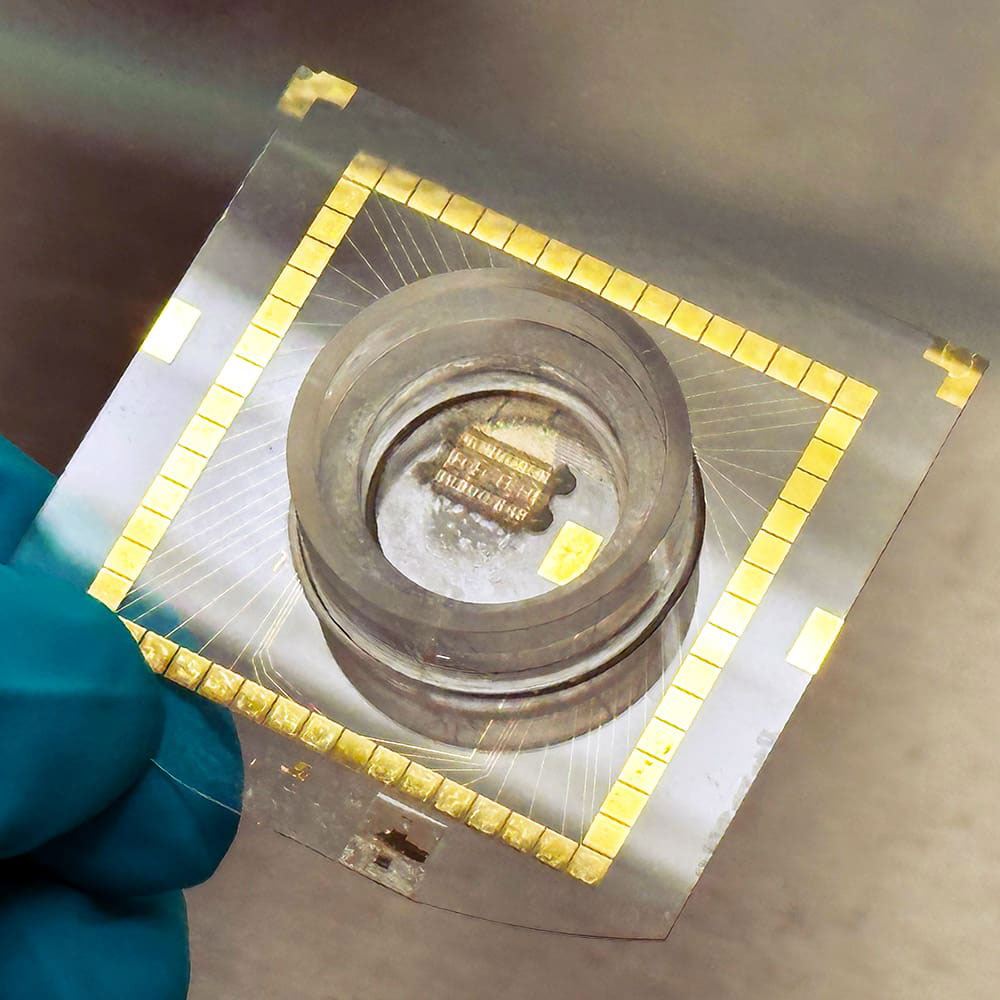
    Biological Neuron Chip With Electrodes
    The chip features around 70,000 biological neurons networked on a 3D mesh with dozens of microscopic electrodes that can sense and manipulate the brain cells’ activity. Credit: Wright Señeres

    A living network learns patterns

    The researchers said this integrated design allowed them to record and stimulate neuronal electrical activity with much finer detail than earlier systems. Over more than six months, they monitored how the network changed, tested ways to strengthen or weaken connections between important neurons, and eventually trained an algorithm to identify patterns in electrical pulses.

    In one experiment, the system was tested with pairs of different spatial patterns. In another, it was tested with different temporal patterns. In both cases, the system correctly told the patterns apart. The researchers said they aim to expand the platform so it can eventually handle more complex tasks.
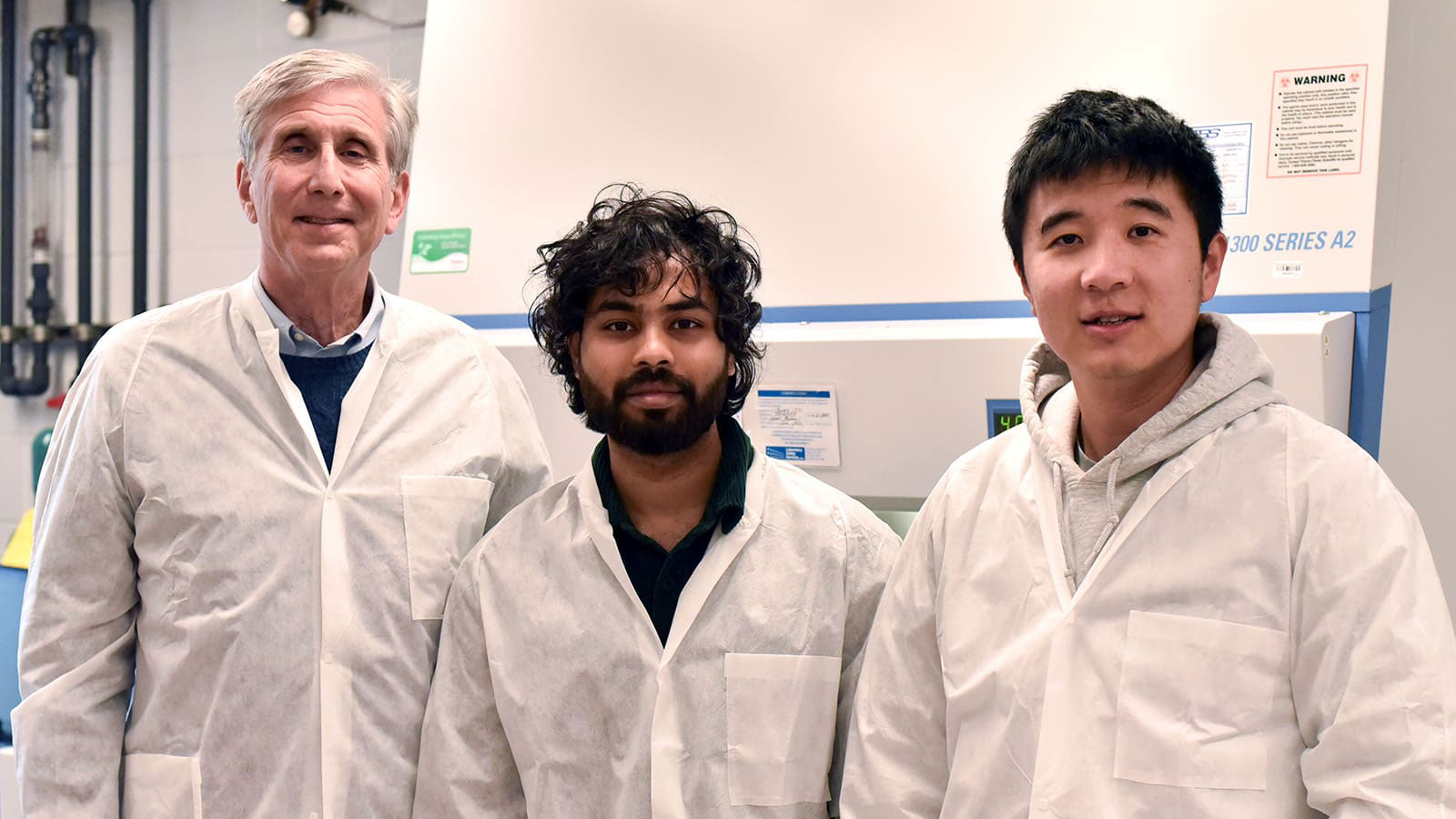
    Jim Sturm, Kumar Mritunjay, and Tian Ming Fu
    The paper’s senior authors were Jim Sturm, left, and Tian-Ming Fu, right. The paper’s first author was postdoctoral researcher Kumar Mritunjay, center, who was a graduate student when most of the work was done. Credit: Wright Señeres

    Brain biology meets AI limits

    The work was led jointly by Tian-Ming Fu, assistant professor of Electrical and Computer Engineering and Omenn-Darling Bioengineering Institute; James Sturm, Stephen R. Forrest Professor of Electrical and Computer Engineering; and Kumar Mritunjay, a postdoctoral researcher in electrical and computer engineering.

    The project was first developed to investigate basic questions in neuroscience, but the team later saw that it could also help address one of the major challenges facing modern AI: energy consumption.
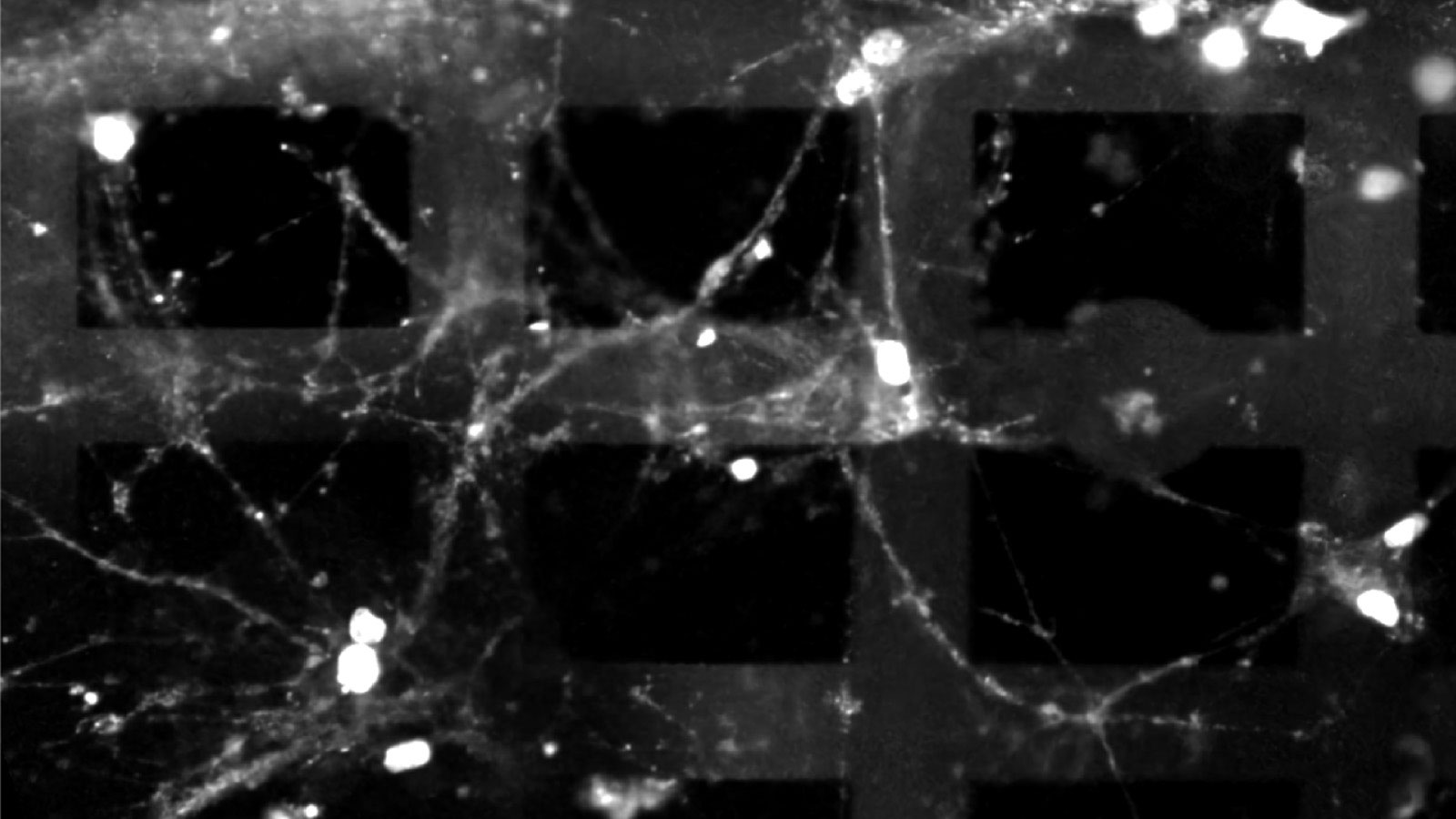
    Biological Neurons on Electronic Mesh
    Biological neurons growing over and through a layer of a 3D electronic mesh. Researchers programmed the device to recognize patterns. Credit: Courtesy of the researchers/Princeton University

    “The real bottleneck for AI in the near future is energy,” said Fu. “Our brain consumes only a tiny fraction—about one millionth—of the power consumed by today’s AI systems to perform similar tasks.”

    Mritunjay, the paper’s first author, said that systems like this, called 3D biological neural networks, “not only help uncover the computing secrets of the brain but can also assist in understanding and possibly treating neurological diseases.”

    Reference: “A three-dimensional micro-instrumented neural network device” by Kumar Mritunjay, James C. Sturm and Tian-Ming Fu, 23 April 2026, Nature Electronics.
    DOI: 10.1038/s41928-026-01608-1

    Funding from the Princeton Alliance for Collaborative Research and Innovation, Princeton Catalysis Initiative, School of Engineering and Applied Science Innovation Grants, and departmental start-up funds via the Department of Electrical and Computer Engineering and the Omenn–Darling Bioengineering Institute at Princeton University.

    Never miss a breakthrough: Join the SciTechDaily newsletter.
    Follow us on Google and Google News.

    Artificial Intelligence Biotechnology Machine Learning Neuroscience Princeton University
    Share. Facebook Twitter Pinterest LinkedIn Email Reddit

    Related Articles

    “Organoid Intelligence” – Revolutionary Biocomputers Powered by Human Brain Cells

    Limitless Possibilities – AI Technology Generates Original Proteins From Scratch

    Artificial Intelligence Tutoring Outperforms Expert Instructors in Brain Surgery Training

    Implantable AI System Developed for Early Detection and Treatment of Illnesses

    Neuromorphic Chip: Artificial Neurons Recognize Biosignals in Real Time

    Powerful Algorithms Used by Netflix, Amazon and Facebook Could “Crack the Language of Cancer and Alzheimer’s”

    Blind Spots Uncovered at the Intersection of AI and Neuroscience – Dozens of Scientific Papers Debunked

    Growing Artificial Organs With Help From Machine Learning

    Human Brain-Like Functions Emerge in Neuromorphic Metallic Nanowire Network

    Leave A Reply Cancel Reply

    • Facebook
    • Twitter
    • Pinterest
    • YouTube

    Don't Miss a Discovery

    Subscribe for the Latest in Science & Tech!

    Trending News

    Popular Sugar-Free Sweetener Linked to Liver Disease, Study Warns

    What Is Hantavirus? The Deadly Disease Raising Alarm Worldwide

    Scientists Just Discovered How the Universe Builds Monster Black Holes

    Scientists Unveil New Treatment Strategy That Could Outsmart Cancer

    A Simple Vitamin May Hold the Key to Treating Rare Genetic Diseases

    Scientists Think the Real Fountain of Youth May Be Hiding in Your Gut

    Ravens Don’t Follow Wolves, They Predict Them

    This Common Knee Surgery May Be Doing More Harm Than Good

    Follow SciTechDaily
    • Facebook
    • Twitter
    • YouTube
    • Pinterest
    • Newsletter
    • RSS
    SciTech News
    • Biology News
    • Chemistry News
    • Earth News
    • Health News
    • Physics News
    • Science News
    • Space News
    • Technology News
    Recent Posts
    • Scientists Build a Living AI Device Using Real Brain Cells
    • Why Are So Many New Fathers Dying? Scientists Say the U.S. Has a Dangerous Blind Spot
    • Scientists Identify Simple Supplement That Greatly Reduces Alzheimer’s Damage
    • You May Have a Dangerous Type of Cholesterol Even if Your Tests Look Normal
    • Study Reveals Dangerous Flaw in AI Symptom Checkers
    Copyright © 1998 - 2026 SciTechDaily. All Rights Reserved.
    • Science News
    • About
    • Contact
    • Editorial Board
    • Privacy Policy
    • Terms of Use

    Type above and press Enter to search. Press Esc to cancel.