
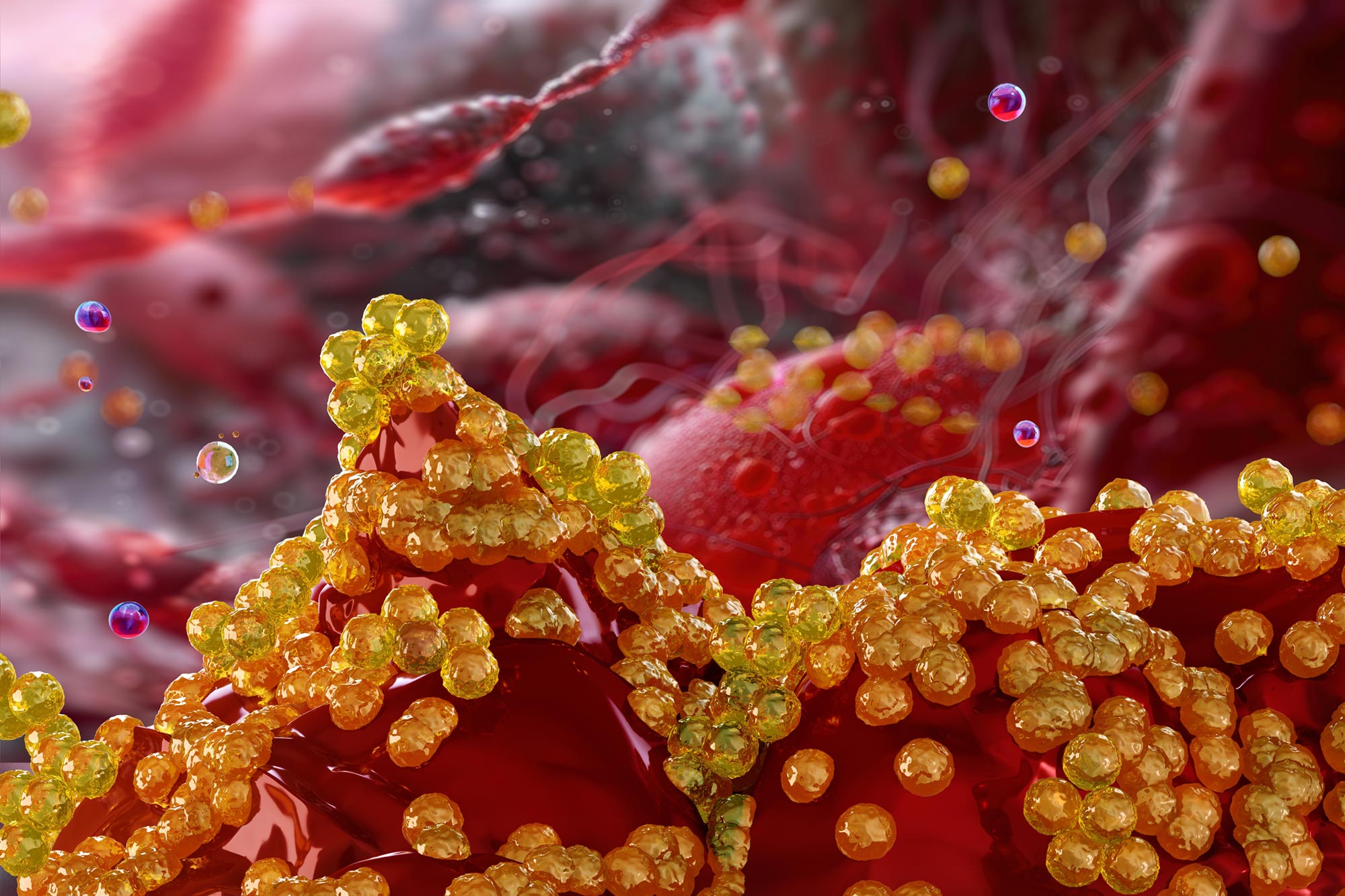
An everyday medication may hold untapped potential against one of the most difficult-to-treat bacterial threats.
Antibiotic-resistant bacteria continue to outpace modern medicine, causing more than 2.8 million infections and over 35,000 deaths each year in the United States alone. Among the most concerning is methicillin-resistant Staphylococcus aureus, or MRSA, a type of staph bacteria that has evolved to survive many commonly used antibiotics. Once largely confined to hospitals, MRSA now spreads in communities as well, causing skin infections, pneumonia, and even life-threatening bloodstream infections.
A new study published in Nature Communications suggests an unexpected new approach. Researchers found that a widely prescribed blood pressure medication may also help fight MRSA, pointing to a faster and more cost-effective path toward new treatments.
The Growing Challenge of MRSA
“MRSA commonly causes infections in both hospitals and the community. It infects people in different ways and can survive even when antibiotics are used, which makes treatment extremely difficult,” said corresponding author Eleftherios Mylonakis, M.D., Ph.D., chair, Houston Methodist Charles W. Duncan Jr. Department of Medicine.
“Scientists around the world are looking at various ways to provide treatment options outside of established antibiotics. The high cost of developing new drugs, and the time it takes to do so, led our team to explore the possibility of using existing medications, approved for other uses, to treat bacterial infections.”
Part of MRSA’s strength comes from its ability to form biofilms. These slimy, protective layers allow bacteria to cling to surfaces such as medical devices or tissue while shielding them from antibiotics and the immune system. This makes infections harder to eliminate and more likely to return.
Repurposing Existing Medications
Instead of creating a new antibiotic from scratch, the research team investigated whether existing drugs could weaken bacteria in a different way. Their focus was on the bacterial cell membrane, a structure essential for survival that controls what enters and leaves the cell.
They identified candesartan cilexetil (CC), a commonly used and inexpensive blood pressure drug, as a promising candidate. Because it is already approved and widely used, its safety profile is well understood, which could significantly shorten the timeline for clinical use in a new role.
Laboratory Findings and Potential Impact
In laboratory tests, first author Dr. Nagendran Tharmalingam and colleagues showed that the drug can combat MRSA by damaging its cell membrane and disrupting essential cellular processes.
The treatment killed MRSA cells at multiple stages of growth and also limited the formation of biofilms, which are clusters of bacteria that are especially hard to eliminate.
By impairing bacterial survival and slowing its growth, the findings suggest this existing medication could become a useful option for addressing antibiotic-resistant infections.
Reference: “Candesartan cilexetil disrupts methicillin-resistant Staphylococcus aureus membrane and potentiates gentamicin and polymyxin B activity” by Nagendran Tharmalingam, Robert Wilson Kovacs, Suelen Scarpa de Mello, Philip Rupert Baldwin, Harikrishna Sekar Jayanthan, Kulandaisamy Arulsamy, Rajmohan Rajmuthiah, Fernanda Cristina Possamai Rossatto, Katherine E. Manz, Joseph A. DeGiorgis, Orlando Acevedo, Michael S. Gilmore, Steven J. Ludtke, Kurt D. Pennell, Frederick M. Ausubel and Eleftherios Mylonakis, 15 March 2026, Nature Communications.
DOI: 10.1038/s41467-026-70173-0
Never miss a breakthrough: Join the SciTechDaily newsletter.
Follow us on Google and Google News.
9 Comments
Studies show that biofilms from Staphylococcus aureus, E. coli,pseudomonus, and Salmonella can interact with alpha – synuclein and contribute to the development of Parkinson’s Disease.
If Candesartan can treat MRSA and stop biofilm formation, and hence, neuroinflammation and neurodegeneration,, one can conclusively deduce that, it can stop the progression of and or cure Parkinson’s Disease.
Great Discovery.
Can this drug help hypotensive patients with MRSA Infections? Contraindications need to be mentioned. Besides septicemia causes low BP in septicemic shock. Not sure about hemolysis in septicemia with MRSA.Would like to learn more.
You just got me thinking, this med is an anti -hypertensive if I understood it correctly. Wouldn’t this be almost catastrophic with the occurring hypotension already occurring in a MRSA septic encounter?
My wife had it nothing worked than we used black seed oil with oragano oil drops . Knocked it out of the park in 2 weeks …
Ok kills the cells of mrsa my thoughts are what will it kill.matbe other cell in me that I need
Ditto here, buddy.
If civilization survives, the future will have tussled mightily to rid the environment of drug fragments – none of you seem to think about.
Keep up thr good work.
Has anyone used psudomonas ability to surprise fungi defenses yet ?