
Close Menu
    Facebook X (Twitter) Instagram
    SciTechDaily
    • Biology
    • Chemistry
    • Earth
    • Health
    • Physics
    • Science
    • Space
    • Technology
    Facebook X (Twitter) Pinterest YouTube RSS
    SciTechDaily
    Home»Biology»Rare Species of Animals and Plants Organize in Ghettos to Survive
    Biology

    Rare Species of Animals and Plants Organize in Ghettos to Survive

    By University of MadridDecember 21, 2019No Comments3 Mins Read
    Facebook Twitter Pinterest Telegram LinkedIn WhatsApp Email Reddit
    Share
    Facebook Twitter LinkedIn Pinterest Telegram Email Reddit
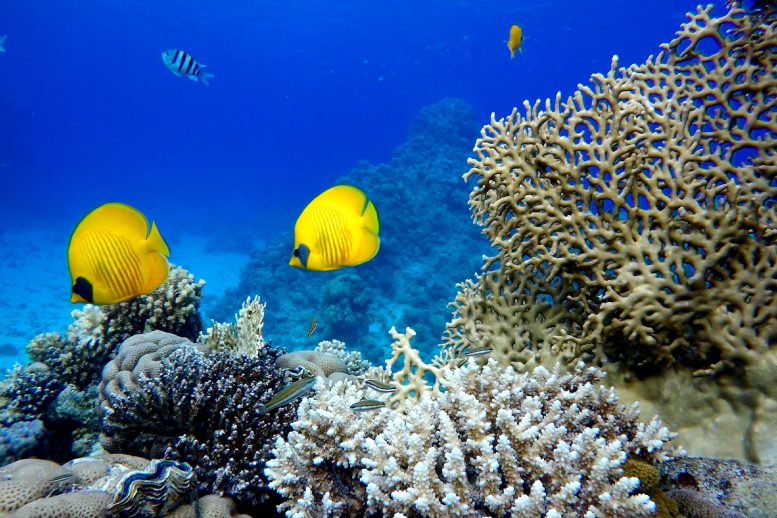
    Coral Reef Tropical Fish
    Among the ecological communities studied are corals.

    An international research team in which Spanish experts participate has shown that sparse species are associated spatially in 90% of the animal and plant communities studied.

    “Animal and plant communities are organized in a similar way to cities, ghettos, or ethnic neighborhoods,” the researchers say. “This organization could be behind the persistence of rare species since they could avoid the competitive pressure of the most abundant species, either because they cooperate with each other or because they prefer specific microhabitats or both at the same time,” they point out.

    The results of this research, published in Nature Ecology & Evolution on December 16, 2019, suggest a general explanation for the maintenance of biodiversity in competitive environments, clarifying the principle of competitive exclusion whereby species with the lowest competitive abilities should be excluded by more efficient competitors. “This pattern could explain how species that compete for the same resources are able to coexist,” biologists say.

    Spanish institutions participating in this study are the National Museum of Natural Sciences and the Doñana Biological Station (both of the CSIC), the University of Alcalá, the Complutense University of Madrid, the Rey Juan Carlos University, the Autonomous University of Madrid, the University of Castilla-La Mancha, the University of the Basque Country.

    From conservation to the study of diseases

    To carry out the study, more than three hundred worldwide ecological communities of mosses, herbs, trees, insects, arachnids, and corals, among others, have been analyzed.

    The researchers explain that they used the network theory to detect ghettos or groups, while they applied numerical simulations to study the mechanisms that gave rise to them. The results of these simulations confirm that the grouping between sparse species is necessary to explain the coexistence patterns observed all around the world.

    These findings may have profound implications for the understanding of the formation of ecological communities. Among their applications, experts highlight conservation planning or even the study of human diseases related to the intestinal microbiome, “where the coexistence of species is essential.”

    “However, the specific interactions and mechanisms that allow associations of rare species are still unknown, which should also boost a new research agenda in various fields of life sciences,” researchers acknowledge.

    Reference: “Positive associations among rare species and their persistence in ecological assemblages” by Joaquín Calatayud, Enrique Andivia, Adrián Escudero, Carlos J. Melián, Rubén Bernardo-Madrid, Markus Stoffel, Cristina Aponte, Nagore G. Medina, Rafael Molina-Venegas, Xavier Arnan, Martin Rosvall, Magnus Neuman, Jorge Ari Noriega, Fernanda Alves-Martins, Isabel Draper, Arantzazu Luzuriaga, Juan Antonio Ballesteros-Cánovas, César Morales-Molino, Pablo Ferrandis, Asier Herrero, Luciano Pataro, Leandro Juen, Alex Cea and Jaime Madrigal-González, 16 December 2019, Nature Ecology & Evolution.
    DOI: 10.1038/s41559-019-1053-5

    Never miss a breakthrough: Join the SciTechDaily newsletter.
    Follow us on Google and Google News.

    Biodiversity Coral Reefs Ecology Evolution Marine Biology University of Madrid
    Share. Facebook Twitter Pinterest LinkedIn Email Reddit

    Related Articles

    Scientists Discover Coral Reefs Are Teeming With Previously Unknown Life

    Coral Calamity: Scientists Uncover Hidden Perils of Bleaching

    Reef-Building Corals and the Microscopic Algae Within Their Cells Genetically Evolve in Tandem

    How Did 500 Species of a Fish Evolve in a Lake? Dramatically Different Body Clocks

    Innovative Genetic Analysis Unlocks Clues to the Evolution and Survival of the Great Barrier Reef

    The Great Barrier Reef Has Lost Half Its Corals – Massive Declines in Just 3 Decades

    “Treasure Trove” of New Coral Species Discovered Along the Great Barrier Reef

    New Study Links Expanding Human Population to Threats of Animal Extinction

    Jacques Cousteau Predicted Detrimental Change in Coral Reefs

    Leave A Reply Cancel Reply

    • Facebook
    • Twitter
    • Pinterest
    • YouTube

    Don't Miss a Discovery

    Subscribe for the Latest in Science & Tech!

    Trending News

    JWST Finds a “Star” 100 Billion Times Brighter Than Any Star Should Be

    Scientists Find a Hidden Biological Link Across Different Forms of Autism

    Astronomers Discover a Ghostly River of Stars That Could Reveal Dark Matter

    Why Is Colorectal Cancer Rising in People Under 50? New Clues Point to the Environment

    Quantum Fluctuations Break a Crystal’s Symmetry Rules

    Why Does an Irregular Heartbeat Strike 40 Years Early in Some People?

    Scientists Reveal How ADHD Could Fuel Creative Thinking

    Scientists Find Just 3 Minutes of Sprinting Can Transform Blood Chemistry

    Follow SciTechDaily
    • Facebook
    • Twitter
    • YouTube
    • Pinterest
    • Newsletter
    • RSS
    SciTech News
    • Biology News
    • Chemistry News
    • Earth News
    • Health News
    • Physics News
    • Science News
    • Space News
    • Technology News
    Recent Posts
    • Common Plant Chemical Linked to Widespread Organ Damage in Aquatic Animals
    • Scientists Discover a Hidden Baobab Species in Madagascar
    • Dogs and Humans May Share a Surprising Biological Secret to Longevity
    • A 150-Million-Year-Old Dinosaur Flight Mystery May Finally Have an Answer
    • Giant Crocodylians Ruled South America’s Ancient Food Chain
    Copyright © 1998 - 2026 SciTechDaily. All Rights Reserved.
    • Science News
    • About
    • Contact
    • Editorial Board
    • Privacy Policy
    • Terms of Use

    Type above and press Enter to search. Press Esc to cancel.