
Corridors Between Western U.S. National Parks Would Greatly Increase the Persistence Time of Mammals
National parks play a crucial role in conservation efforts, however, increasing evidence highlights the limitations of many parks in terms of preserving long-term, self-sustaining populations and supporting critical ecological processes like large mammal migrations and natural disturbance regimes. These parks are often too small to accomplish these goals.
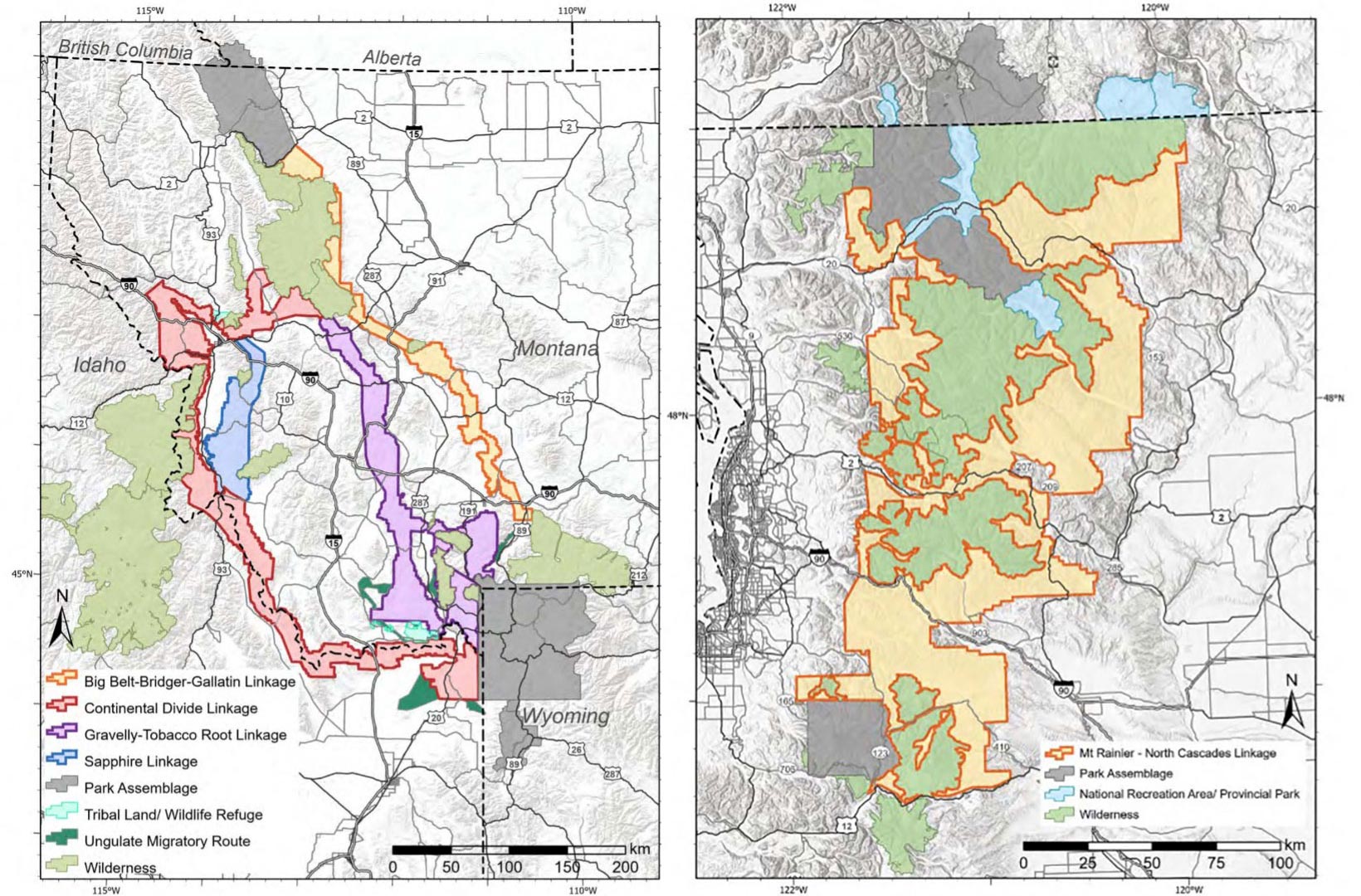
A new research study found that enhancing ecological connectivity, known as “corridors” or “linkages,” among several of the oldest and largest national parks in the Western United States would greatly extend the time that many mammal species populations can persist. The study was published on January 11, 2023, in the journal Scientific Reports. The authors analyzed the value of establishing ecological corridors for large mammals between Yellowstone and Glacier National Parks and between Mount Rainier and North Cascades National Parks. Their findings show that these corridors would not only enlarge populations, but also allow species to shift their geographic ranges more readily in response to climate change.
“Eliminating barriers of movement between parks and more carefully managing land use along these pathways are crucial for the survival of many mammal species,” said William Newmark, research curator at the Natural History Museum of Utah and lead author of the study. “Establishing an expanded protected area network based on identified mammal pathways and incorporating adjacent wilderness areas would greatly enlarge available habitat for mammal species. And this would have a very positive effect on species persistence time.”
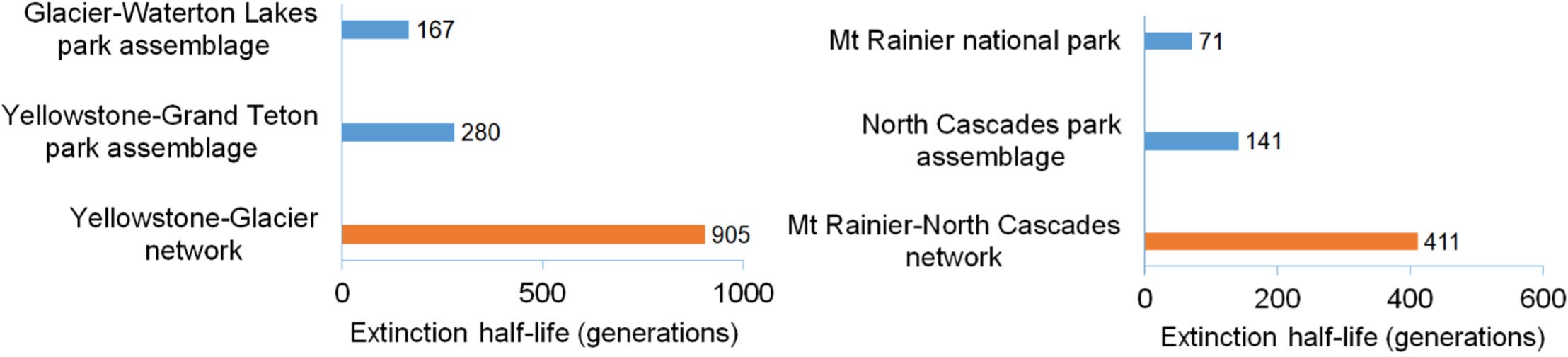
The authors found that linking Yellowstone National Park with Glacier National Park, and Mount Rainier National Park with North Cascades National Park would increase the long-term persistence time of mammal species by a factor of 4.3 relative to the persistence time of species in fragmented, individual parks.
Infrastructure for Wildlife Movement
The proposed corridor network would cross two- and four-lane highways, which would require multiple ecological bridges over and under the roadways. Fortunately, highway authorities in the Western U.S. and Canada are beginning to construct such over- and underpasses for wildlife.
“However, a much greater effort will certainly be required if we are to reduce the known adverse impacts of highways on species movement and dispersal,” said Paul Beier, professor emeritus of Northern Arizona University and co-author of the study.
It’s well supported that ecological corridors enhance population persistence of species, but most studies have been small-scale experiments. There are few assessments of the value of ecological linkages at large spatial scales. This study’s analysis drew heavily upon patterns of species loss over time in habitat fragments around the world.
“The analytical approach presented in this paper can provide conservation planners and practitioners with a powerful method of prioritizing and quantifying the value of ecological linkages between protected areas,” said John Halley, professor at the University of Ioannina and co-author of the study.
Global Vision for Connectivity
Over the past two decades, there has been worldwide efforts to establish networks of reserves interconnected by protected corridors. One of the boldest visions was first articulated a quarter century ago by co-author Michael Soulé, professor emeritus at the University of California, Santa Cruz, who passed away before this paper was completed. Soulé advocated to establish a protected area network that would extend from the top of Alaska down to the southern tip of South America at Tierra del Fuego. A more regionally-focused initiative to connect Canada’s Yukon territory to Yellowstone National Park in the northern Rocky Mountains has made considerable progress.
The study’s analysis highlights the positive effects that large-scale conservation initiatives can have on biodiversity conservation. The authors note that enhancing ecological connectivity between protected areas in Western U.S. and Canada could serve as an important template for large-scale biodiversity conservation both nationally and worldwide in the 21st century.
Reference: “Enhanced regional connectivity between western North American national parks will increase persistence of mammal species diversity” by William D. Newmark, John M. Halley, Paul Beier, Samuel A. Cushman, Phoebe B. McNeally and Michael E. Soulé, 11 January 2023, Scientific Reports.
DOI: 10.1038/s41598-022-26428-z
Other authors on the study include Phoebe B. McNeally of the University of Utah and Samuel A. Cushman of the U.S. Forest Service.
Never miss a breakthrough: Join the SciTechDaily newsletter.
Follow us on Google and Google News.