
Close Menu
    Facebook X (Twitter) Instagram
    SciTechDaily
    • Biology
    • Chemistry
    • Earth
    • Health
    • Physics
    • Science
    • Space
    • Technology
    Facebook X (Twitter) Pinterest YouTube RSS
    SciTechDaily
    Home»Science»People in Less Affluent Neighborhoods Breathe More Hazardous Particles
    Science

    People in Less Affluent Neighborhoods Breathe More Hazardous Particles

    By SciTechDailyNovember 2, 2012No Comments2 Mins Read
    Facebook Twitter Pinterest Telegram LinkedIn WhatsApp Email Reddit
    Share
    Facebook Twitter LinkedIn Pinterest Telegram Email Reddit
    smog-inner-city-disparity
    Urban smog frequently worsens health disparities between wealthy and impoverished communities.

    People living in non-white and low-income communities breathe in more hazardous particles than in affluent white ones. This new study isn’t intended to speak on the racial disparity, but on the widening economic gap when it comes to air pollution.

    The findings are by Yale University and were published in the journal Environmental Health Perspectives. These communities face greater health risks even if their air quality meets federal health standards.

    smog-los-angeles
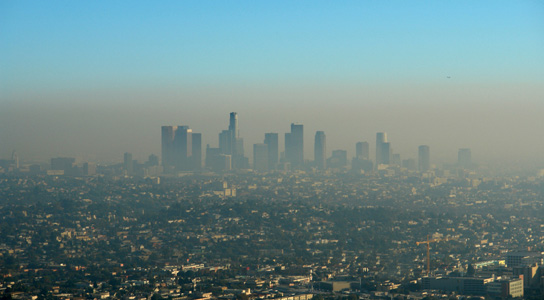
    Smog over Los Angeles

    Los Angeles, Pittsburgh, Cincinnati, St. Louis, and Fresno are among the metropolitan areas that have unhealthy levels of fine particles. More than 50 counties exceed tighter health standards for particles proposed by the EPA.

    Some of these particulates are linked to asthma, cardiovascular problems, and cancer. The particles that people breathe in are a mix of metals and chemicals. People living near refineries are exposed to more nickel and vanadium, while those living near coal-fired power plants breathe in particles with higher sulfate content. Neighborhoods near busy roads have more nitrates from vehicle exhaust.

    People with less than a high-school education, unemployed or living in poverty had more exposure to silicon and zinc. Regulatory agencies may want to assess how they can encourage emissions reductions from sources that are having localized impacts.

    Low-income and minority neighborhoods in the USA are often clustered around industrial sites, truck routes, ports, and other air pollution hotspots. Asthma rates are four times higher in some polluted areas than the national average.

    The health effects of fine particle pollution are well-documented in scientific literature. Studies have shown that on days when fine particle concentrations increase, more people will die from heart attacks and respiratory problems.

    Sulfate can trigger asthma attacks, while vanadium irritates lungs. Nitrates cause inflammation that may lead to heart attacks or strokes. More research is needed to understand which components are the most harmful and why this is so.

    Reference: “Environmental Inequality in Exposures to Airborne Particulate Matter Components in the United States” by Michelle L. Bell and Keita Ebisu, 1 December 2012, Environmental Health Perspectives.
    DOI: 10.1289/ehp.1205201

    Never miss a breakthrough: Join the SciTechDaily newsletter.
    Follow us on Google and Google News.

    Cancer Disease Particulates Pollution
    Share. Facebook Twitter Pinterest LinkedIn Email Reddit

    Related Articles

    Airborne Poison: Johns Hopkins Detects Toxic Gas Swamping Louisiana

    Groundbreaking Study Reveals That Plants Can Remove Cancer-Causing Toxins From Air

    Nanoparticles Shut Down Cancer Growth

    Human Caused Air Pollution Results in Over Two Million Deaths Annually

    Researchers Identify Mutations Responsible for USC Tumors

    Exposomics Looks to Tie Environmental Exposure to Biological Triggers of Disease

    Communities in California Are Plagued by Contaminated Drinking Water

    The Health Challenges of the Growing Class of Megacities

    Newly Discovered Connection Between Climate Change & Ozone Layer Could Impact Health

    Leave A Reply Cancel Reply

    • Facebook
    • Twitter
    • Pinterest
    • YouTube

    Don't Miss a Discovery

    Subscribe for the Latest in Science & Tech!

    Trending News

    This Deadly Disease Was Wiping Out Humans 5,500 Years Ago

    Beyond DNA: Scientists Discover Inheritance That Breaks the Rules of Genetics

    Scientists Just Discovered the Eye Defies a Long-Held Rule of Vision

    What if Time Isn’t Fundamental? Physicists Just Tested the Idea in the Lab

    Scientists Say We’ve Been Wrong About the Aging Brain

    68 Quadrillion Miles: Scientists Map Earth’s Vast Hidden Fungal Network for the First Time

    Hidden Damage From Youth May Explode Into Disease Later in Life

    Climate Models May Be Wrong About How Trees Store Carbon

    Follow SciTechDaily
    • Facebook
    • Twitter
    • YouTube
    • Pinterest
    • Newsletter
    • RSS
    SciTech News
    • Biology News
    • Chemistry News
    • Earth News
    • Health News
    • Physics News
    • Science News
    • Space News
    • Technology News
    Recent Posts
    • Antarctica’s Future May Be More Predictable Than Scientists Thought
    • Sea Level Rise Is Swallowing Farmland at Alarming Rates
    • Scientists Have Found “The Heaven Sword” After Years of Looking
    • The Hottest Known Exoplanets May Hold Clues to Planetary Habitability
    • Astronomers Discover a Sleeping Giant: Ancient Black Hole 6 Billion Times the Sun’s Mass
    Copyright © 1998 - 2026 SciTechDaily. All Rights Reserved.
    • Science News
    • About
    • Contact
    • Editorial Board
    • Privacy Policy
    • Terms of Use

    Type above and press Enter to search. Press Esc to cancel.