
Close Menu
    Facebook X (Twitter) Instagram
    SciTechDaily
    • Biology
    • Chemistry
    • Earth
    • Health
    • Physics
    • Science
    • Space
    • Technology
    Facebook X (Twitter) Pinterest YouTube RSS
    SciTechDaily
    Home»Science»Nest of Juvenile Protoceratops Andrewsi Dinosaurs Discovered
    Science

    Nest of Juvenile Protoceratops Andrewsi Dinosaurs Discovered

    By SciTechDailyNovember 22, 2011No Comments2 Mins Read
    Facebook Twitter Pinterest Telegram LinkedIn WhatsApp Email Reddit
    Share
    Facebook Twitter LinkedIn Pinterest Telegram Email Reddit
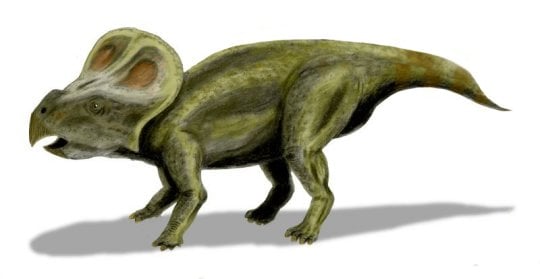
    Protoceratops andrewsi dinosaurs

    Protoceratops andrewsi was a four-legged, 6-foot-long (1.8-meter-long) herbivorous dinosaur, with a beak-like mouth and a bony frill around the back of its neck, making it look like a small Triceratops without the three horns. (It does have hard ridges where the horns would be.) It has been described as about the size of a large sheep. Now for the first time ever, scientists have discovered a nest containing the fossilized remains of 15 young Protoceratops andrewsi dinosaurs in Mongolia.

    This incredible find is already revealing valuable clues about this genus, like the fact that these young Protoceratops remained in the nest for a longer period of time than first thought. This 70-million-year-old nest is in remarkable condition, with at least 10 of the 15 dinosaurs remaining complete and intact.
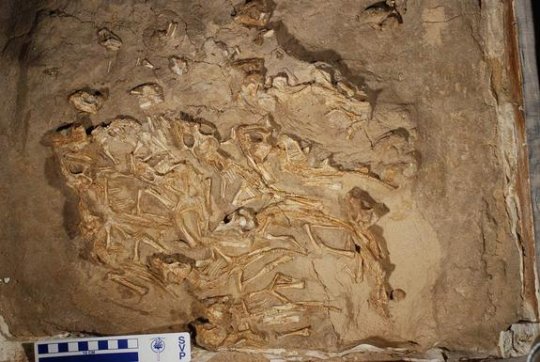
    Protoceratops andrewsi
    A nest containing the fossilized remains of 15 juvenile Protoceratops andrewsi dinosaurs. Credit: University of Rhode Island

    All are about the same size and at the same stage of development, so it looks like they are all from the same mother at the same time of birth. This find gives the first evidence that the young dinosaurs stayed in the nest through the early stages of life while being cared for. They did not just fend for themselves from the outset. It appears that at the time of death these youngsters were less than a year old. As it turns out, there is a good reason for this extended nest time.

    According to David Fastovsky, University of Rhode Island (URI) professor of geosciences, Protoceratops andrewsi lived in a climate resembling the Sahara Desert, and the reason that they spoiled their large number of youngsters with extra care may be because the mortality rate was high and this helped ensure the survival of some.

    Never miss a breakthrough: Join the SciTechDaily newsletter.
    Follow us on Google and Google News.

    Dinosaurs Fossils
    Share. Facebook Twitter Pinterest LinkedIn Email Reddit

    Related Articles

    Scientists Reveal a New Species of Dinosaur

    World’s Oldest Dinosaur Bonebed Reveals How Dinosaur Embryos Grew and Developed

    Stubby-Tailed Oviraptors Had Tails for Courtship Displays

    Xenoceratops, A New Species of Horned Dinosaur Discovered in Canada

    How Tyrannosaurus Rex Ate Triceratops Horridus

    Fossils Reveal Headbutts May Have Been Used as a Dinosaur Courtship Behavior

    Cretaceous Period Sankofa Pyrenaica Fossilized Eggs Are Unusually Shaped

    Microraptor Feathers Were Black With Iridescent Sheen

    Jurassic Period Super-Sized Fleas Had Armored Mouthparts to Attack the Thick Hide of Dinosaurs

    Leave A Reply Cancel Reply

    • Facebook
    • Twitter
    • Pinterest
    • YouTube

    Don't Miss a Discovery

    Subscribe for the Latest in Science & Tech!

    Trending News

    Scientists Say Love Follows Mathematical Patterns

    “Zombie Cells” Reveal a Hidden Weakness That Could Help Fight Aging

    Alien Signals May Be Hiding in a Radio Band SETI Has Barely Explored

    Earth’s Hidden Thermostat Has Regulated Climate for 60 Million Years

    This 518-Million-Year-Old Creature Reveals How Spiders Got Their Bite

    Scientists Built a Programmable Chip That Can Slow Light on Command

    The Backyard “Silly Sprinkler” That Cracked One of Physics’ Biggest Puzzles

    This Common Sleep Habit Could Be Making You Gain Weight

    Follow SciTechDaily
    • Facebook
    • Twitter
    • YouTube
    • Pinterest
    • Newsletter
    • RSS
    SciTech News
    • Biology News
    • Chemistry News
    • Earth News
    • Health News
    • Physics News
    • Science News
    • Space News
    • Technology News
    Recent Posts
    • Screen Time at Ages 1 and 6 Linked to Lasting Learning and Memory Effects
    • Brain Scans Reveal Which Disorders May Accelerate Brain Aging
    • Viagra May Block a Hidden Pathway Cancer Cells Need To Spread
    • Underwater Drones Find “Dead” Coral Reefs Teeming With Life
    • How Brown Tree Snakes Became an Unstoppable Invasive Species
    Copyright © 1998 - 2026 SciTechDaily. All Rights Reserved.
    • Science News
    • About
    • Contact
    • Editorial Board
    • Privacy Policy
    • Terms of Use

    Type above and press Enter to search. Press Esc to cancel.