
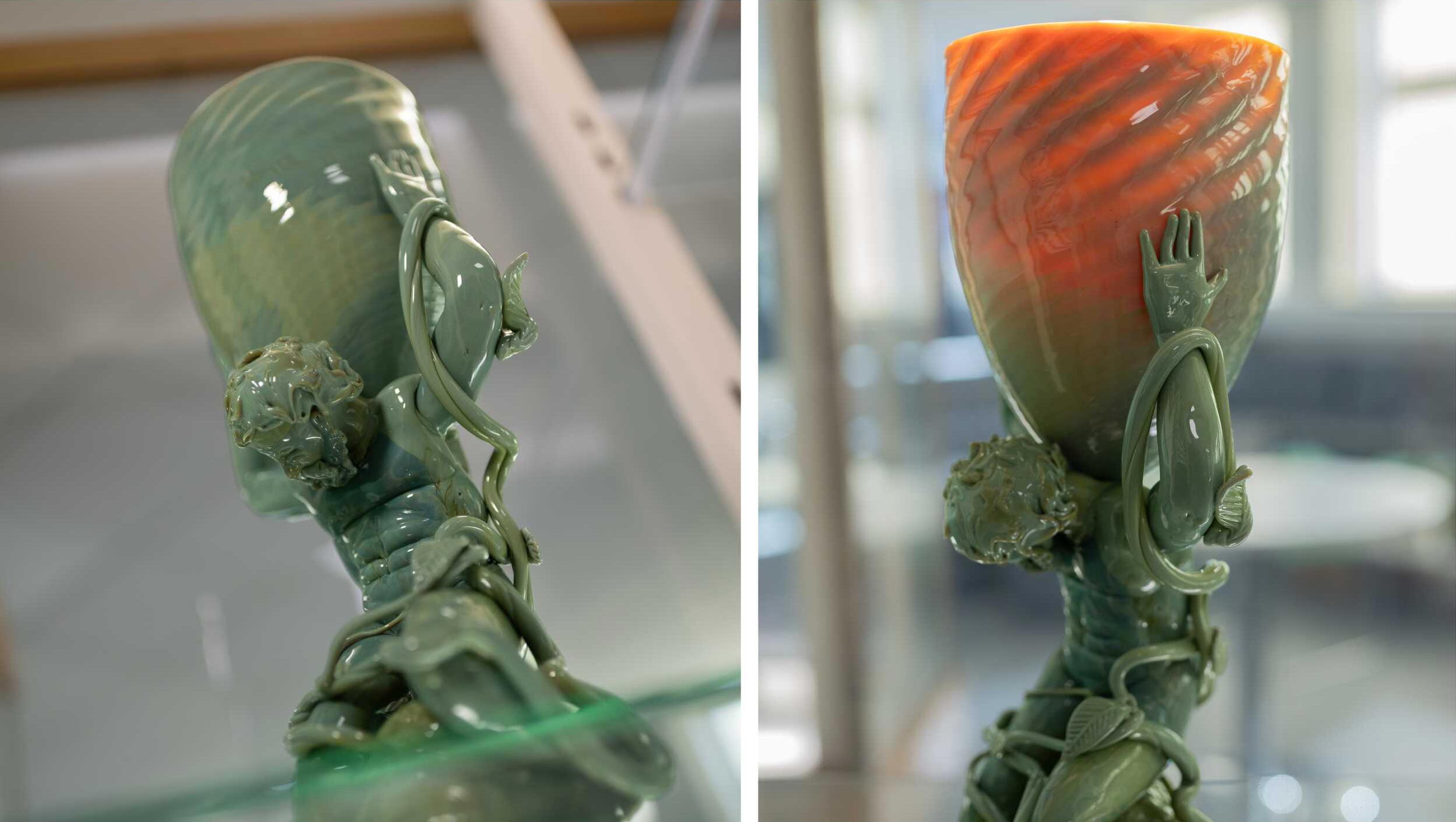
More than 1,600 years after the Romans created the famous Lycurgus Cup, a University of Sheffield technician has found a way to reliably reproduce its extraordinary color-changing glass.
A glass cup made more than 1,600 years ago has puzzled historians and glassmakers for centuries.
When light reflects off its surface, the cup appears jade green. When light shines through it, the glass turns a striking ruby red. Despite knowing much about the science behind this unusual effect, modern glassmakers have struggled to reproduce it consistently. Now, researchers at the University of Sheffield have developed a recipe that recreates the remarkable color-changing properties of this ancient Roman masterpiece.
The Lycurgus Cup, created in the fourth century AD and housed in the British Museum, is made from a special type of glass known as dichroic glass. Its appearance changes depending on whether light reflects from the surface or passes through the material. The cup is one of only 40 surviving Roman glass cage cups and among the most complete. It is also the only surviving example known to display this extraordinary color-changing effect.
Its craftsmanship is just as remarkable as its colors. The decoration depicts Lycurgus, a mythical Thracian king, entangled in vines as punishment for his misdeeds. In 2022, an international panel of artists and conservators recognized the cup as one of the seven glass wonders of the world, honoring its artistry, unusual colors, and exceptional preservation.
Gold and silver behind the color shift
Scientists believe the secret lies in tiny amounts of gold and silver added to the glass by Roman craftspeople. Under the right conditions, these metals can form layered nanoparticles thousands of times smaller than a grain of sand. Because the particles are smaller than the wavelengths of visible light, they absorb light strongly and produce vibrant colors that depend on their size and shape.
Understanding this process, however, is different from knowing exactly how to recreate it. The precise techniques used by Roman glassmakers remain unknown, and previous attempts to reproduce the effect have met with varying degrees of success.
Modern experiments recreate Roman colors
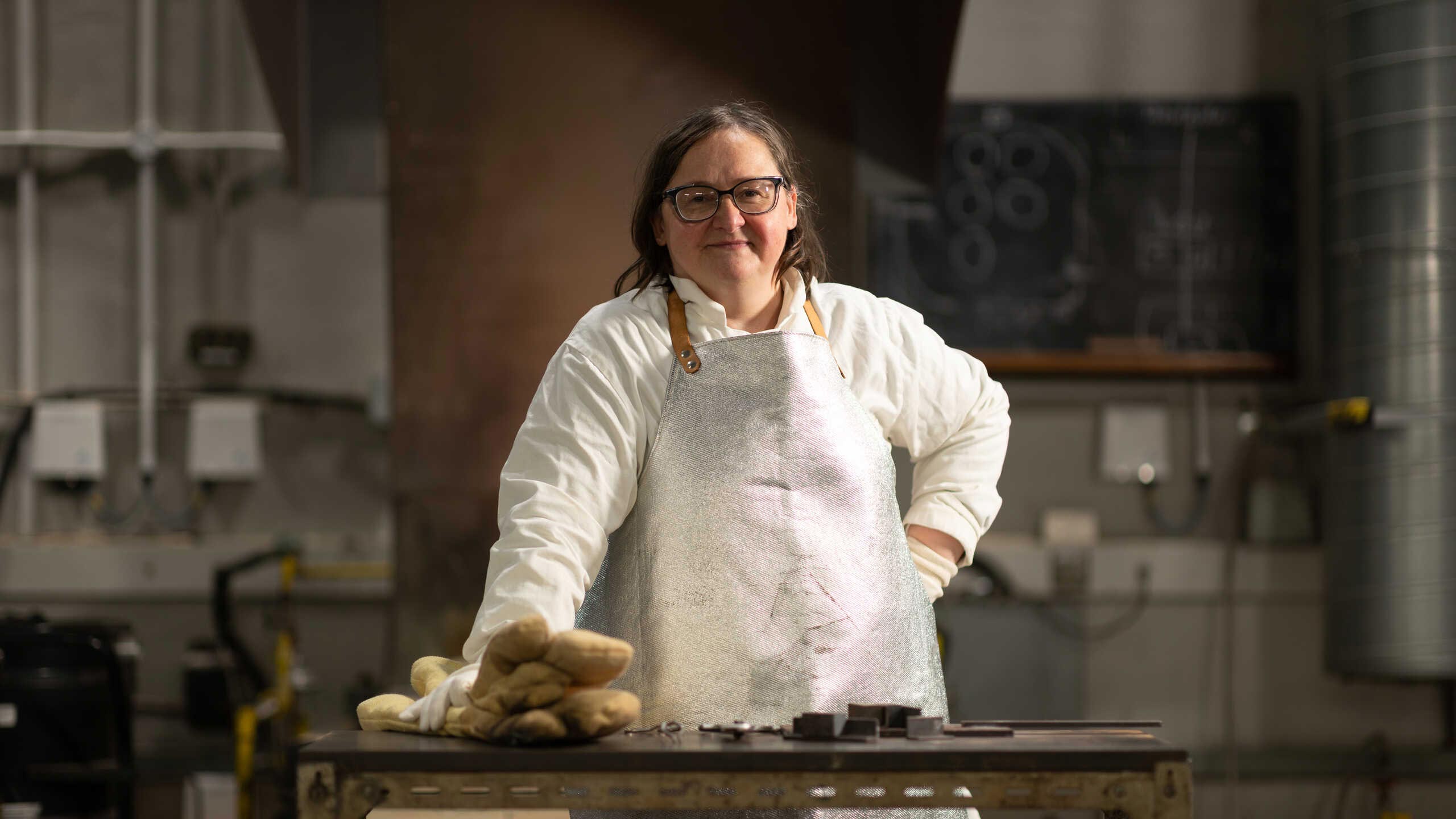
The challenge took on new life when Christina Metcalfe, project manager for the Molecular Photonic Breadboards project, asked University of Sheffield technician Dr. Lisa Hollands to recreate the glass for the university’s LightFest in 2025.
“I knew that making a glass of this type was likely to be a complex task, as it is not just a case of adding nanoparticles to glass,” said Dr. Hollands, from the University’s School of Chemical, Materials and Biological Engineering.
“I’ve studied and worked with glass for over 25 years, so I used the knowledge and experience I’ve gained, coupled with a modern scientific understanding of what I was trying to achieve.
“To start with, I worked with a leading Roman glass expert, Professor Caroline Jackson, to research what was already known about glass of the time and developed a base glass using modern materials to mimic what the Romans might have used. Then came the more difficult part of trying to get small amounts of gold and silver into the glass in the right form.
“Although if the Romans could have seen me experimenting, they’d probably laugh and ask: ‘Why does she not know how to make this?’”
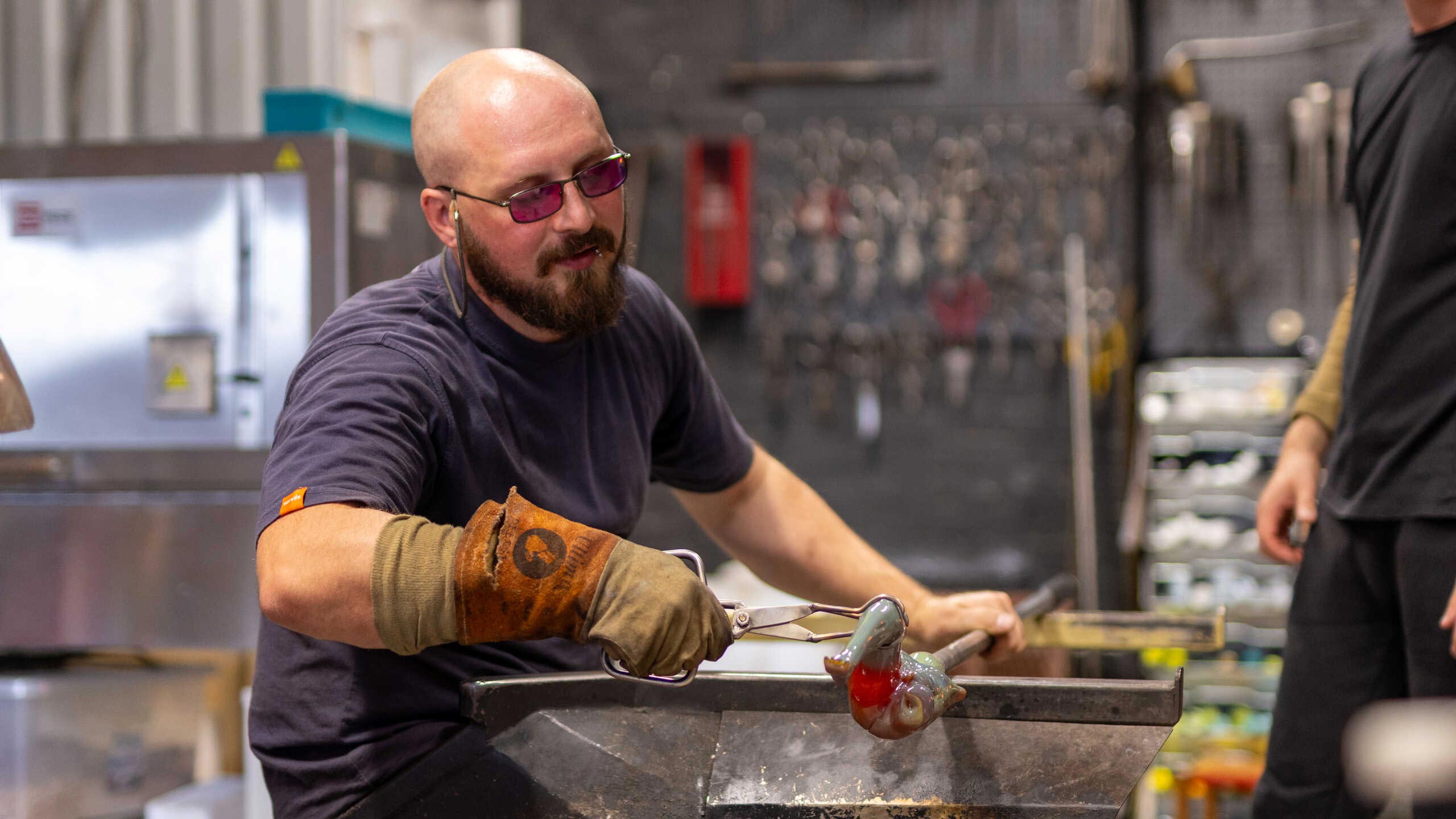
Hollands experimented with different types of furnaces, starting materials, and oxygen levels, even testing the addition of sugar. After numerous attempts, she developed a glass that appeared opaque green under reflected light but turned red when illuminated from behind. The successful sample demonstrated that the distinctive optical effect of the ancient cup could be recreated using modern materials and experimental techniques, although it did not establish the exact recipe used by the Romans.
The first piece was exhibited at LightFest, an event held in Sheffield by the Molecular Photonic Breadboards project in partnership with the Universities of Sheffield and Bristol. Funded by the Engineering and Physical Sciences Research Council (EPSRC), the project focuses on developing materials that harness light for sustainable technologies. These materials could support fields important to the United Kingdom’s economy, including solar energy, quantum technologies, and healthcare diagnostics.
Roman glass inspires a modern sculpture
With the glass recipe established, the team wanted to create something that would showcase its unusual properties while paying tribute to the original Roman artifact.
“The next step was to commission a piece worthy of paying homage to its illustrious predecessor.
“We approached Elliot Walker, one of the UK’s finest glass artists and winner of season two of Netflix’s Blown Away, who accepted the challenge and was commissioned to create a contemporary sculpture using Dr Hollands’ recipe,” said Metcalfe.
For Walker, working with a material inspired by ancient glassmaking offered a rare connection to the craftspeople who had mastered similar techniques centuries earlier.
“It is a very rare thing to have the opportunity to work with glass developed from ancient mixtures and recipes, and it is always a very exciting one.
“You can really get an idea of how the glass makers of the past would have adapted to this sort of glass; it’s like shaking their hands.”
Walker drew inspiration from both the story depicted on the Lycurgus Cup and the classical Farnese Atlas sculpture. His design also needed to make the unusual optical effect visible to viewers, which influenced the final form of the artwork.
“I wanted to keep the sculpture quite classical in form and to carry through the original story of Lycurgus shown on the cup, but we needed a blown element within this to really show the dichroic glass,” Walker explained.
“The piece is a blend of the Lycurgus story and the Farnese Atlas sculpture, with the globe replaced by a cup.”
The completed sculpture is scheduled to be unveiled at the Millennium Gallery during the University of Sheffield’s Festival of the Mind, running from November 6 to 15, 2026. After the festival, it will become a permanent exhibit at the Turner Museum of Glass, located within the university’s School of Chemical, Materials and Biological Engineering.
“We set out to create something tangible to help the public understand what is possible when these tiny nanoparticles are embedded in something,” Metcalfe said.
“What Lisa and Elliot have managed to achieve has surpassed all our expectations. The incredible historic narrative really captures people’s imaginations, and I like to think we’ve created something that people will marvel at for years to come.”
Glassmaking insights for nuclear waste storage
Although this particular glass is expected to have mainly decorative uses, the knowledge gained from recreating it could contribute to the development of new photonic materials and advanced glasses for managing radioactive waste.
The project also connects with ongoing research led by Professor Russell Hand at the university’s Immobilisation Science Laboratory (ISL), within the School of Chemical, Materials and Biological Engineering. His work focuses on immobilizing complex nuclear wastes in glass, a process intended to keep hazardous materials safely contained.
Never miss a breakthrough: Join the SciTechDaily newsletter.
Follow us on Google and Google News.