

Close Menu
    Facebook X (Twitter) Instagram
    SciTechDaily
    • Biology
    • Chemistry
    • Earth
    • Health
    • Physics
    • Science
    • Space
    • Technology
    Facebook X (Twitter) Pinterest YouTube RSS
    SciTechDaily
    Home»Science»New Study: Corruption in Sweden May Be More Common Than Thought
    Science

    New Study: Corruption in Sweden May Be More Common Than Thought

    By Linkoping UniversityApril 13, 2023No Comments4 Mins Read
    Facebook Twitter Pinterest Telegram LinkedIn WhatsApp Email Reddit
    Share
    Facebook Twitter LinkedIn Pinterest Telegram Email Reddit
    Corruption Bribery
    A doctoral thesis at Linköping University reveals that nepotism may be an underestimated issue in Sweden, with individuals having a 2-4% increased chance of obtaining jobs or housing if their relatives hold important public positions. The researcher suggests that transparency, awareness training, and improved procedures could mitigate corruption risks and maintain citizens’ confidence in public agencies.

    Nepotism in Mature Democracies: A Hidden Threat

    A doctoral thesis conducted at Linköping University on corruption in a mature democracy highlights the risk of individuals gaining an advantage by having their relatives in significant positions within the public sector. The research reveals that nepotism could be a more significant issue in Sweden than previously thought and warrants increased attention.

    Sweden is often regarded as a nation with a low level of corruption, which is true when looking at, for instance, its relatively low number of convictions for bribery.

    However, critics claim that the extent of corruption may still be underestimated, as rankings may miss forms of corruption that are harder to detect and have a less obvious impact on people’s daily lives. One example of this is when politicians or public officials make decisions that unlawfully benefit their friends or relatives, i.e., what is known as nepotism or friendship corruption.

    Analyzing Nepotism through Large-Scale Data

    To investigate this, Emanuel Wittberg, in his doctoral thesis, has analyzed records data for the entire Swedish population, relating to for instance workplace, educational level, and family relationships.

    The results show that individuals whose parents or siblings work for public agencies or public landlords have a greater chance of getting a job or a flat. There are also indications that local businesses may be favored in public procurements.
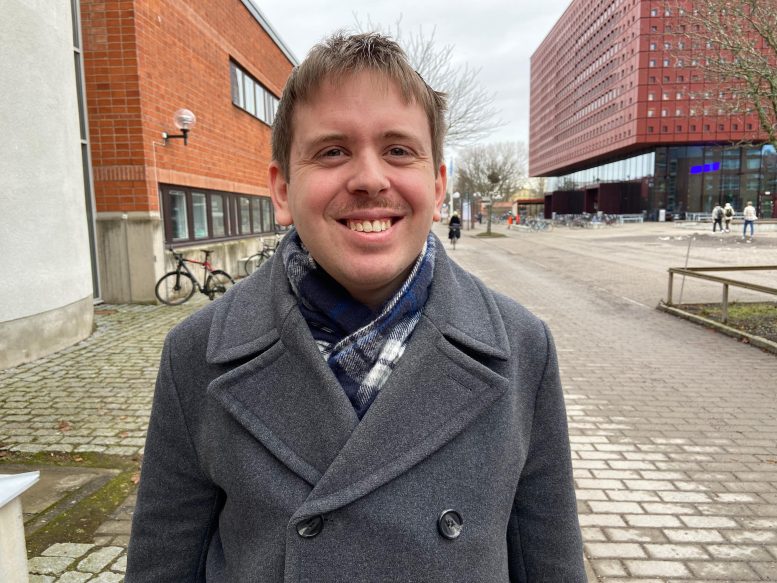
    Emanuel Wittberg
    Emanuel Wittberg, doctoral student at the Institute for Analytical Sociology and the Centre for Local Government Studies at Linköping University, Sweden. Credit: Jonas Roslund

    “Both when it comes to housing owned by any given municipal landlord and jobs in any given municipality or government agency, we’re talking about a 2 to 4 percent increased chance,” says Emanuel Wittberg, a doctoral student at the Institute for Analytical Sociology and the Centre for Local Government Studies at Linköping University.

    According to Emanuel Wittberg, this difference is statistically significant.

    There may of course be many explanations for this other than nepotism. Individuals may differ in backgrounds, drives, preferences, and knowledge about how society functions, and this may affect the results. To weed out such factors, Emanuel Wittberg has compared individuals who are similar but some of whom have contacts and others do not.

    In spite of this, it is not possible to eliminate uncertainty, as the records data do not contain all information. He, therefore, points out that the results show where there may be a risk of nepotism, although it is not possible to determine that nepotism is involved in each individual case.

    “My thesis indicates that this is a problem that is relevant to study and keep your eyes on, also in a mature democracy like Sweden.”

    Transparency and Awareness Training

    There is a risk that corruption may erode citizens’ confidence in public agencies. In Emanuel Wittberg’s opinion, this can be avoided by ensuring transparency, so that decisions can be reviewed. There may also be a need for more awareness training and better procedures, such as anonymizing job applications to a greater extent.

    Emanuel Wittberg says that what is special about his thesis is not only that it investigates corruption in a mature democracy but also the method used: analysis of large-scale data. His investigation includes many individuals, organizations, and businesses, analyzed over a long period of time. According to him, the results are a first step towards getting an idea of the risk of large-scale nepotism.

    Reference: “Corruption risks in a mature democracy: Mechanisms of social advantage and danger zones for corruption” by Emanuel Wittberg, 13 February 2023, Linköping University Electronic Press.
    DOI: 10.3384/9789180750073

    Never miss a breakthrough: Join the SciTechDaily newsletter.
    Follow us on Google and Google News.

    Linkoping University Politics
    Share. Facebook Twitter Pinterest LinkedIn Email Reddit

    Related Articles

    The Dark Side of Keeping Up With Politics: A Toll on Our Mental Health

    Can the US Supply Enough Natural Gas To Neutralize Russia’s Energy Leverage Over Europe?

    What Are False Flag Operations – And Did Russia Stage Any To “Justify” Invading Ukraine?

    Russia Masses Military Equipment Near Ukraine Borders: A Prologue to WWIII?

    The Great Reset: Support for Populist Politics “Collapsed” Globally During the COVID Pandemic

    Community, Faith and Public Violence: Mass Shootings Occur Less Frequently in Towns With More Religious Congregations

    MIT Economist’s New Research: The Long Afterlife of the “China Shock”

    The US Biofuel Mandate Helps Farmers, but Harms the Environment

    New Materials for a Sustainable Future

    Leave A Reply Cancel Reply

    • Facebook
    • Twitter
    • Pinterest
    • YouTube

    Don't Miss a Discovery

    Subscribe for the Latest in Science & Tech!

    Trending News

    JWST Finds a “Star” 100 Billion Times Brighter Than Any Star Should Be

    Scientists Find a Hidden Biological Link Across Different Forms of Autism

    Astronomers Discover a Ghostly River of Stars That Could Reveal Dark Matter

    Why Is Colorectal Cancer Rising in People Under 50? New Clues Point to the Environment

    Quantum Fluctuations Break a Crystal’s Symmetry Rules

    Why Does an Irregular Heartbeat Strike 40 Years Early in Some People?

    Scientists Reveal How ADHD Could Fuel Creative Thinking

    Scientists Find Just 3 Minutes of Sprinting Can Transform Blood Chemistry

    Follow SciTechDaily
    • Facebook
    • Twitter
    • YouTube
    • Pinterest
    • Newsletter
    • RSS
    SciTech News
    • Biology News
    • Chemistry News
    • Earth News
    • Health News
    • Physics News
    • Science News
    • Space News
    • Technology News
    Recent Posts
    • Scientists Turn Red Strawberries White With a Single Gene Edit
    • NASA’s Artemis II Crew Flew Farther Than Any Humans Ever. Now They’re Being Honored
    • The Sun’s Corona Usually Looks White. In Spain, It Turned Gold
    • A SpaceX Falcon 9 Rocket Hit the Moon and Blasted Open a 60-Foot Crater
    • Does Vitamin C Really Prevent Colds? The Answer May Surprise You
    Copyright © 1998 - 2026 SciTechDaily. All Rights Reserved.
    • Science News
    • About
    • Contact
    • Editorial Board
    • Privacy Policy
    • Terms of Use

    Type above and press Enter to search. Press Esc to cancel.