
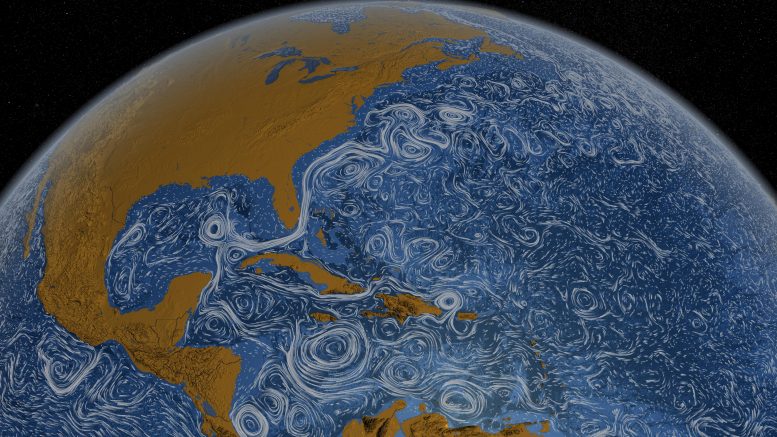
The mission is gathering observations with airborne sensors, a research ship, and autonomous instruments like gliders that skim the upper layers of the Pacific Ocean.
NASA’s S-MODE mission is conducting its third expedition to study the role of ocean surface eddies in climate change. By using diverse instruments, scientists aim to understand these eddies’ impact on heat, greenhouse gas dynamics, and nutrient distribution. They are also analyzing ocean color to identify phytoplankton presence, furthering understanding of the ocean’s role in the carbon cycle.
NASA has taken to the seas and skies to study the unique environment at the ocean’s surface, where marine ecosystems intersect with our planet’s complex atmosphere. On April 7, scientists participating in the Sub-Mesoscale Ocean Dynamics Experiment (S-MODE) embarked on the RV Sally Ride from San Diego on the last of three field expeditions to understand the ocean’s role in the Earth’s changing climate. They will be at sea for about a month until returning to San Diego on May 4, and they will operate for most of that period in tandem with an accompanying airborne campaign.
“There are small swirls on the ocean surface – eddies – that are challenging to see by satellites and models,” said S-MODE scientist Kelly Luis, who is working aboard the RV Sally Ride. “During campaigns like S-MODE, we get to be up close to them to understand their broader impact on the climate and oceans.”
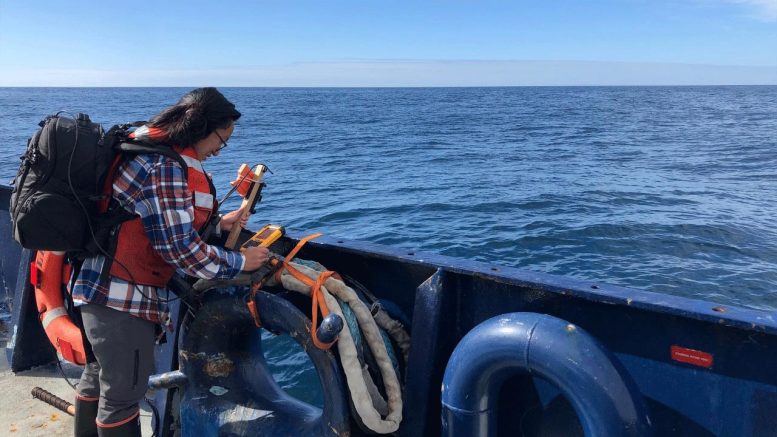
The S-MODE mission, managed out of NASA’s Ames Research Center in California’s Silicon Valley, is gathering observations with airborne instruments, a research ship, and autonomous instruments like gliders that skim the upper layers of the Pacific Ocean. Data gathered from these different perspectives are being blended to form an unprecedented view of the whirlpools and eddies that affect the way the ocean absorbs and emits heat, greenhouse gases, and nutrients.
Better understanding of ocean dynamics that are driven by those eddies at kilometer scales can tell researchers a lot about the ocean’s role in global climate change. Models suggest that those eddies could have a net effect on air-sea exchange that is larger than the heating from the greenhouse effect. S-MODE is among the first NASA missions to test this conclusion with observations. Building on the previous S-MODE campaigns in October 2021 and 2022, scientists hope these three years of observations can help better characterize this significant energy transfer.
Luis and colleagues are using ship-based instruments that measure ocean color to understand the creatures living near the surface. When sunlight hits the ocean, different wavelengths are scattered or absorbed. Part of that light transformation is due to the presence of phytoplankton – microscopic organisms floating in the ocean’s surface layer. Phytoplankton not only serve as a foundation of the marine food web, they also take up carbon dioxide and produce oxygen – much like plants on land. These small creatures show how even the tiniest parts of the ocean ecosystem interact with the world above the ocean’s surface.
The researchers measure differences in ocean color to determine how much phytoplankton are contained within surface layers and which species. The findings are then compared against observations made from S-MODE instruments and sensors mounted on aircraft.
The project is a team effort, with contributions from various NASA centers – including NASA’s Langley Research Center in Hampton, Virginia, NASA’s Armstrong Flight Research Center in Edwards, California, and NASA’s Jet Propulsion Laboratory in Southern California – and from researchers with the Scripps Institution of Oceanography, University of Washington, Oregon State University, and the Woods Hole Oceanographic Institution. With so many different teams coming together, collaboration and support are essential.
“My responsibility to the S-MODE team gets me up in the morning,” Luis said. “The ocean is a great teacher about the state of our planet, and we all have to be at the ready to carry out our jobs and support each other to learn as much as we can during research campaigns.”
Luis is a NASA postdoctoral program fellow at NASA’s Jet Propulsion Laboratory.
S-MODE is NASA’s ocean physics Earth Venture Suborbital-3 (EVS-3) mission, funded by the Earth System Science Pathfinder (ESSP) Program Office at NASA’s Langley Research Center in Hampton, Virginia, and managed by the Earth Science Project Office (ESPO) at Ames Research Center.
Never miss a breakthrough: Join the SciTechDaily newsletter.
Follow us on Google and Google News.
1 Comment
Look familiar? Seems to me earth and Jupiter have more in common than we thought! Studying changes on one can help with answers about the other 🙂