
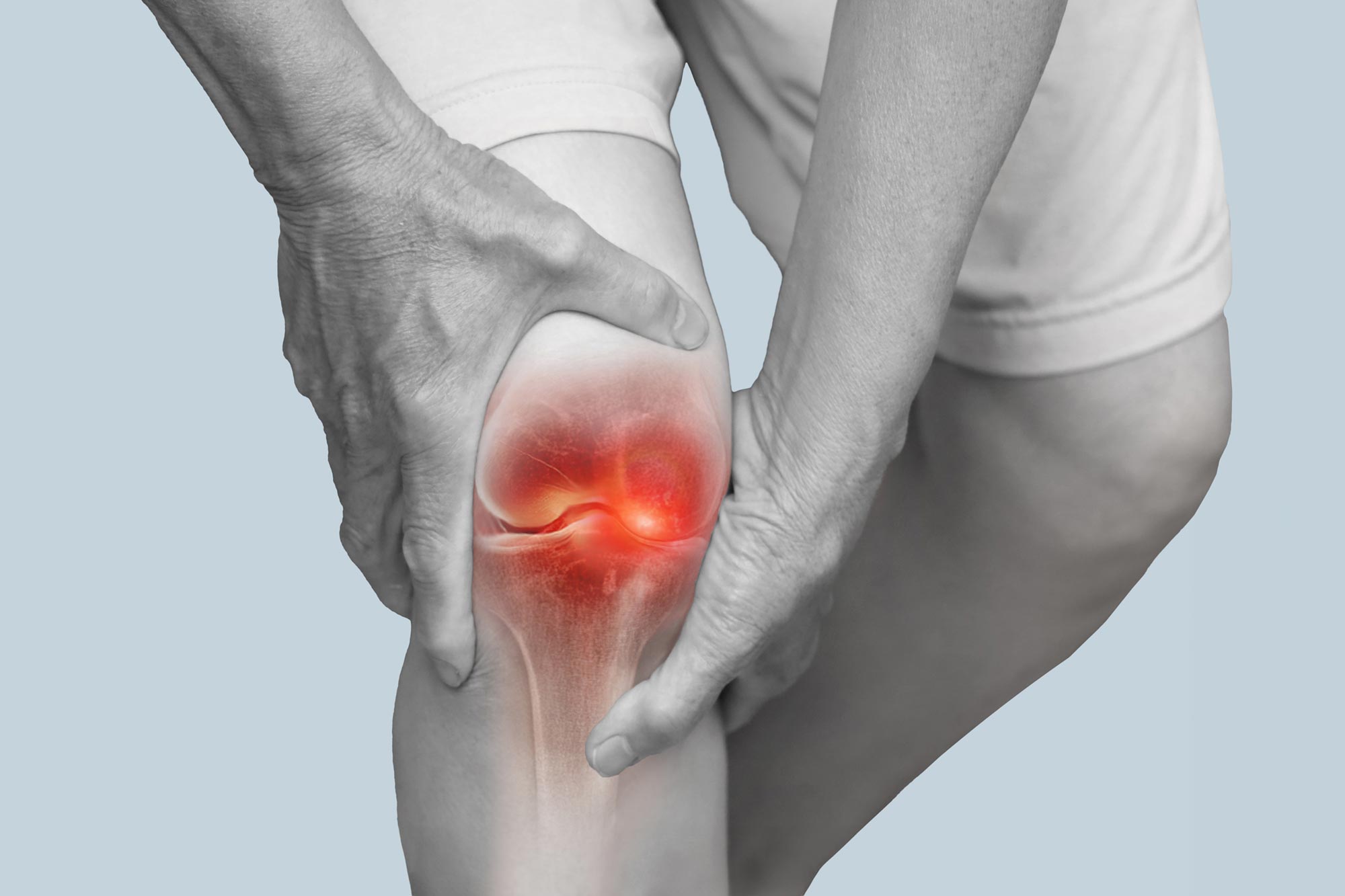
A small dose of radiation could do more than ease an aching knee: it may help preserve the joint for years.
A long-term analysis of a randomized Russian trial suggests that low-dose radiation therapy could influence the course of early knee osteoarthritis. Among 292 participants, those who received radiation alongside medication experienced more lasting symptom relief and less joint deterioration than those taking medication alone. Nearly 12 years of health records also linked the treatment to less disability.
The strongest apparent benefits emerged in patients with grade 2 osteoarthritis, whose disease was established but not yet advanced. The findings are being presented at the American Society for Radiation Oncology (ASTRO) Annual Meeting, but larger trials are needed to determine whether radiation truly changes how the disease progresses.
“The most compelling part of this study is how the outcomes fit together,” said Bobby (Nagendra) Koneru, MD, FASTRO, a study author and radiation oncologist at Loyola University in Maywood, Illinois. “Patients experienced sustained improvement in pain and function; MRI showed less joint deterioration, and years later, we saw less disability and, in patients with grade 2 disease, fewer knee replacements. Together, these findings raise the possibility that treatment may influence the longer course of osteoarthritis. That prospect makes it important to confirm in a larger multicenter study whether these findings represent a disease-modifying effect.”
Why Radiation Is Being Studied For Osteoarthritis
Knee osteoarthritis involves the breakdown of cartilage and other joint tissues, causing pain and limiting movement. Inflammation can help drive that damage. Once cartilage or bone becomes permanently damaged, some patients eventually need a knee replacement.
Exercise, weight management, medications, and injections are commonly used to manage symptoms. They can make movement easier and reduce pain, but most do not reliably prevent further structural damage. That gap has prompted interest in treatments that might protect the joint as well as make it feel better.
Low-dose radiation has been used for decades in parts of Europe to relieve osteoarthritis pain and treat other noncancerous inflammatory conditions, and its use is increasing in the United States. It delivers a small fraction of the radiation used in cancer treatment, with the aim of reducing inflammation.
“Radiation therapy works differently at very low doses,” Dr. Koneru said. “In cancer treatment, we use much higher doses to kill cancer cells or keep them from growing. At the doses used for osteoarthritis, the goal is to reduce inflammation inside the joint.”
Testing Treatment Before Advanced Joint Damage
Previous research showed that low-dose radiation could improve short-term pain and physical function in mild-to-moderate knee osteoarthritis. This analysis examined a broader question: whether those improvements coincided with better joint structure and fewer serious consequences years later.
The trial enrolled people with symptomatic knee osteoarthritis classified as Kellgren-Lawrence grade 0, 1, or 2. These grades range from no definite osteoarthritis visible on X-rays to definite bone spurs and possible early narrowing of the joint space. Patients with grade 0 had evidence of osteoarthritis on MRI. Those with more advanced grade 3 or 4 disease were excluded.
Participants were relatively young, with a median age of 38. At a single Russian institution, they were randomly assigned to glucosamine and chondroitin alone or the same medications plus radiation therapy.
The radiation group received a total dose of 4.5 Gy across 10 treatments. An orthovoltage machine delivered the treatment using low-energy X-rays.
Pain Relief Matched By Less Joint Deterioration
Both groups initially reported less pain, but sustained relief occurred only in the radiation group. Those patients also experienced significantly greater and longer-lasting improvements in physical function and quality of life.
MRI scans followed joint changes for three years. At 12 months, imaging scores showed slight improvement in patients who received radiation, while the medication-only group showed worsening. The significant difference between the groups persisted throughout the imaging follow-up.
Researchers then reviewed regional health records over a median of 11.9 years, looking for knee replacements and government-certified disability attributed to knee osteoarthritis. Across the study population, radiation was associated with a 67% lower adjusted hazard of disability, a statistically significant finding.
Dr. Koneru noted that disability certification provided an independently assessed measure of the disease’s consequences. Together with symptom reports and MRI scans, it offered another way to evaluate whether the early benefits translated into better outcomes later.
Grade 2 Osteoarthritis Showed The Strongest Signal
Among the 78 patients with grade 2 disease, disability developed in 31% of those treated with radiation, compared with 61% of those receiving medication alone. This subgroup had the largest absolute reduction in disability. Knee replacement was also less common among those who received radiation, occurring in 14% of patients compared with 36% of those taking medication alone.
“Grade 2 disease may represent a window where osteoarthritis is established but extensive joint damage has not yet occurred,” Dr. Koneru said. “The combination of less disability and fewer knee replacements in these patients is particularly encouraging. It suggests an opportunity to study whether treating inflammation earlier can change the longer course of the disease.”
The findings make grade 2 osteoarthritis a promising focus for further research. However, the subgroup analysis and long-term outcomes were exploratory and need confirmation in a trial designed specifically to test them. The difference in knee replacement rates also did not reach statistical significance across the full study population.
What Still Needs To Be Confirmed
The study had limitations in both treatment blinding and follow-up. Participants knew which treatment they received, as the control group received medication alone rather than simulated radiation. MRI readers were blinded to treatment assignment, but incomplete follow-up scans limited the imaging data available for analysis.
The study’s single-institution setting also limits how broadly its results can be applied. Differences in health care delivery and access to knee replacement in Russia could affect the long-term outcomes observed elsewhere.
Researchers reported no immediate reactions to radiation and no cancers in the treated area during follow-up. Still, those observations cannot establish long-term safety: the study was not designed to measure uncommon effects that emerge years later or cancer risk over a lifetime, especially among younger patients. Larger studies that follow patients over time will need to examine these risks and determine how long the treatment’s benefits last.
Dr. Koneru said the next step should be a multicenter randomized trial focused on grade 2 disease, with simulated radiation as the control. Defining imaging measures and long-term clinical outcomes in advance would help establish whether the treatment can preserve joint health as well as relieve symptoms.
Looking Beyond Pain Relief
“For osteoarthritis, we have treatments that can help patients feel better, but much less evidence that they can change what is happening inside the joint. What makes these findings interesting is that the patient-reported improvement was accompanied by a measurable difference on MRI,” said Gopal K. Bajaj, MD, MBA, FASTRO, co-chair of ASTRO’s Functional Radiation Medicine Task Force and a radiation oncologist at Inova Schar Cancer Institute in Fairfax, Virginia.
“That moves the question beyond pain relief alone. The long-term disability data add another reason to test whether low-dose radiation can affect the course of early osteoarthritis in a larger, rigorously controlled trial.”
Meeting: American Society for Radiation Oncology (ASTRO) Annual Meeting
Never miss a breakthrough: Join the SciTechDaily newsletter.
Follow us on Google and Google News.