
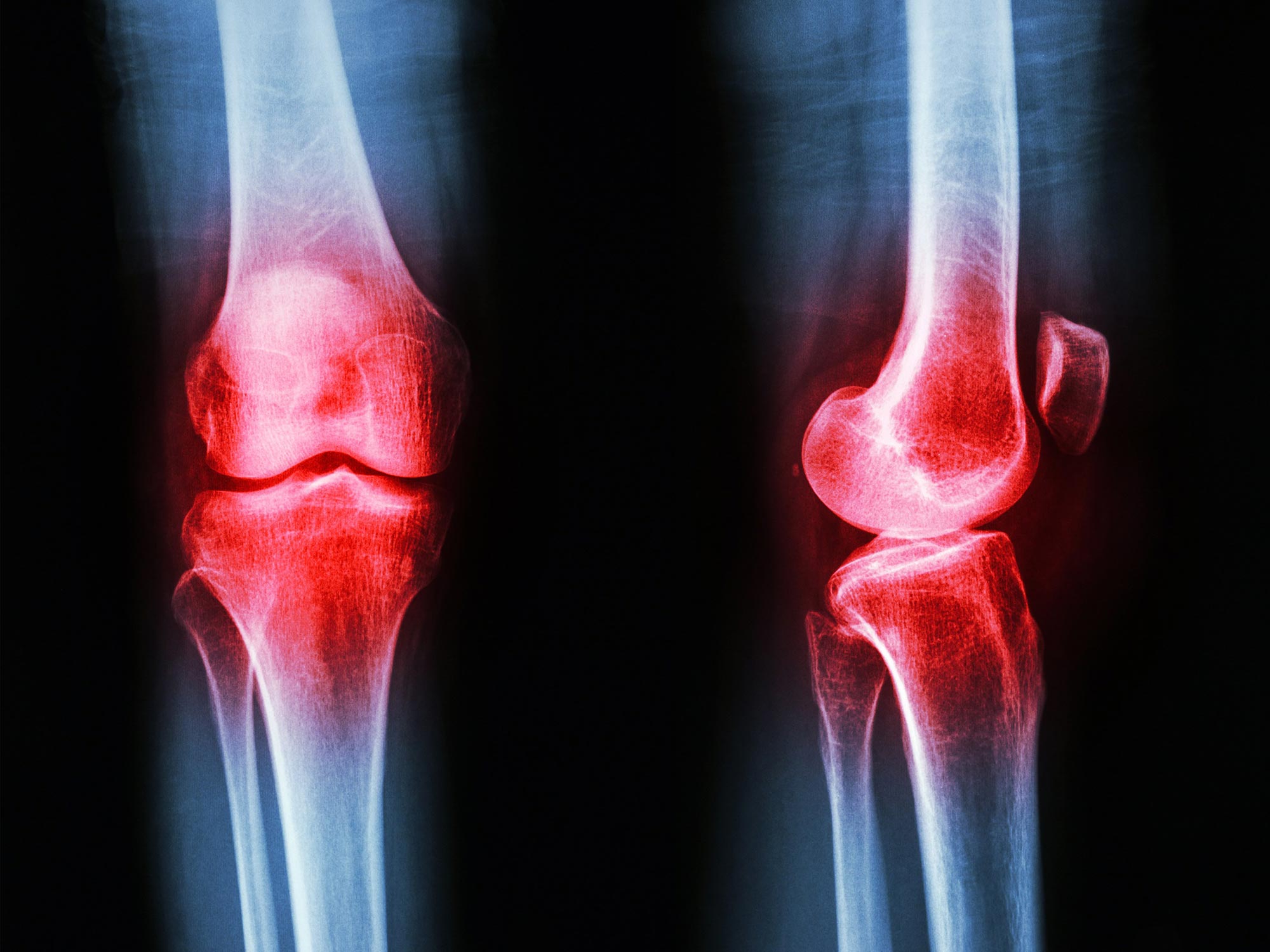
A new study led by a Utah engineering professor shows that gait retraining can reduce pain and slow cartilage damage.
Almost one in four adults over the age of 40 live with painful osteoarthritis, a condition that has become one of the leading causes of disability. The disease gradually wears away the cartilage that cushions joints, and there is currently no way to restore this damage. For now, treatment typically focuses on pain management with medication, followed eventually by joint replacement.
Scientists from the University of Utah, New York University, and Stanford University are now pointing to a promising alternative: gait retraining.
In a year-long randomized controlled trial, participants who adjusted the angle of their foot while walking reported pain relief comparable to medication. Importantly, these individuals also showed slower cartilage deterioration in their knees compared with those who received a placebo treatment.

First placebo-controlled proof
Published in The Lancet Rheumatology and co-led by Scott Uhlrich of Utah’s John and Marcia Price College of Engineering, these findings come from the first placebo-controlled study to demonstrate the effectiveness of a biomechanical intervention for osteoarthritis.
“We’ve known that for people with osteoarthritis, higher loads in their knee accelerate progression, and that changing the foot angle can reduce knee load,” said Uhlrich, an assistant professor of mechanical engineering. “So the idea of a biomechanical intervention is not new, but there have not been randomized, placebo-controlled studies to show that they’re effective.”
Tailoring treatment to each patient
Backed by the National Institutes of Health and other federal agencies, the researchers focused on patients with mild-to-moderate osteoarthritis in the medial compartment of the knee (the inner side of the leg), which carries more weight than the lateral, outer compartment. This type of osteoarthritis is the most widespread, but the best foot angle to lessen stress on the medial knee varies for each individual, depending on their natural gait and how it shifts when they adopt a new walking style.
“Previous trials prescribed the same intervention to all individuals, resulting in some individuals not reducing, or even increasing, their joint loading,” Uhlrich said. “We used a personalized approach to selecting each individual’s new walking pattern, which improved how much individuals could offload their knee and likely contributed to the positive effect on pain and cartilage that we saw.”
Using motion capture cameras, the researchers tracked the degree to which participants walked with their toes pointed inward or outward. Researchers could then calculate the loading in participants’ knees and prescribe the change in foot angle that reduced each individual’s loading. During weekly gait training visits, participants received vibrations on their lower leg after each step, teaching them to walk precisely with their prescribed foot angle. Credit: Utah Movement Bioengineering Lab
During their first two sessions, participants underwent a baseline MRI and practiced walking on a pressure-sensitive treadmill while motion-capture cameras tracked their movements. These assessments revealed whether turning the foot inward or outward reduced knee loading more effectively, and whether a 5° or 10° adjustment was most suitable.
This individualized evaluation also excluded participants for whom no foot angle adjustment could reduce knee stress. Including such individuals in earlier studies may explain why those trials produced inconclusive results on pain reduction.
Placebo versus intervention
After the initial intake sessions, the 68 participants were divided into two groups. Half were placed in a sham treatment group designed to measure the placebo effect. These individuals were instructed to walk with foot angles that were identical to their natural gait. In contrast, participants in the intervention group were assigned a foot angle adjustment that most effectively reduced stress on their knees.
Both groups then took part in six weekly lab-based training sessions. During these sessions, participants received biofeedback in the form of gentle vibrations from a device attached to the shin, which guided them in maintaining the prescribed foot angle while walking on a treadmill. Following the training phase, participants were asked to continue practicing their new gait for at least 20 minutes each day until it became habitual. Regular follow-up visits confirmed that participants were sticking closely to their assigned gait, typically within a one-degree margin.
After a year, all participants self-reported their experience of knee pain and had a second MRI to quantitatively assess the damage to their knee cartilage.

“The reported decrease in pain over the placebo group was somewhere between what you’d expect from an over-the-counter medication, like ibuprofen, and a narcotic, like oxycontin,” Uhlrich said. “With the MRIs, we also saw slower degradation of a marker of cartilage health in the intervention group, which was quite exciting.”
Beyond the quantitative measures of effectiveness, participants in the study expressed enthusiasm for both the approach and the results. One participant said: “I don’t have to take a drug or wear a device…it’s just a part of my body now that will be with me for the rest of my days, so that I’m thrilled with.”
A long-term option
Participants’ ability to adhere to the intervention over long periods of time is one of its potential advantages.
“Especially for people in their 30’s, 40’s, or 50’s, osteoarthritis could mean decades of pain management before they’re recommended for a joint replacement,” Uhrlich said. “This intervention could help fill that large treatment gap.”
Before this intervention can be clinically deployed, the gait retraining process will need to be streamlined. The motion-capture technique used to make the original foot angle prescription is expensive and time-consuming; the researchers envision this intervention to eventually be prescribed in a physical therapy clinic and retraining can happen while people go for a walk around their neighborhood.
“We and others have developed technology that could be used to both personalize and deliver this intervention in a clinical setting using mobile sensors, like smartphone video and a ‘smart shoe’,” Uhlrich said. Future studies of this approach are needed before the intervention can be made widely available to the public.
Reference: “Personalised gait retraining for medial compartment knee osteoarthritis: a randomised controlled trial” by Scott D Uhlrich, Valentina Mazzoli, Amy Silder, Andrea K Finlay, Feliks Kogan, Garry E Gold, Scott L Delp, Gary S Beaupre and Julie A Kolesar, 12 August 2025, The Lancet Rheumatology.
DOI: 10.1016/S2665-9913(25)00151-1
Those interested in participating in future studies can contact Uhlrich’s Movement Bioengineering Lab by filling out this web form.
Funding: U.S. National Science Foundation, NIH/National Institutes of Health, U.S. Department of Veterans Affairs
Never miss a breakthrough: Join the SciTechDaily newsletter.
Follow us on Google and Google News.
33 Comments
What’s Crazy is I have been dying from pain the past fox weeks with my herniated disc and my mom also so this comes at very good time
So what is the secret to walking better?
Getting into the next trial or waiting til they’re done and spending a fortune to have a video of you walking taken.
Ask Scientist that Ayurveda has scientific treatments for arthritis, we have proved many cases with our complete treatments. Before and after treatments investigation are with us.
Wow. I’ve had arthritis forr nearly 6 years now and this is the first time I have heard of this. Really appreciate SciTechDaily sharing studies I wouldn’t have found otherwise.
EVERYBODY!….. Please check out the great benefits of DMSO for RA and pain and a LOT of other things.
thank you for sharing. I have joined the newsletter.
Everyone when you walk do not slide your feet pick them up about 1 inch. this really lowers the stress on your heart.
Pls update me with your latest osteoarthritis news and medications! Thanks !
Will losing some body weight help in the knee movements besides knee pain? I also have what appears to be liquid accumulation or swelling on inner part of right knee which I think hinders movement.
losing weight relieves knee pain.
ALWAYS CONSULT WITH YOUR DOCTOR…….. FOR ME LOWER WEIGHT HELPED LESS STRAIN ON BODY , JOINTS ECT…. KEEP MIND BUSY … KEEP MOVING…….LOVE A PET AND PRAY , GOD BLESS TED IN CONNECTICUT ❤
I have a total of 4 knee surgery on left knee and l loss all my range of motion due to many surgeries build up scar tissues through out the healing times now my right knee is giving up as well and lm trying to void surgery because l don’t wanna be in a wheel chair 💺.
Im 78 and as long as I lie on the couch and munch on Frito Lays, I have absolutely no issues
The pain I have is enormous. I don’t think I will survive it. My right shoulder and left knee. But thanks for the article. I have already had total right knee replacement. It is tolerable. I see my doctor this week for shots. There may be no hope for me.
You should not despair of God’s mercy. You should continue to act with courage. See a doctor and focus on your treatment. Everything will be fine. May God bless you with healthy life. Amen
I’ve changed my gait to straighten the fall of my feet, rather than walking on the out edges of both feet. This was done not for my knees but to relieve pressure on a herniated lower back joint…. i.e. the new gait for me creates a straighter back and better body balance around the spine.
Interesting read! I just had a total knee replacement, but within weeks I got bursitis in my hip. Doctor says it’s common because my gait changed when I walked with my new knee.
I wonder if training my walking style will help improve the bursitis, but how exactly do I change the way I walk without overthinking about it naturally????
I have suffered from Osteoarthritis in both knees for over ten (10) years, too date no medications, injections or over the counter herbal medicine has helped. I have been caught by many online companies who claim they have a cure however, A) The cost per bottle is prohibited, B) Charges have been processed prematurely without having a chance to pick a payment preference. I had to fight with said companies for a refund but to date the only physical action I could take was to cancel and renew my credit card and C) Even if a product was formulated in my own country, the medication is made in the USA and thus have to pay in US Dollar’s which is almost double the cost.
I was diagnosed with osteoarthritis 10 years ago. But from 1 year ago I have pain inside my left knee and right arm.
I will have a surgery in November.
Is there any information about osteoarthritis in hands? All of my fingers are painful, restricted and my little fingers on both hands are fused. Super challenging to find HAND specialists that deal with and have expertise in hand arthritis. Any suggestions? I live in North Vancouver BC
Good night. Try eating and or drinking cloves in water water.
Do the research.
This methodology has been around for decades. Read (and more importantly do) the chapter(s) for what ails you.
Pain Free by Pete Egoscue
Can this help my wife with arthritis she forever in pains
There is no doubt that what is written in this article is an expert opinion. I think that the nature of knee pain in each person can be due to different reasons. Therefore, instead of blindly believing what is said in this article, we should consult an expert orthopedic practitioner.
I am 57 had a bad fall which hurt both my knees especially the left one, in November 2024. I always had problems with my left knee from a childhood injury. I had another MRI and it turned out to be just a sprain. However, the doctor said I did have arthritis . As time went by , the sprain healed and my knees and legs started to feel better. Now I am able to bend my knees without feeling any pain at all and the pain in my knees is completely gone.
No mention of Custom Orthotics?! Everybody should get and wear Custom Orthotics (not off-the-shelf ones) in their shoes. They must be created by a Certified Pedorthist and Orthotics specialist! Orthotics really help manage a proper gait, and they even help eliminate most back problems coming from walking or standing for long periods.
Hope it works for you. Was a giant waste of time for me. Does nothing for chronic pain and arthritis relief.
……and the scientists never discovered it inside the United States. Summary: it didn’t come from the United States.
The study was conducted by the University of Utah, NIH and Department of Veterans Affairs. Just published in The Lancet. All USA
My dad was diagnosed of osteoarthritis his right knee is having a big lump on the side. What supplements can he be taking to manage this?
He is 79yrs the doctor suggested knee replacement surgery but he didn’t agree he will do it. I need help on what he will do
Just changing the way you walk can really help…. I don’t know. Seems like this information could have been shared a long time ago…. Like 20 – 25 years ago. Our medical fields don’t fix us… They give temporary relief so we keep spending money. On doctor visits, prescriptions, surgery’s, vaccines.
That was a great insightful Article…thanks for writing