
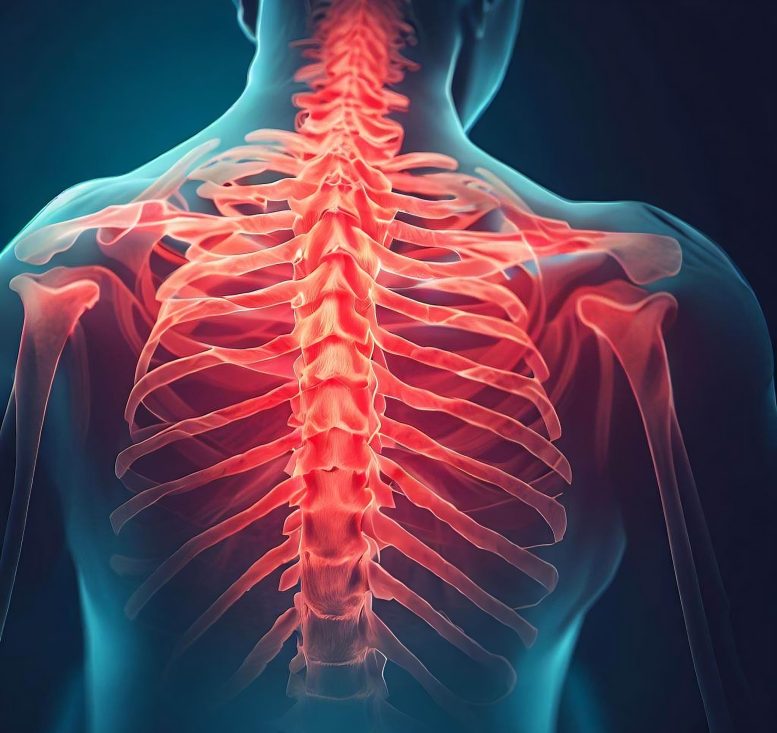
Aging reduces the immune response to spinal cord injuries. Newly discovered meningeal structures and immune cell interactions could help develop better treatments.
A new study suggests that the immune system’s capacity to react to spinal cord injuries declines as one ages, but it also highlights potential strategies to boost this response and facilitate patient recovery.
The new findings provide critical knowledge about the immune system’s reaction to spinal cord injuries, and why this reaction seems to weaken with age. They also underscore the significant contribution of the membranes encircling the spinal cord in initiating the immune response to such injuries. Armed with this knowledge, medical professionals may eventually be able to strengthen the body’s inherent immune response to enhance patient recovery, especially among the elderly population.
“Recently, it has been reported more aging individuals experience spinal cord injuries. Our findings suggest in aging, there is an impairment in how the immune response is initiated and resolved compared to young,” said researcher Andrea Francesca M. Salvador, who just received her Ph.D. from the University of Virginia School of Medicine. “Hopefully, our results can help identify points of intervention and druggable targets that can improve recovery and address long-term consequences of injury such as pain.”
Understanding Spinal Cord Injuries
Spinal cord injuries can have devastating, lifelong effects, leaving patients unable to move, unable to control their bowels, or suffering pain, sexual dysfunction, or uncontrollable spasms, depending on the severity and location of the injury. A better understanding of how the body responds to spinal cord injuries is an important step in developing better ways to treat them.
The new findings are the latest from the lab of Jonathan Kipnis, Ph.D., who made a stunning discovery at UVA in 2015 that the brain was connected to the immune system by vessels long thought not to exist. Prior to this game-changing revelation, the brain had been held to be essentially walled off from the immune system. The discovery of the unknown vessels in the membranes, or meninges, surrounding the brain rewrote textbooks and opened a whole new frontier in neurological research. Today, “neuroimmunology,” or the study of the nervous system’s relationship to the immune system, is one of the hottest areas of neuroscience research, and it is poised to transform our understanding of – and ability to treat – a vast array of neurological diseases.
Now Salvador, Kipnis, and their collaborators have determined that the meninges surrounding the spinal cord play an essential role in the immune response to spinal cord injury. They discovered, for example, that previously unknown meningeal lymphatic “patches” form above the site of spinal cord injuries. More research is needed to determine exactly what these structures do, but their formation speaks to an important role for the spinal cord meninges in the immune response to injury.
Further, Salvador and her collaborators quantified how immune cells respond to spinal cord injuries. They found that this response was much stronger in young lab mice than in older ones, suggesting that scientists may be able to target certain immune cells to improve recovery after spinal cord injuries.
Together, the findings identify the spinal cord meninges – and their interactions with other components of the central nervous system – as exciting new areas for researchers to explore as they seek to better understand the body’s complex response to spinal cord injuries.
“This is an exciting finding and one which may indeed lead to new therapeutic approaches for spinal cord injury patients,” said Kipnis, now a professor at Washington University School of Medicine in St. Louis and director of its Brain Immunology and Glia Center (BIG Center). “We are now collaborating with clinicians in the hope of better understanding what is happening in human patients and how our findings could be translated to make a real difference.”
Reference: “Age-dependent immune and lymphatic responses after spinal cord injury” by Andrea Francesca M. Salvador, Taitea Dykstra, Justin Rustenhoven, Wenqing Gao, Susan M. Blackburn, Kesshni Bhasiin, Michael Q. Dong, Rafaela Mano Guimarães, Sriharsha Gonuguntla, Igor Smirnov, Jonathan Kipnis and Jasmin Herz, 5 May 2023, Neuron.
DOI: 10.1016/j.neuron.2023.04.011
The study was funded by the Howard Hughes Medical Institute and the National Institutes of Health.
Never miss a breakthrough: Join the SciTechDaily newsletter.
Follow us on Google and Google News.