
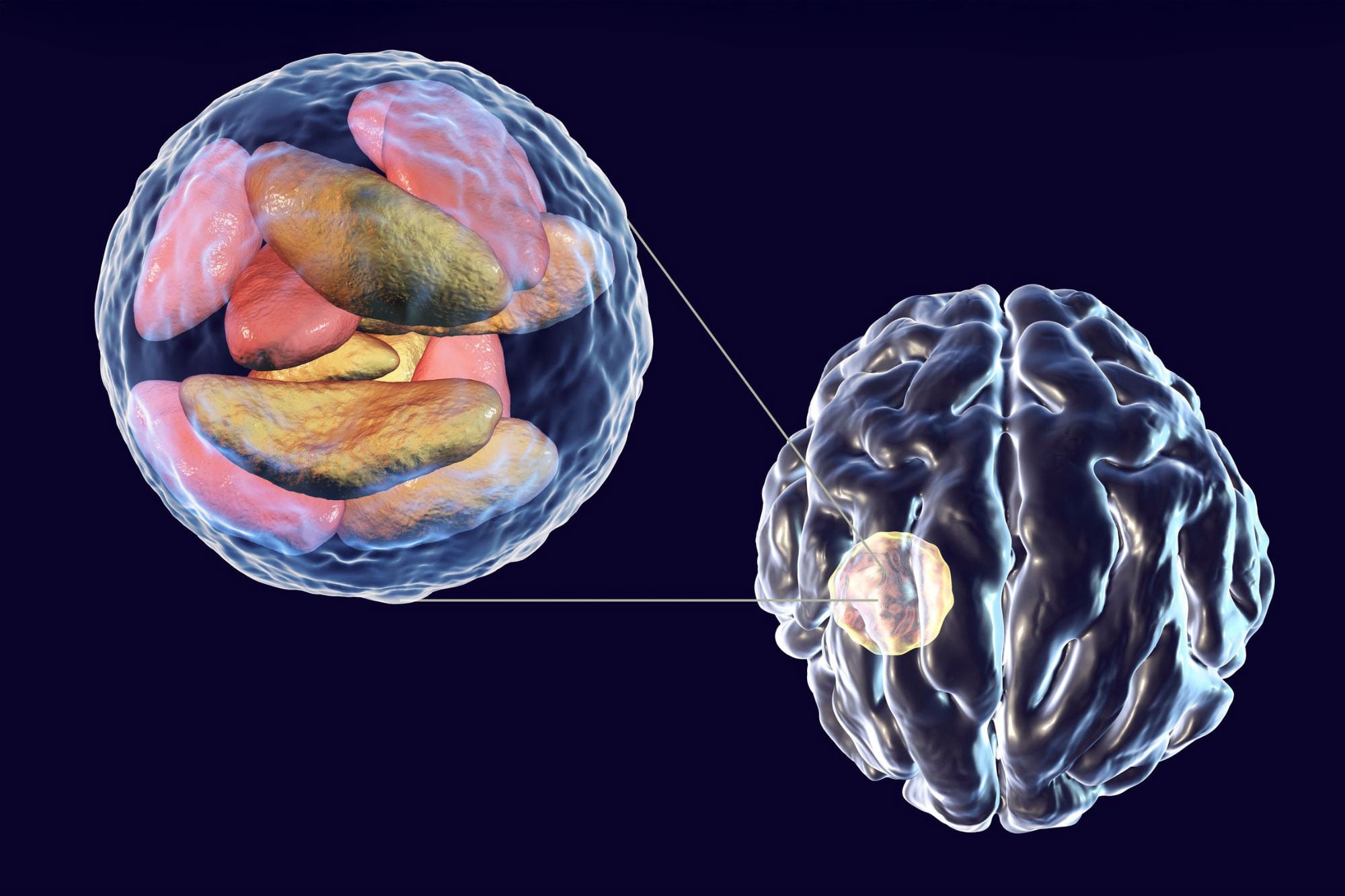
Scientists have uncovered a hidden battle between a widespread brain parasite and the immune cells tasked with destroying it.
A parasite that can quietly persist in the human brain is capable of invading the immune cells sent to eliminate it, yet new research from UVA Health explains how the body is usually able to keep this infection in check.
The organism, Toxoplasma gondii, can cause life-threatening illness. It infects warm-blooded animals and most often spreads to humans through contact with cats or by eating contaminated fruits and vegetables or undercooked meat. After entering the body, the parasite travels through multiple tissues and eventually establishes a long-term presence in the brain.
Scientists estimate that roughly one-third of the global population carries T. gondii, although the vast majority never develop symptoms. When illness does occur, known as toxoplasmosis, it most commonly affects people with weakened immune systems.
A research team led by Tajie Harris, PhD, set out to understand how the immune system responds when the parasite manages to enter CD8+ T cells, which are normally responsible for destroying infected cells.
“We know that T cells are really important for combatting Toxoplasma gondii, and we thought we knew all the reasons why. T cells can destroy infected cells or cue other cells to destroy the parasite. We found that these very T cells can get infected, and, if they do, they can opt to die. Toxoplasma parasites need to live inside cells, so the host cell dying is game over for the parasite,” said Harris, the director of the Center for Brain Immunology and Glia (BIG Center) at the University of Virginia School of Medicine.
“Understanding how the immune system fights Toxoplasma is important for several reasons. People with compromised immune systems are vulnerable to this infection, and now we have a better understanding of why and how we can help patients fight this infection.”
Battling the Brain Parasite
Working with collaborators, Harris found that CD8+ T cells rely on a powerful internal defense against T. gondii, an enzyme known as caspase-8. Caspase-8 plays a key role in regulating immune responses, including triggering cells to initiate a self-destruct process when necessary.

The UVA researchers found that lab mice that lacked Caspase-8 in their T cells had far greater numbers of T. gondii parasites in their brain than did mice that had the enzyme. This was the case even though both sets of mice produced strong immune responses to deal with the infection.
While the mice with the enzyme continued living normally, the ones without grew sick and died. Examining their brains after their deaths revealed that their CD8+ T cells were much more likely to be infected with the parasites.
That suggests that Caspase-8 is a critical player in how our bodies control T. gondii within our T cells. And it also adds to a growing understanding of the importance of the enzyme in controlling pathogens in our bodies more generally, the researchers report in a new scientific paper.
“We scoured the scientific literature to find examples of pathogens infecting T cells. We found very few examples,” said Harris, part of UVA’s Department of Neuroscience. “Now, we think we know why. Caspase-8 leads to T cell death. The only pathogens that can live in CD8+ T cells have developed ways to mess with Caspase-8 function. Prior to our study, we had no idea that Caspase-8 was so important for protecting the brain from Toxoplasma.”
Reference: “Caspase-8 expression in CD8+ T cells promotes pathogen restriction in the brain during Toxoplasma gondii infection” by Lydia A. Sibley, Maureen N. Cowan, Abigail G. Kelly, NaaDedee A. Amadi, Isaac W. Babcock, Sydney A. Labuzan, Michael A. Kovacs, Samantha J. Batista, John R. Lukens and Tajie H. Harris, 12 December 2025, Science Advances.
DOI: 10.1126/sciadv.adz4468
The research was supported by the National Institutes of Health, grants R01NS112516, R01NS134747, R21NS12855, T32GM008715, T32AI007496, T32AI007046, T32NS115657, F30AI154740, T32AI007496 and T32GM007267; a University of Virginia Pinn Scholars Award; a UVA Shannon Fellowship; and UVA’s Strategic Investment Fund.
Never miss a breakthrough: Join the SciTechDaily newsletter.
Follow us on Google and Google News.