
Close Menu
    Facebook X (Twitter) Instagram
    SciTechDaily
    • Biology
    • Chemistry
    • Earth
    • Health
    • Physics
    • Science
    • Space
    • Technology
    Facebook X (Twitter) Pinterest YouTube RSS
    SciTechDaily
    Home»Health»How Effective Is the First Shot of the Pfizer and Moderna COVID-19 Vaccines?
    Health

    How Effective Is the First Shot of the Pfizer and Moderna COVID-19 Vaccines?

    By William Petri, University of VirginiaMarch 23, 2021No Comments3 Mins Read
    Facebook Twitter Pinterest Telegram LinkedIn WhatsApp Email Reddit
    Share
    Facebook Twitter LinkedIn Pinterest Telegram Email Reddit
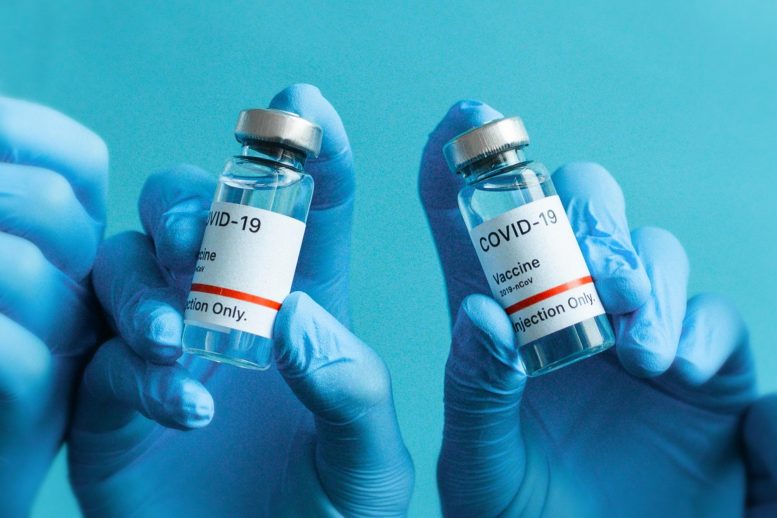
    COVID-19 Vaccines Compared
    A recent study in Israel demonstrated that a single dose of the Pfizer COVID-19 vaccine is highly effective, achieving up to 85% efficacy.

    One dose of the Pfizer vaccine offers high protection, but two doses are still advised for the best immunity.

    As the COVID-19 vaccines reach more people across the country, some people have asked: Could we delay the second dose of the Pfizer and Moderna vaccines to allow more people to be vaccinated more quickly? And, how safe am I after my first dose?

    As an immunologist, I hear this question frequently. The answer is that a single dose is very effective – but I would add that you should still get both doses. The issue is important, however, not only for your personal health but also for the country’s health as leaders figure out how to ensure there’s enough vaccine for everyone who wants one.

    Good News From Abroad

    A recent study in Israel showed that a single dose of the Pfizer COVID-19 vaccine is highly effective, up to 85%.

    The Sheba Medical Center reported its experience with vaccinating its nearly 10,000 staff members with the Pfizer COVID-19 vaccine. Vaccination there started December 19, 2020, which coincided with the third wave of COVID-19 in Israel. The researchers looked to see the rate of reduction in SARS-CoV-2 infection and COVID-19 disease after vaccination. By January 24, 2021, 7,214 health care workers there had received a first dose, and 6,037 had received the second dose.

    Altogether, there were 170 cases of infection between December 19, 2020, and January 24, 2021. Of those, 89 people, or 52%, were unvaccinated; 78 people, or 46%, tested positive after the first dose; and three, or 2%, tested positive after the second dose.

    This is consistent with a reanalysis of the phase 3 clinical trial data reported in 2020 in the New England Journal of Medicine. In that study, the 52% protection from the first dose included infections that occurred in the first 10 days after vaccination, when one would not expect the vaccine to have had time to generate protective anti-spike antibodies.

    Using the data from the published study of the Pfizer vaccine, Public Health England determined that vaccine efficacy was 89% for 15-21 days after dose 1 – and before dose 2 on day 21. The range was between 52% and 97%. For days 15-28, or up to the first week after the second dose, protection from the first dose was estimated at 91%. The range for this was between 74% and 97%. A second dose would not be expected to confer immunity within that time.

    Bottom Line

    So what do we know? The Centers for Disease Control and Prevention urges people to get both doses of the Pfizer and Moderna vaccines. You should be reassured that even after a single dose of either of those vaccines, you have very high levels of protection after your body has time to build immunity, about a week. The scheduled second dose of these vaccines makes them even more effective, but at a time where vaccine supplies are limited, there’s a lot to be said about prioritizing the first dose for the most people.

    Written by William Petri, Professor of Medicine, University of Virginia.

    Adapted from an article originally published on The Conversation.

    Never miss a breakthrough: Join the SciTechDaily newsletter.
    Follow us on Google and Google News.

    COVID-19 Immunology Infectious Diseases University of Virginia Vaccine
    Share. Facebook Twitter Pinterest LinkedIn Email Reddit

    Related Articles

    Why It Takes 2 Shots to Make mRNA Vaccines Do Their COVID-19 Antibody-Creating Best

    Real Hope for Vaccine Longevity: New Data Reveals COVID Immunity Lasts Up to 8 Months

    Antidepressant Fluvoxamine May Prevent COVID-19 Infections From Worsening

    These Seven Different “Disease Forms” Have Been Identified in Mild COVID-19

    Critical Insight Into COVID-19 Immune Response From New Study of Serum Samples

    Long-Lived Antibodies Detected in Both Blood and Saliva of Patients With COVID-19

    SARS-CoV-2 Antibodies Provide Lasting COVID-19 Immunity

    Research Shows Exposure to Common Cold Coronaviruses Can Teach the Immune System to Recognize SARS-CoV-2

    Common Molecular Feature of Antibodies That Neutralize SARS-CoV-2 Discovered, Boosting COVID-19 Vaccine Prospects

    Leave A Reply Cancel Reply

    • Facebook
    • Twitter
    • Pinterest
    • YouTube

    Don't Miss a Discovery

    Subscribe for the Latest in Science & Tech!

    Trending News

    Millions Take These IBS Drugs, But a New Study Finds Serious Risks

    Scientists Unlock Hidden Secrets of 2,300-Year-Old Mummies Using Cutting-Edge CT Scanner

    Bread Might Be Making You Gain Weight Even Without Eating More Calories

    Scientists Discover Massive Magma Reservoir Beneath Tuscany

    Europe’s Most Active Volcano Just Got Stranger – Here’s Why Scientists Are Rethinking It

    Alzheimer’s Symptoms May Start Outside the Brain, Study Finds

    Millions Take This Popular Supplement – Scientists Discover a Concerning Link to Heart Failure

    The Universe Is Expanding Too Fast and Scientists Can’t Explain Why

    Follow SciTechDaily
    • Facebook
    • Twitter
    • YouTube
    • Pinterest
    • Newsletter
    • RSS
    SciTech News
    • Biology News
    • Chemistry News
    • Earth News
    • Health News
    • Physics News
    • Science News
    • Space News
    • Technology News
    Recent Posts
    • Doctors Surprised by the Power of a Simple Drug Against Colon Cancer
    • Why Popular Diabetes Drugs Like Ozempic Don’t Work for Everyone: The “Genetic Glitch”
    • Scientists Create Improved Insulin Cells That Reverse Diabetes in Mice
    • Scientists Stunned After Finding Plant Thought Extinct for 60 Years
    • A Common Diabetes Drug May Hold the Key to Stopping HIV From Coming Back
    Copyright © 1998 - 2026 SciTechDaily. All Rights Reserved.
    • Science News
    • About
    • Contact
    • Editorial Board
    • Privacy Policy
    • Terms of Use

    Type above and press Enter to search. Press Esc to cancel.