
Close Menu
    Facebook X (Twitter) Instagram
    SciTechDaily
    • Biology
    • Chemistry
    • Earth
    • Health
    • Physics
    • Science
    • Space
    • Technology
    Facebook X (Twitter) Pinterest YouTube RSS
    SciTechDaily
    Home»Space»Hubble Views the Core of Spiral Galaxy Messier 61
    Space

    Hubble Views the Core of Spiral Galaxy Messier 61

    By Hubble Space TelescopeApril 28, 2014No Comments2 Mins Read
    Facebook Twitter Pinterest Telegram LinkedIn WhatsApp Email Reddit
    Share
    Facebook Twitter LinkedIn Pinterest Telegram Email Reddit
    New Hubble Image of Spiral Galaxy Messier 61
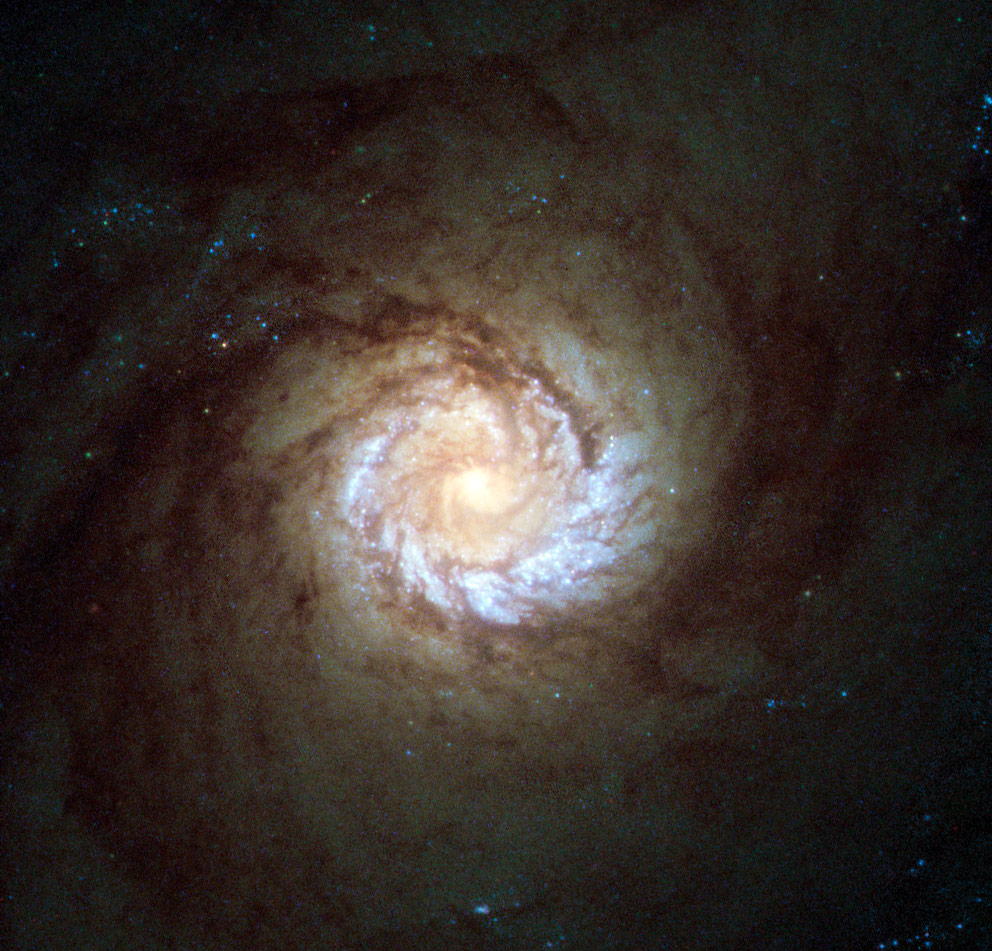
    Messier 61, or NGC 4303, spans about 100,000 light-years, similar to our Milky Way. Both are part of the Virgo Supercluster in the constellation Virgo, a collection of up to 2000 galaxies. Credit: ESA/Hubble & NASA, Acknowledgement: Det58

    This newly released Hubble image shows spiral galaxy Messier 61, also known as NGC 4303.

    This new Hubble picture is the sharpest ever image of the core of the spiral galaxy Messier 61. Taken using the High Resolution Channel of Hubble’s Advanced Camera for Surveys, the central part of the galaxy is shown in striking detail.

    Also known as NGC 4303, this galaxy is roughly 100,000 light-years across, comparable in size to our Milky Way galaxy. Both Messier 61 and our home galaxy belong to a group of galaxies known as the Virgo Supercluster in the constellation of Virgo (The Virgin) — a group of galaxy clusters containing up to 2000 spiral and elliptical galaxies in total.

    Messier 61 is a type of galaxy known as a starburst galaxy. Starburst galaxies experience an incredibly high rate of star formation, hungrily using up their reservoir of gas in a very short period of time (in astronomical terms). But this is not the only activity going on within the galaxy; deep at its heart there is thought to be a supermassive black hole that is violently spewing out radiation.

    Despite its inclusion in the Messier Catalog, Messier 61 was actually discovered by Italian astronomer Barnabus Oriani in 1779. Charles Messier also noticed this galaxy on the very same day as Oriani, but mistook it for a passing comet — the comet of 1779.

    A version of this image was submitted to the Hubble’s Hidden Treasures image processing competition by Flickr user Det58.


    Never miss a breakthrough: Join the SciTechDaily newsletter.
    Follow us on Google and Google News.

    Astronomy Hubble Space Telescope
    Share. Facebook Twitter Pinterest LinkedIn Email Reddit

    Related Articles

    A Morphing Spiral Galaxy Amongst Friends

    Hubble Views Magnificent Lopsided Galaxy NGC 2276

    Hubble Captures Fantastic Detail of Eponymous Spiral Galaxy NGC 691

    Spectacular Image Captured by Hubble Shows a Strangely Contorted Spiral Galaxy

    A Distant Spiral in Virgo: Extraordinary Detail Seen in a Galaxy 150 Million Light-Years Away From Earth

    Magnetic Monsters: Hubble Tracks Down Location of Mysterious Radio Signals From Intergalactic Space

    A Menagerie of Galaxies: Hubble Captures a Cluster With Galaxies of All Shapes and Sizes

    How Habitable Are Planets That Orbit Red Dwarfs – The Most Common Type of Stars in the Galaxy?

    Cosmic Silver Lining: Hubble Spots V565 Surrounded by Four Prominent Diffraction Spikes

    Leave A Reply Cancel Reply

    • Facebook
    • Twitter
    • Pinterest
    • YouTube

    Don't Miss a Discovery

    Subscribe for the Latest in Science & Tech!

    Trending News

    Magnetic Bacterium Extends Lifespan by 43% in Surprising Anti-Aging Study

    Archaeologists Discover Evidence of “Brands” 3,200 Years Before Modern Capitalism

    The Rare Vision Side Effect of Ozempic and Wegovy You Should Know About

    Hidden Deep Beneath Mars, Scientists Find Evidence of a Vast Magmatic System

    Your Gut Microbiome May Be Contagious, Scientists Discover

    Scientists Find a Troubling Effect of Sitting That Exercise Couldn’t Prevent

    125-Million-Year-Old Crocodile Fossil Reveals Astonishing New Secrets

    Scientists Discover an “Impossible” Way Muscle Filaments Can Grow

    Follow SciTechDaily
    • Facebook
    • Twitter
    • YouTube
    • Pinterest
    • Newsletter
    • RSS
    SciTech News
    • Biology News
    • Chemistry News
    • Earth News
    • Health News
    • Physics News
    • Science News
    • Space News
    • Technology News
    Recent Posts
    • Archaeologists Discover 1,200-Year-Old Hairless Dog at Ancient Peruvian Site
    • The Human Family Tree May Need a Major Rewrite
    • “Lower-Risk” Childhood Cancer May Be More Dangerous Than It Appears
    • Scientists Warn a Common Eczema Remedy May Offer Little Relief
    • Scientists Find a Surprising Cancer-Fighting Effect in Dark Sweet Cherries
    Copyright © 1998 - 2026 SciTechDaily. All Rights Reserved.
    • Science News
    • About
    • Contact
    • Editorial Board
    • Privacy Policy
    • Terms of Use

    Type above and press Enter to search. Press Esc to cancel.