
Close Menu
    Facebook X (Twitter) Instagram
    SciTechDaily
    • Biology
    • Chemistry
    • Earth
    • Health
    • Physics
    • Science
    • Space
    • Technology
    Facebook X (Twitter) Pinterest YouTube RSS
    SciTechDaily
    Home»Space»Hubble Image of R Sculptoris and Its Hidden Companion
    Space

    Hubble Image of R Sculptoris and Its Hidden Companion

    By Hubble Space TelescopeJanuary 5, 20153 Comments2 Mins Read
    Facebook Twitter Pinterest Telegram LinkedIn WhatsApp Email Reddit
    Share
    Facebook Twitter LinkedIn Pinterest Telegram Email Reddit
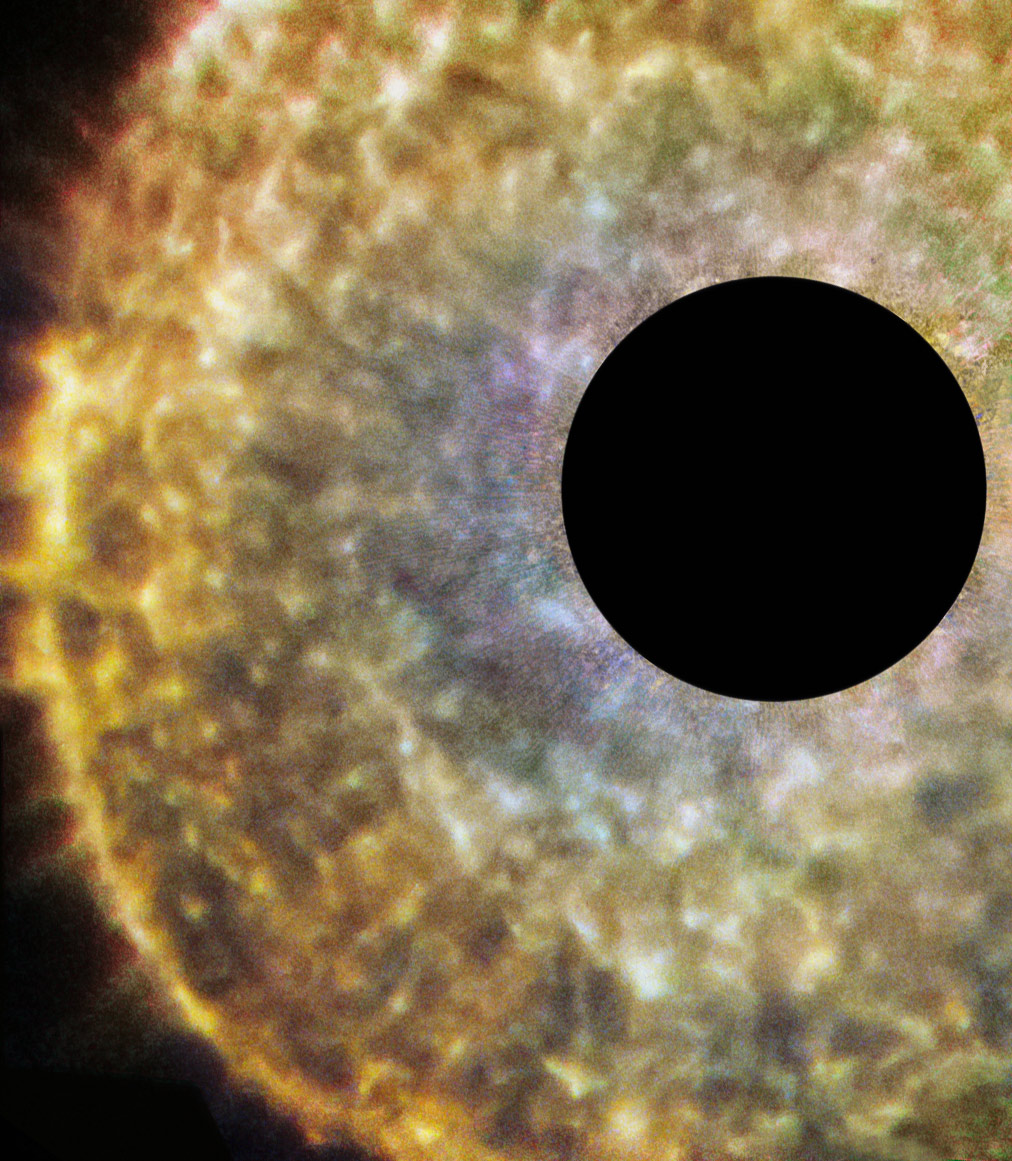
    Hubble Views R Sculptoris
    Credit: ESA/Hubble & NASA

    This newly released Hubble images shows star R Sculptoris, a red giant located 1,500 light-years from Earth in the constellation of Sculptor.

    Recent observations have shown that the material surrounding R Sculptoris actually forms a spiral structure — a phenomenon probably caused by a hidden companion star orbiting the star. Systems with multiple stars often lead to unusual or unexpected morphologies, as seen, for example, in the wide range of striking planetary nebulae that Hubble has imaged.

    R Sculptoris is an example of an asymptotic giant branch (AGB) star. All stars with initial masses up to about eight times that of the Sun will eventually become red giants in the later stages of their lives. They start to cool down and lose a large amount of their mass in a steady, dense wind that streams outwards from the star. With this constant loss of material, red giants like R Sculptoris provide a good portion of the raw materials — dust and gas — used for the formation of new generations of stars and planets. They also show what is likely to happen to the Sun in a few billion years from now, and help astronomers to understand how the elements we are made up of are distributed throughout the Universe.

    R Sculptoris itself is located outside the plane of the Milky Way and is easily visible using a moderately sized amateur telescope. In this part of the sky far from the galactic plane, there are relatively few stars but many faint and distant galaxies can be seen.

    The black region at the center of the image has been artificially masked.

    Never miss a breakthrough: Join the SciTechDaily newsletter.
    Follow us on Google and Google News.

    Astronomy Hubble Space Telescope
    Share. Facebook Twitter Pinterest LinkedIn Email Reddit

    Related Articles

    A Morphing Spiral Galaxy Amongst Friends

    Hubble Views Magnificent Lopsided Galaxy NGC 2276

    Hubble Captures Fantastic Detail of Eponymous Spiral Galaxy NGC 691

    Spectacular Image Captured by Hubble Shows a Strangely Contorted Spiral Galaxy

    A Distant Spiral in Virgo: Extraordinary Detail Seen in a Galaxy 150 Million Light-Years Away From Earth

    Magnetic Monsters: Hubble Tracks Down Location of Mysterious Radio Signals From Intergalactic Space

    A Menagerie of Galaxies: Hubble Captures a Cluster With Galaxies of All Shapes and Sizes

    How Habitable Are Planets That Orbit Red Dwarfs – The Most Common Type of Stars in the Galaxy?

    Cosmic Silver Lining: Hubble Spots V565 Surrounded by Four Prominent Diffraction Spikes

    3 Comments

    1. J Z on January 5, 2015 9:08 am

      Just curious, why was the center blacked out?

      Reply
      • Staff on January 5, 2015 9:28 am

        They didn’t mention why, sorry.

        Reply
      • Phil on January 5, 2015 9:46 am

        I Would imagine to blot out the centre of light. SOHO does the same when observing our own sun. Blocking out the worse of the stars rays gives a more observable picture of the stars corona-sphere (surrounding circle). Or its a xmas bauble put there by mistake and has been forgotten to be taken down XD ?

        Reply
    Leave A Reply Cancel Reply

    • Facebook
    • Twitter
    • Pinterest
    • YouTube

    Don't Miss a Discovery

    Subscribe for the Latest in Science & Tech!

    Trending News

    The Best Exercise Combination for Longevity, According to a 30-Year Study

    Popular Weight-Loss Drug Found To Slow Biological Aging in Landmark Human Trial

    NASA’s Fermi Telescope Caught a Supernova Doing Something Never Seen Before

    This Dinosaur Had the Claws of a Raptor but Hunted Like a Heron

    Doctors May Need To Rethink Calcium and Vitamin D Recommendations After Major Review

    Scientists Discover a Hidden Cause of Cellular Aging That Can Be Reversed

    Archaeologists Have Found Something Unexpected Inside a 1,600-Year-Old Egyptian Mummy

    Scientists May Have Found a Completely New Way To Treat Depression

    Follow SciTechDaily
    • Facebook
    • Twitter
    • YouTube
    • Pinterest
    • Newsletter
    • RSS
    SciTech News
    • Biology News
    • Chemistry News
    • Earth News
    • Health News
    • Physics News
    • Science News
    • Space News
    • Technology News
    Recent Posts
    • NASA Captures Typhoon Jangmi’s Massive Eye in Stunning Nighttime Image
    • Super Typhoon Sinlaku Was So Powerful It Made the Sky Ripple With Gravity Waves
    • The World Praised This Wolverine Program. Then Everything Changed
    • This Giant Tropical Fruit Could Hold a Surprising Secret to Saving Teeth
    • Scientists Discover Rogue Gene That Could Unlock New Cancer Treatments
    Copyright © 1998 - 2026 SciTechDaily. All Rights Reserved.
    • Science News
    • About
    • Contact
    • Editorial Board
    • Privacy Policy
    • Terms of Use

    Type above and press Enter to search. Press Esc to cancel.