
Close Menu
    Facebook X (Twitter) Instagram
    SciTechDaily
    • Biology
    • Chemistry
    • Earth
    • Health
    • Physics
    • Science
    • Space
    • Technology
    Facebook X (Twitter) Pinterest YouTube RSS
    SciTechDaily
    Home»Technology»How Can the Human Brain Compete With Artificial Intelligence?
    Technology

    How Can the Human Brain Compete With Artificial Intelligence?

    By Bar-Ilan UniversityJanuary 15, 20241 Comment3 Mins Read
    Facebook Twitter Pinterest Telegram LinkedIn WhatsApp Email Reddit
    Share
    Facebook Twitter LinkedIn Pinterest Telegram Email Reddit
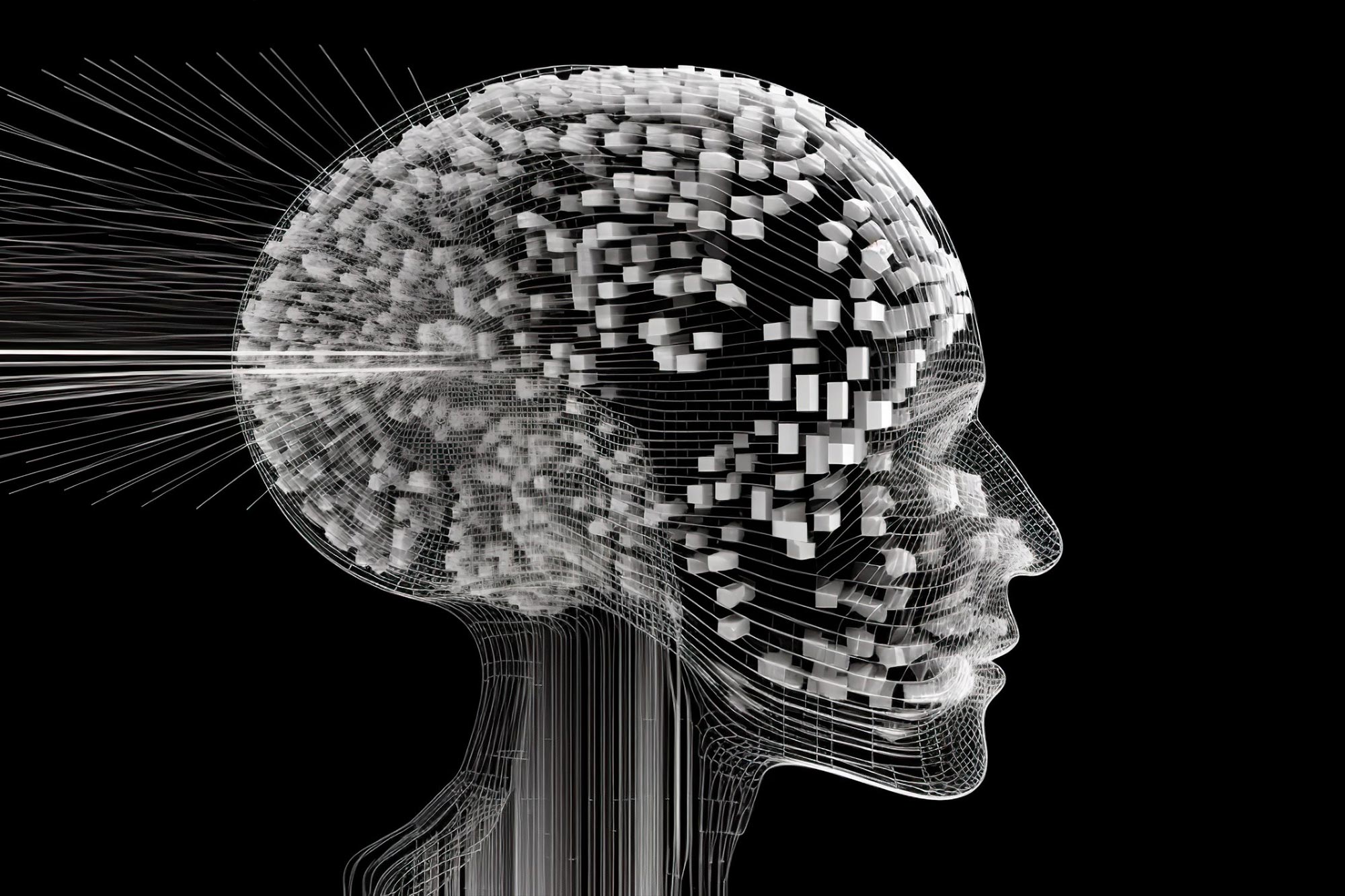
    Brain Signals Art Concept
    A study from Bar-Ilan University reveals that the brain’s efficient shallow learning, involving a wide network with few layers, can compete with the multi-layered deep learning models in complex classification tasks. This challenges the current design of GPUs, which favor deep over wide architectures.

    The brain, despite its comparatively shallow structure with limited layers, operates efficiently, whereas modern AI systems are characterized by deep architectures with numerous layers. This raises the question: Can brain-inspired shallow architectures rival the performance of deep architectures, and if so, what are the fundamental mechanisms that enable this?

    Neural network learning methods are inspired by the brain’s functioning, yet there are fundamental differences between how the brain learns and how deep learning operates. A key distinction lies in the number of layers each employs.

    Deep learning systems often have many layers, sometimes extending into the hundreds, which allows them to effectively learn complex classification tasks. In contrast, the human brain has a much simpler structure with far fewer layers. Despite its relatively shallow architecture and the slower, noisier nature of its processes, the brain is remarkably adept at handling complex classification tasks efficiently.

    Research on Shallow Learning Mechanisms in the Brain

    The key question driving new research is the possible mechanism underlying the brain’s efficient shallow learning — one that enables it to perform classification tasks with the same accuracy as deep learning. In an article published in Physica A, researchers from Bar-Ilan University in Israel show how such shallow learning mechanisms can compete with deep learning.


    Credit: Prof. Ido Kanter, Bar-Ilan University

    “Instead of a deep architecture, like a skyscraper, the brain consists of a wide shallow architecture, more like a very wide building with only very few floors,” said Prof. Ido Kanter, of Bar-Ilan’s Department of Physics and Gonda (Goldschmied) Multidisciplinary Brain Research Center, who led the research.

    “The capability to correctly classify objects increases where the architecture becomes deeper, with more layers. In contrast, the brain’s shallow mechanism indicates that a wider network better classifies objects,” said Ronit Gross, an undergraduate student and one of the key contributors to this work.

    “Wider and higher architectures represent two complementary mechanisms,” she added.  Nevertheless, the realization of very wide shallow architectures, imitating the brain’s dynamics, requires a shift in the properties of advanced GPU technology, which is capable of accelerating deep architecture, but fails in the implementation of wide shallow ones.

    Reference: “Efficient shallow learning mechanism as an alternative to deep learning” by Ofek Tevet, Ronit D. Gross, Shiri Hodassman, Tal Rogachevsky, Yarden Tzach, Yuval Meir and Ido Kanter, 11 January 2024, Physica A: Statistical Mechanics and its Applications.
    DOI: 10.1016/j.physa.2024.129513

    Never miss a breakthrough: Join the SciTechDaily newsletter.
    Follow us on Google and Google News.

    Artificial Intelligence Bar-Ilan University Brain Machine Learning
    Share. Facebook Twitter Pinterest LinkedIn Email Reddit

    Related Articles

    How Does AI Work? Researchers Reveal the Mechanism Underlying Successful Machine Learning

    Breakthrough AI Predicts Mouse Movement With 95% Accuracy Using Brain Data

    Smarter AI: Choosing the Best Path to Optimal Deep Learning

    Debunking the Myth: Is Deep Learning Necessary for Artificial Intelligence?

    “Organoid Intelligence” – Revolutionary Biocomputers Powered by Human Brain Cells

    Building a New Type of Efficient Artificial Intelligence Inspired by the Brain

    Making Mind Reading Possible: Invention Allows Amputees To Control a Robotic Arm With Their Mind

    MIT Neuroscientists Discover That Computers Identify Faces in a Surprisingly Human-Like Fashion

    New Type of Artificial Intelligence Inspired by Brain

    1 Comment

    1. xABBAAA on January 23, 2024 10:44 am

      … if I could have a chance to ask AI one question it would be this:
      You have three bodies: A, B and C. Each of those bodies travels at the speed close to the light speed, and there are some quantum effects taking place… like time dilatation…
      Then you calculate the time effect on B from A, and on B from C, and etc…
      So, the question is which are the time dilatation on each of those points… And there are three more questions… but not yet… what it means the homogenous and isotropic … those two things are bit… you know…

      Reply
    Leave A Reply Cancel Reply

    • Facebook
    • Twitter
    • Pinterest
    • YouTube

    Don't Miss a Discovery

    Subscribe for the Latest in Science & Tech!

    Trending News

    Scientists May Have Discovered How To Heal Damaged Kidneys

    Interstellar Visitor 3I/ATLAS Is Bursting With an Unexpected Chemical

    Scientists Just Found All 5 Genetic “Letters” of DNA and RNA on an Asteroid

    The 4,000-Year-Old City That Defied History’s Rules on Wealth and Power

    The World’s Biggest Population Fear Has Flipped – and It Could Change Everything

    This “Fake” Pill Improved Memory and Physical Performance in Just 3 Weeks

    Scientists Say Frequent Ejaculation May Improve Sperm Quality and Fertility

    Scientists Have Found “The Heaven Sword” After Years of Looking

    Follow SciTechDaily
    • Facebook
    • Twitter
    • YouTube
    • Pinterest
    • Newsletter
    • RSS
    SciTech News
    • Biology News
    • Chemistry News
    • Earth News
    • Health News
    • Physics News
    • Science News
    • Space News
    • Technology News
    Recent Posts
    • Watch What Happened When a Lost Elephant Calf Returned to Her Family
    • 17,000 Brain Scans Reveal Surprising Ethnic Differences in Alzheimer’s Biology
    • New Autism Treatment Strategy Restores Key Brain Receptor Function
    • Younger Generations Are Aging Faster – and It May Be Fueling a Surge in Cancer
    • Scientists Turn Ordinary Sunlight Into UV Light in Major Energy Breakthrough
    Copyright © 1998 - 2026 SciTechDaily. All Rights Reserved.
    • Science News
    • About
    • Contact
    • Editorial Board
    • Privacy Policy
    • Terms of Use

    Type above and press Enter to search. Press Esc to cancel.