
Close Menu
    Facebook X (Twitter) Instagram
    SciTechDaily
    • Biology
    • Chemistry
    • Earth
    • Health
    • Physics
    • Science
    • Space
    • Technology
    Facebook X (Twitter) Pinterest YouTube RSS
    SciTechDaily
    Home»Physics»Femtosecond Laser Turns Glass Into a “Transparent” Light-Energy Harvester
    Physics

    Femtosecond Laser Turns Glass Into a “Transparent” Light-Energy Harvester

    By EPFLJanuary 28, 20241 Comment2 Mins Read
    Facebook Twitter Pinterest Telegram LinkedIn WhatsApp Email Reddit
    Share
    Facebook Twitter LinkedIn Pinterest Telegram Email Reddit
    Tellurite Glass Energy Harvester
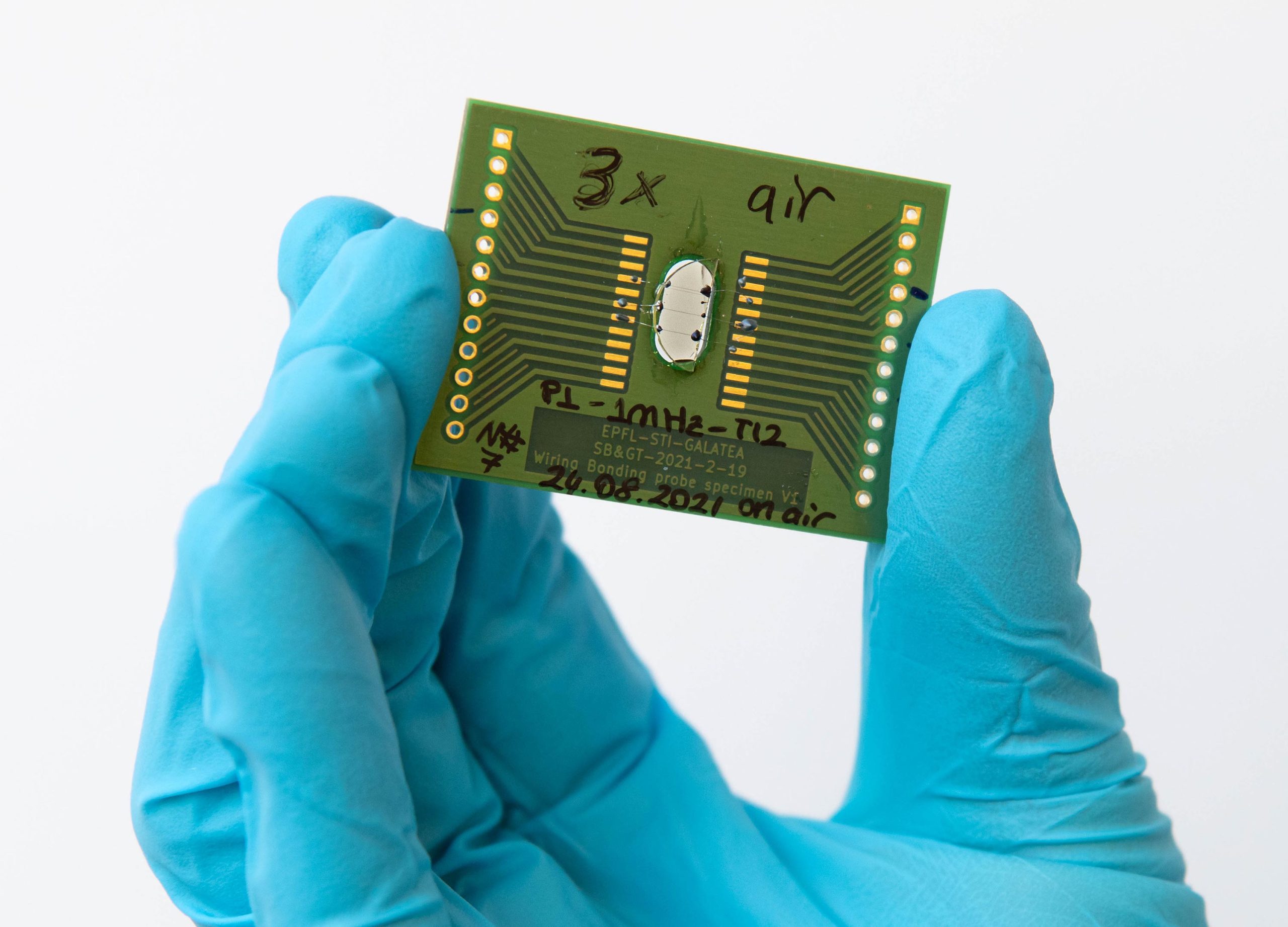
    Turning tellurite glass into a ‘transparent’ light-energy harvester by etching semiconducting patterns using femtosecond laser light. Credit: EPFL / Lisa Ackermann

    Researchers found that exposing tellurite glass to femtosecond laser light creates semiconducting nanocrystals, opening the possibility of turning glass into electricity-generating surfaces using only light.

    What happens when you expose tellurite glass to femtosecond laser light? That’s the question that Gözden Torun at the Galatea Lab, in a collaboration with Tokyo Tech scientists, aimed to answer in her thesis work when she made the discovery that may one day turn windows into single material light-harvesting and sensing devices. The results are published in PR Applied.

    Interested in how the atoms in the tellurite glass would reorganize when exposed to fast pulses of high energy femtosecond laser light, the scientists stumbled upon the formation of nanoscale tellurium and tellurium oxide crystals, both semiconducting materials etched into the glass, precisely where the glass had been exposed. That was the eureka moment for the scientists, since a semiconducting material exposed to daylight may lead to the generation of electricity.

    “Tellurium being semiconducting, based on this finding we wondered if it would be possible to write durable patterns on the tellurite glass surface that could reliably induce electricity when exposed to light, and the answer is yes,” explains Yves Bellouard who runs EPFL’s Galatea Laboratory. “An interesting twist to the technique is that no additional materials are needed in the process. All you need is tellurite glass and a femtosecond laser to make an active photoconductive material.”

    Using tellurite glass produced by colleagues at Tokyo Tech, the EPFL team brought their expertise in femtosecond laser technology to modify the glass and analyze the effect of the laser. After exposing a simple line pattern on the surface of a tellurite glass 1 cm in diameter, Torun found that it could generate a current when exposing it to UV light and the visible spectrum, and this, reliably for months.

    “It’s fantastic, we’re locally turning glass into a semiconductor using light,” says Yves Bellouard. “We’re essentially transforming materials into something else, perhaps approaching the dream of the alchemist!”

    Reference: “Femtosecond-laser direct-write photoconductive patterns on tellurite glass” by Gözden Torun, Anastasia Romashkina, Tetsuo Kishi and Yves Bellouard, 5 January 2024, Physical Review Applied.
    DOI: 10.1103/PhysRevApplied.21.014008

    Never miss a breakthrough: Join the SciTechDaily newsletter.
    Follow us on Google and Google News.

    Energy Nanocrystals Semiconductors
    Share. Facebook Twitter Pinterest LinkedIn Email Reddit

    Related Articles

    “Big Surprise” Discovery Increases Perovskite Solar Cell Efficiency

    Harvesting Hot Electrons Without Tricks Could Increase Solar Panel Efficiency

    New Spectroscopic Methods to Observe Energy Flow in the Nano Range

    Using Quantum Wells to Cool Electronics With No Moving Parts

    Langevin 4D Model Improves How We Predict Low-Energy Fission

    A New Technique to Map Energy and Momentum of Electrons

    Physicists Discover Negative Photoconductivity in Monolayer MoS2

    New Quantum Dots Design for Solotronics

    Computer Simulation Shows High-Gain Nuclear Fusion

    1 Comment

    1. Bao-hua ZHANG on January 29, 2024 2:52 am

      It’s really fantastic. You-all are indeed approaching the dream of the alchemist.
      Wishing you all the best.

      The interaction of topological vortices gives humanity infinite possibilities. If you are interested, you can browse https://zhuanlan.zhihu.com/p/569722770 and https://zhuanlan.zhihu.com/p/624024548.

      Reply
    Leave A Reply Cancel Reply

    • Facebook
    • Twitter
    • Pinterest
    • YouTube

    Don't Miss a Discovery

    Subscribe for the Latest in Science & Tech!

    Trending News

    JWST Finds a “Star” 100 Billion Times Brighter Than Any Star Should Be

    Scientists Find a Hidden Biological Link Across Different Forms of Autism

    Astronomers Discover a Ghostly River of Stars That Could Reveal Dark Matter

    Why Is Colorectal Cancer Rising in People Under 50? New Clues Point to the Environment

    Quantum Fluctuations Break a Crystal’s Symmetry Rules

    Why Does an Irregular Heartbeat Strike 40 Years Early in Some People?

    Scientists Reveal How ADHD Could Fuel Creative Thinking

    Scientists Find Just 3 Minutes of Sprinting Can Transform Blood Chemistry

    Follow SciTechDaily
    • Facebook
    • Twitter
    • YouTube
    • Pinterest
    • Newsletter
    • RSS
    SciTech News
    • Biology News
    • Chemistry News
    • Earth News
    • Health News
    • Physics News
    • Science News
    • Space News
    • Technology News
    Recent Posts
    • Physicists Discover Time Crystals Can Communicate Across a Semiconductor
    • Scientists Finally Solve a 20-Year Mystery About Diamond Melting
    • Common Vape Flavor May Disrupt Early Human Development
    • Ultra-Processed Foods Linked to 30% Higher Prostate Cancer Risk
    • More Screen Time, Better Thinking? An 8-Year Study Finds a Surprising Link
    Copyright © 1998 - 2026 SciTechDaily. All Rights Reserved.
    • Science News
    • About
    • Contact
    • Editorial Board
    • Privacy Policy
    • Terms of Use

    Type above and press Enter to search. Press Esc to cancel.