
Close Menu
    Facebook X (Twitter) Instagram
    SciTechDaily
    • Biology
    • Chemistry
    • Earth
    • Health
    • Physics
    • Science
    • Space
    • Technology
    Facebook X (Twitter) Pinterest YouTube RSS
    SciTechDaily
    Home»Science»Scientists Discover Mysterious Abandoned Zapotec City Hidden in the Mexican Jungle
    Science

    Scientists Discover Mysterious Abandoned Zapotec City Hidden in the Mexican Jungle

    By McGill UniversityFebruary 7, 2025No Comments4 Mins Read
    Facebook Twitter Pinterest Telegram LinkedIn WhatsApp Email Reddit
    Share
    Facebook Twitter LinkedIn Pinterest Telegram Email Reddit
    Guiengola Serpent Sculpture
    Serpent sculpture from the serpent plaza found by an earlier archaeological expedition and now in the Oaxacan hall in the National Museum of Anthropology in Mexico City. Credit: Pedro Guillermo Ramón Celis

    Understanding the Zapotecs’ level of political and social organization provides insight into their agency in negotiations with the Spanish.

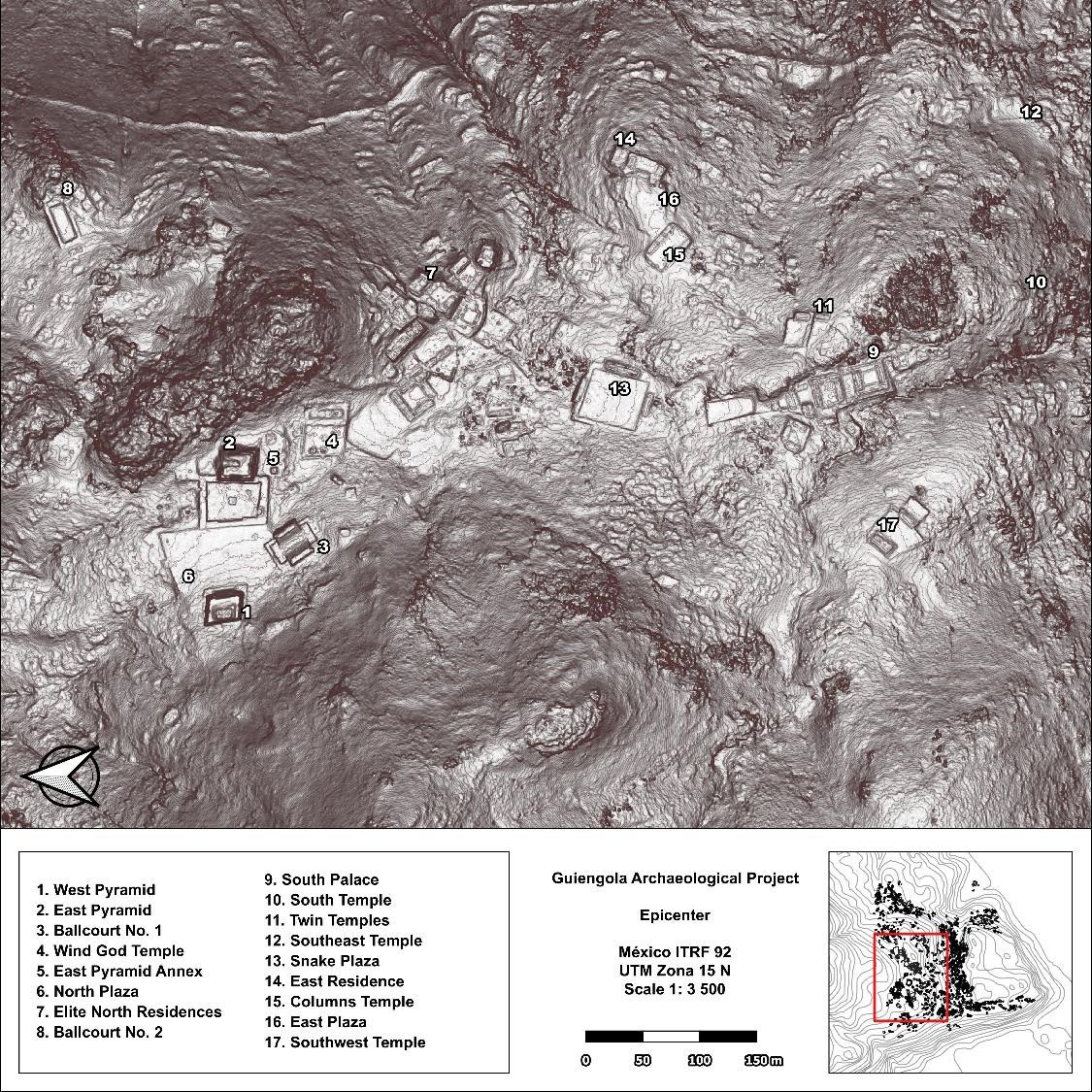
    A McGill University researcher has revealed that Guiengola, a 15th-century Zapotec site in southern Oaxaca, Mexico, was not merely a military fortress, as previously believed, but a vast, fortified city. Spanning 360 hectares, it contained more than 1,100 buildings, four kilometers of defensive walls, an extensive network of roads, and a well-organized urban layout featuring temples, communal spaces like ballcourts, and distinct neighborhoods for elites and commoners.

    Pedro Guillermo Ramón Celis, a Banting postdoctoral researcher in McGill’s Department of Anthropology and author of a recent study in Ancient Mesoamerica, presents evidence suggesting that Guiengola was abandoned just before the Spanish arrived. Its inhabitants are believed to have relocated about 20 kilometers away to Tehuantepec, where their descendants still live today.
    Public and Private Spaces in Guiengola
    North of the centre of the site it is possible to observe public spaces, such as the North Plaza, and private elite spaces, such as the Ballcourt No.2. Credit: Pedro Guillermo Ramón Celis

    Ramón Celis said investigating how the Mesoamerican city was organized on the eve of the Spanish conquest is just the first step. He said he is convinced that as work on Guiengola advances, it will give researchers a better sense of the Zapotecs’ level of political and social organization, and thus a greater understanding of their level of agency in negotiating with the Spanish.

    Revealing the City’s Layout Using Lidar Technology

    The finding was made by using a remote sensing tool known as lidar (light detection and ranging). Lidar relies on pulsing laser beams, in a process akin to sonar, to provide precise, detailed, three-dimensional topographic information about what is on the earth’s surface, below the dense forest canopy.
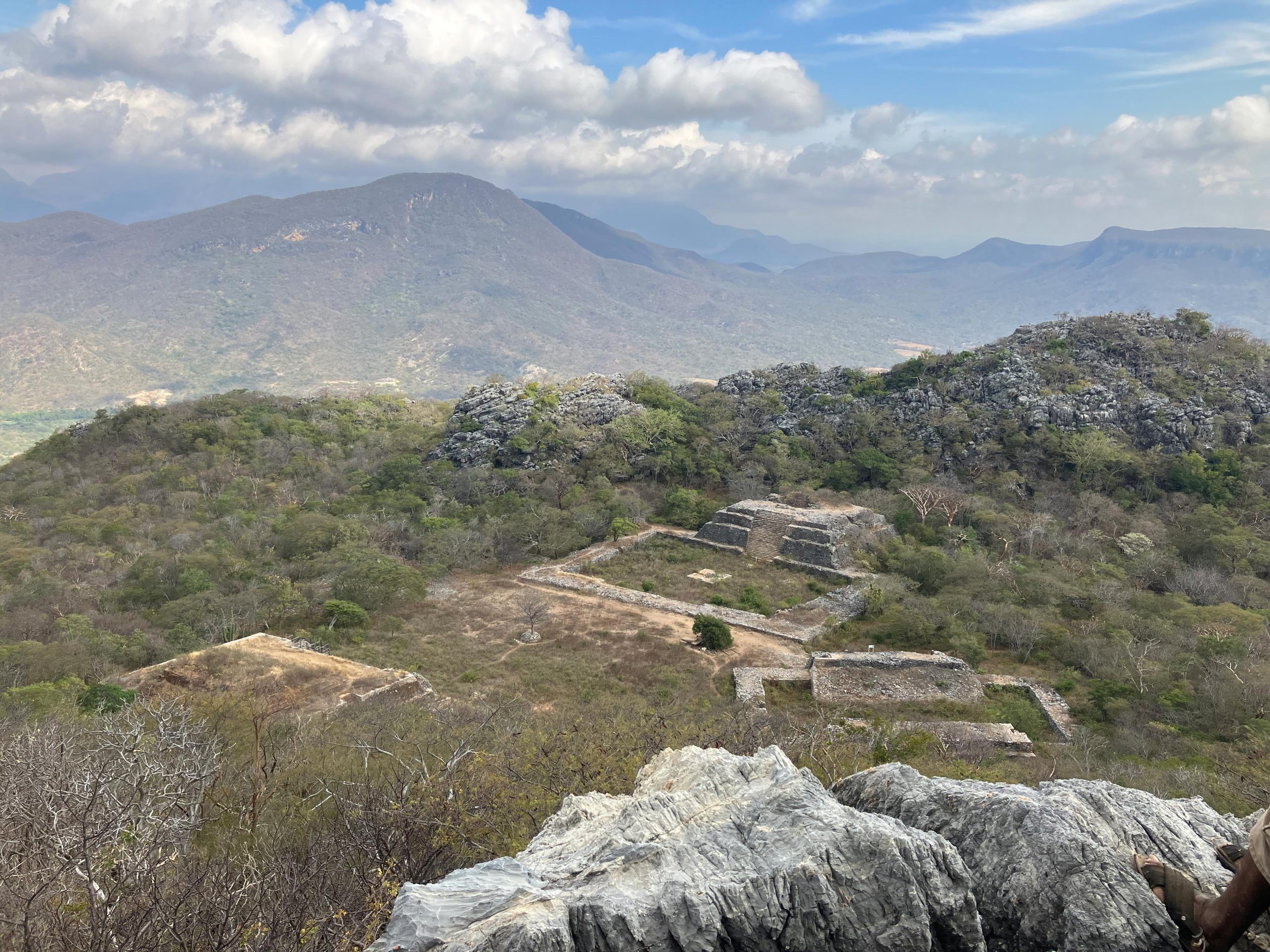
    Guiengola Seen From Above
    View of Guiengola’s North Plaza from above, the only area not covered by the tree canopy. Credit: Pedro Guillermo Ramón Celis

    “My mother’s family is from the region of Tehuantepec which is about 15 km from the site, and I remember them talking about it when I was a child. It was one of the reasons that I chose to go into archaeology,” Ramón Celis said. “Although you could reach the site using a footpath, it was covered by a canopy of trees. Until very recently, there would have been no way for anyone to discover the full extent of the site without spending years on the ground walking and searching. We were able to do it within two hours by using remote sensing equipment and scanning from a plane.”

    By analyzing the data generated by the scans and using the Geo Analytic laboratory at McGill, Ramón Celis has been able to map the size and the layouts of the remaining built structures and infer their use based on the artifacts found at the locations.

    Lidar Scan of Guiengola
    Lidar scan showing the Civic and Ceremonial Center (left) and the commoner areas (right), split by a defensive wall (center). Credit: Pedro Guillermo Ramón Celis

    To explore how power was distributed in the city, he calculated how much building space was given over to elite areas such as the temples and ballcourts, for example, compared to what was built in the areas used by commoners. Ballcourts were built in Mesoamerica for the purpose of practicing a ritual ballgame, and represent both the underworld and fertility, since they are a way of connecting with the ancestors and seeds grow below the soil, where the underworld is found.

    Ramón Celis added, “Because the city is only between 500 and 600 years old, it is amazingly well preserved, so you can walk there in the jungle, and you find that houses are still standing… you can see the doors… the hallways… the fences that split it from other houses. So, it is easy to identify a residential lot. It’s like a city frozen in time, before any of the deep cultural transformations brought by the Spanish arrival had taken place.”

    Reference: “Airborne lidar at Guiengola, Oaxaca: Mapping a Late Postclassic Zapotec city” by Pedro Guillermo Ramón Celis, 8 November 2024, Ancient Mesoamerica.
    DOI: 10.1017/S0956536124000166

    Funding: Wenner-Gren Foundation, Indiana University College of Arts and Sciences and now the Canadian Social Sciences and Humanities Research Council.

    Never miss a breakthrough: Join the SciTechDaily newsletter.
    Follow us on Google and Google News.

    Archaeology Lidar Equipment McGill University Popular
    Share. Facebook Twitter Pinterest LinkedIn Email Reddit

    Related Articles

    Scientists Have Discovered a “Lost” Mayan Megacity, Complete With Hidden Pyramids

    Newly Discovered Fossils Reveal Man’s Earliest Ancestors

    The Stonehenge Hidden Landscapes Project Reveals a Major New Prehistoric Stone Monument

    Prolonged Drought Contributed to Maya Civilization’s Collapse

    Easter Island Moai Statues Could Have “Walked” Out of Quarries

    European Cave Paintings Older Than Previously Thought, Might Have Been Painted by Neanderthals

    Ancient Murals in Guatemala Offer Glimpse of Mayan Astronomy

    Million-Year-Old Ash in South African Cave Yields Evidence of Cooking

    Humans Implicated in Africa’s Deforestation 3,000 Years Ago

    Leave A Reply Cancel Reply

    • Facebook
    • Twitter
    • Pinterest
    • YouTube

    Don't Miss a Discovery

    Subscribe for the Latest in Science & Tech!

    Trending News

    Scientists Recreate a Nuclear Fireball and Uncover Fallout’s Hidden Chemistry

    These Tiny Gut Particles Could Be Accelerating Aging Throughout the Body

    Doctors Changed One Thing and Weight Gain Stopped

    Magnetic Fields May Solve a Longstanding Binary Star Mystery

    The Probiotic Breakthrough for Natural Anxiety Relief and Better Mental Health

    Animal vs. Plant Protein: Scientists Found a Surprising Nutritional Difference

    According to Scientists, This Simple Dietary Change Is Linked to Lower Depression Scores

    Researchers Discover a Hidden Vitamin D Problem That Persists Year-Round

    Follow SciTechDaily
    • Facebook
    • Twitter
    • YouTube
    • Pinterest
    • Newsletter
    • RSS
    SciTech News
    • Biology News
    • Chemistry News
    • Earth News
    • Health News
    • Physics News
    • Science News
    • Space News
    • Technology News
    Recent Posts
    • Mini Brain Organoids Expose Hidden Biological Differences in Alzheimer’s Disease
    • Scientists Recommend Doing This To Reduce Anxiety During Pregnancy
    • Scientists Reveal What Happened When 12 People Were Trapped Together in Antarctica for 10 Months
    • Buried for 1.7 Billion Years: These Ancient Fossils May Rewrite the Story of Complex Life
    • NASA Spots Giant Ocean Swell Signaling a Potential El Niño Comeback
    Copyright © 1998 - 2026 SciTechDaily. All Rights Reserved.
    • Science News
    • About
    • Contact
    • Editorial Board
    • Privacy Policy
    • Terms of Use

    Type above and press Enter to search. Press Esc to cancel.