
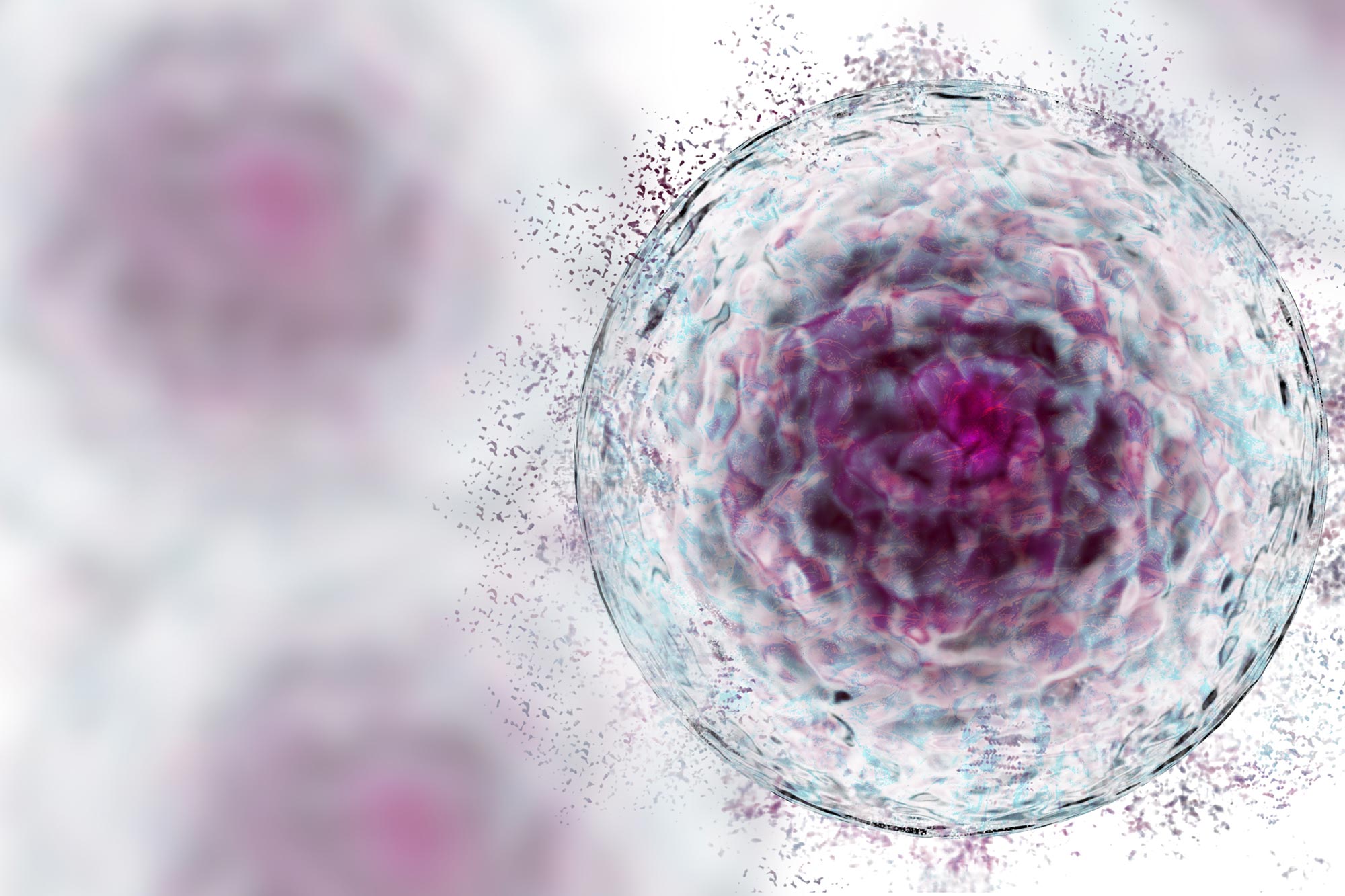
Your immune system is supposed to clear out damaged cells. Researchers may have found how some of them hide and linger as the body ages.
Researchers led by Cedars-Sinai Health Sciences University have identified PD-L2 as a protein that may help damaged cells escape immune removal. In the study, published in Cell Metabolism, blocking PD-L2 reduced the buildup of these cells in older mice and improved insulin sensitivity.
Called senescent cells, they stop dividing after damage but can linger in tissues. There, they release substances that fuel inflammation and disrupt nearby cells. The immune system usually helps clear them, yet they accumulate as the body ages.
How Aging Cells May Evade Removal
PD-L2 helps regulate immune responses. The researchers found more of it in senescent human cells than in younger cells, and levels increased with age in some human tissues. This may help explain why senescent cells persist.
A soluble form of PD-L2 also increased in blood with age and declined after people received drugs intended to clear senescent cells. That suggests it could help researchers track the cells without taking tissue samples, though it has not been validated as a blood test.
“Our findings suggest that PD-L2 may help aging cells stay in the body when they would normally be removed by the immune system,” said Selim Chaib, PhD, a research assistant professor of medicine at Cedars-Sinai and the study’s first and co-corresponding author.
Older mice genetically lacking PD-L2 accumulated fewer senescent cells and showed better insulin sensitivity and grip strength. Separately, blocking the protein with a treatment improved insulin sensitivity in older mice.
What the Findings Could Mean for Treatment
The results point to two possible uses for PD-L2: a target for treatments intended to clear harmful senescent cells and a blood marker that could help researchers track them.
“If we can find a way to block this protein, we may be able to help the immune system get rid of these cells and potentially improve health problems linked with aging,” said James Kirkland, MD, PhD, director of the Center for Advanced Gerotherapeutics and the study’s senior author.
The improvement in mice makes PD-L2 a promising lead, but whether blocking it can safely improve human health remains unknown. Future research will examine that question and clarify how the protein contributes to diseases associated with aging.
Reference: “Blocking PD-L2 prevents senescent cell accumulation and age-related dysfunction” by Selim Chaib, Larissa G.P. Langhi Prata, Masayoshi Suda, Andres Sola, Thomas J. Mitchell, Zacharias P. Anastasiadis, Hawley E. Kunz, Jia Nie, Stella G. Victorelli, Ricardo Lozano Flores, Moritz Weigl, Shimpei Kawamoto, Ken Uemura, Hyungsoo Kim, Binsheng Wang, Christina L. Inman, Tamar Pirtskhalava, Nino Giorgadze, Ailing Xue, Kurt O. Johnson, Jair M. Espindola-Netto, Sonja Suvakov, Jennet Hatamova, Erik S. Parker, Davyn Benitto Hartono, Vagisha Kulshreshtha, Jose Alberto Lopez-Dominguez, Aaron M. Deisinger, Allyson K. Palmer, Yi Zhu, Megan M. Weivoda, Anne Gingery, Robert Hromas, Vesna D. Garovic, João F. Passos, David B. Allison, Eiji Hara, Michael D. Jensen, Nicolas Musi, Stefan G. Tullius, Ze’ev A. Ronai, Manuel Serrano, Ming Xu, Ian R. Lanza, Yuji Ikeno, Tamara Tchkonia and James L. Kirkland, 10 September 2026, Cell Metabolism.
DOI: 10.1016/j.cmet.2026.08.014
Never miss a breakthrough: Join the SciTechDaily newsletter.
Follow us on Google and Google News.