
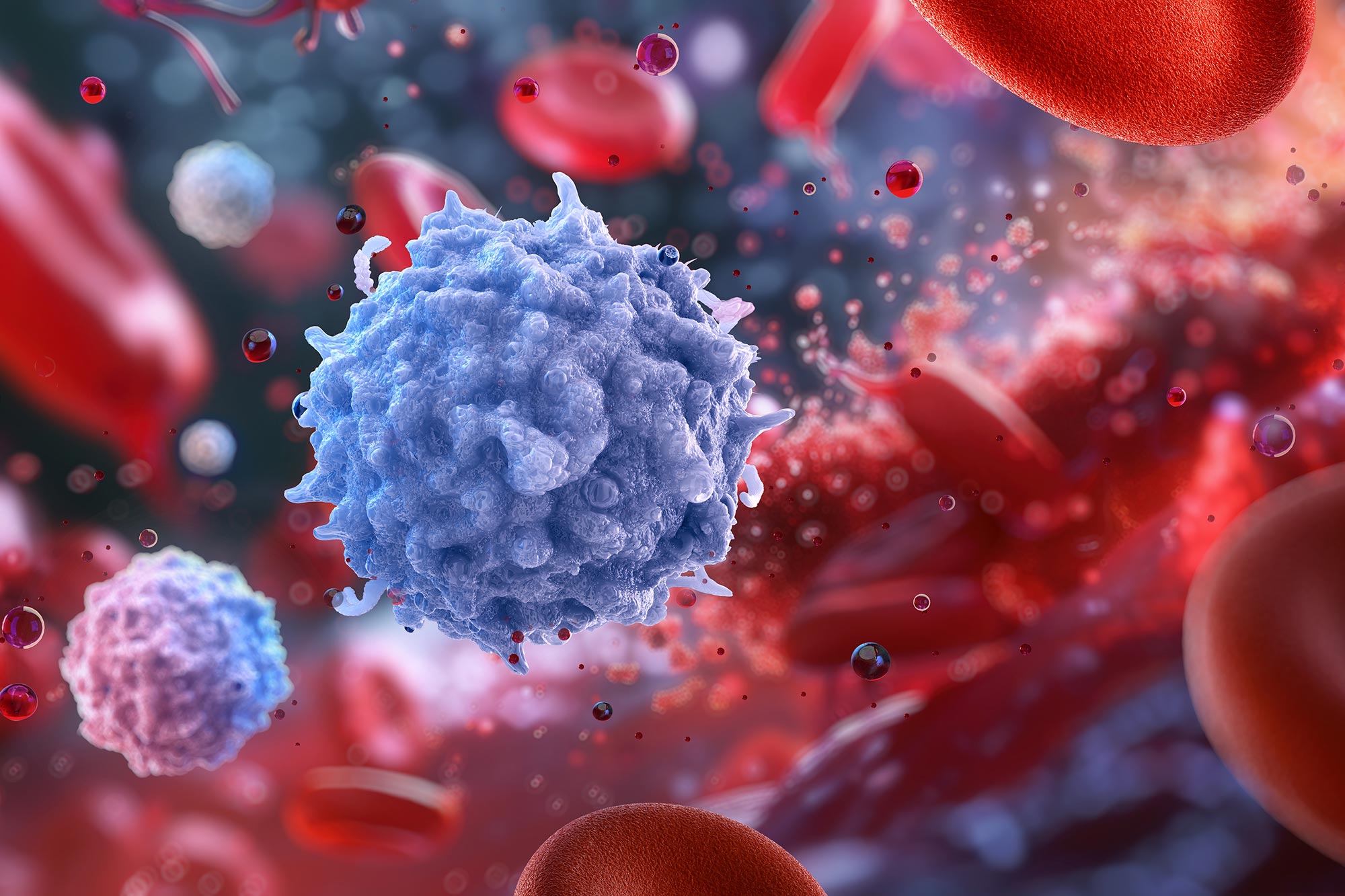
Scientists have identified a pathway that keeps aging immune cells stuck in an inflammatory mode, intensifying the body’s response to severe infection and pointing to new therapeutic possibilities.
As the body grows older, the immune system can lose its ability to function properly, increasing the risk of severe illnesses such as sepsis. A new study from researchers at the University of Minnesota examines how aging affects specific immune cells called macrophages, which remain stuck in a highly inflammatory state in preclinical models. The results were published in Nature Aging.
The researchers discovered that these macrophages produce a protein known as GDF3 that acts back on the same cells, strengthening and sustaining their inflammatory activity. This heightened inflammatory state makes it harder for the body to cope with sepsis. The study, led by biochemistry graduate student In Hwa Jang, found that GDF3 sends signals through SMAD2/3, causing lasting changes in the genome. As a result, macrophages release higher levels of inflammatory cytokines.
Targeting Harmful Immune Pathways
“Macrophages are critical to the development of inflammation; in our study, we identified a pathway which is used to maintain their inflammatory status,” said Christina Camell, PhD, an associate professor with the University of Minnesota Medical School and College of Biological Sciences. “Our findings suggest that this pathway could be blocked to prevent the amplified inflammation that can be damaging to organ function and may be a promising target for future treatments that reduce harmful inflammation.”
The researchers showed that removing the GDF3 gene reduced harmful inflammatory responses to bacterial toxins. They also demonstrated that drugs blocking the GDF3–SMAD2/3 signaling pathway can alter how inflammatory, fat-tissue macrophages behave and improve survival in older preclinical models exposed to severe infection.
Finally, in collaboration with Pamela Lutsey (School of Public Health) and using data from the Atherosclerosis Risk in Communities Study (ARIC), the investigators revealed that GDF3 protein correlates with inflammatory signaling in older humans.
Evidence From Human Data and Next Steps
Additional research is needed to pinpoint the molecular factors involved in this pathway and understand how it regulates specific inflammatory signals. Dr. Camell was recently awarded a 2025 AFAR Discovery Award based on this research, which will further investigate the consequences of these inflammatory macrophages on multiple metabolic organs and metabolic healthspan.
Reference: “GDF3 promotes adipose tissue macrophage-mediated inflammation via altered chromatin accessibility during aging” by In Hwa Jang, Anna Carey, Victor Kruglov, Katie Nguyen, Jeffrey R. Misialek, Stephanie H. Cholensky, Declan M. Smith, Suxia Bai, Timothy Nottoli, David A. Bernlohr, Pamela L. Lutsey and Christina D. Camell, 15 December 2025, Nature Aging.
DOI: 10.1038/s43587-025-01034-6
This research was supported by the National Institute of Health [grants F99AG095479, R00AG058800, R01AG069819, R01AG079913], the McKnight Land-Grant Professorship, the Glenn Foundation for Medical Research/AFAR 2025 Discovery Award, the Diana Jacobs Kalman/AFAR Scholarships for Research in the Biology of Aging and the Medical Discovery Team on the Biology of Aging. The Atherosclerosis Risk in Communities study has been funded in whole or in part with Federal funds from the National Heart, Lung, and Blood Institute, National Institutes of Health, Department of Health, and Human Services, under Contract nos. (75N92022D00001, 75N92022D00002, 75N92022D00003, 75N92022D00004, 75N92022D00005). SomaLogic Inc. conducted the SomaScan assays in exchange for use of ARIC data. This work was supported in part by NIH/NHLBI grant R01 HL134320.
Never miss a breakthrough: Join the SciTechDaily newsletter.
Follow us on Google and Google News.
1 Comment
Great- what causes inflammation upstream needs tested and treated to avoid the mistake of th8nking amyloid was a cause of dentia when it is a correlate.
Infections, toxins, nitrient dna sps like MTHFR can trigger EVERY brain disorder pathway including protein misfolding, genes up amd down regulation, immune changes , IDO1, TDP-43, SOD-1, SIRT 6 and now GDF3. So this is probably protecting us at least at 1st just like amyloid, an anti- microbial. HSV triggers tau. Borrelia, treponema trigger amyloid.
Bartonella triggers every mental illness includuing schizophremia per Breitschwerdt.
3 B’s of borrelia, Bartonella, babesia can cause every mental illness, bipolar in children per Greenberg. Borrelia/Lyme is 3x rate of syphilis, the only other spiral bacteria to invade all tissues. Toxins like mold and lead can cause brain disorders.
None of these are in prenatal, psych or dementia workup tests except by F7nctional Medicine educated clinicians. PsychologyRedefined.org has courses. Neuroimmune.org and AlzPi.org have free webonars.