
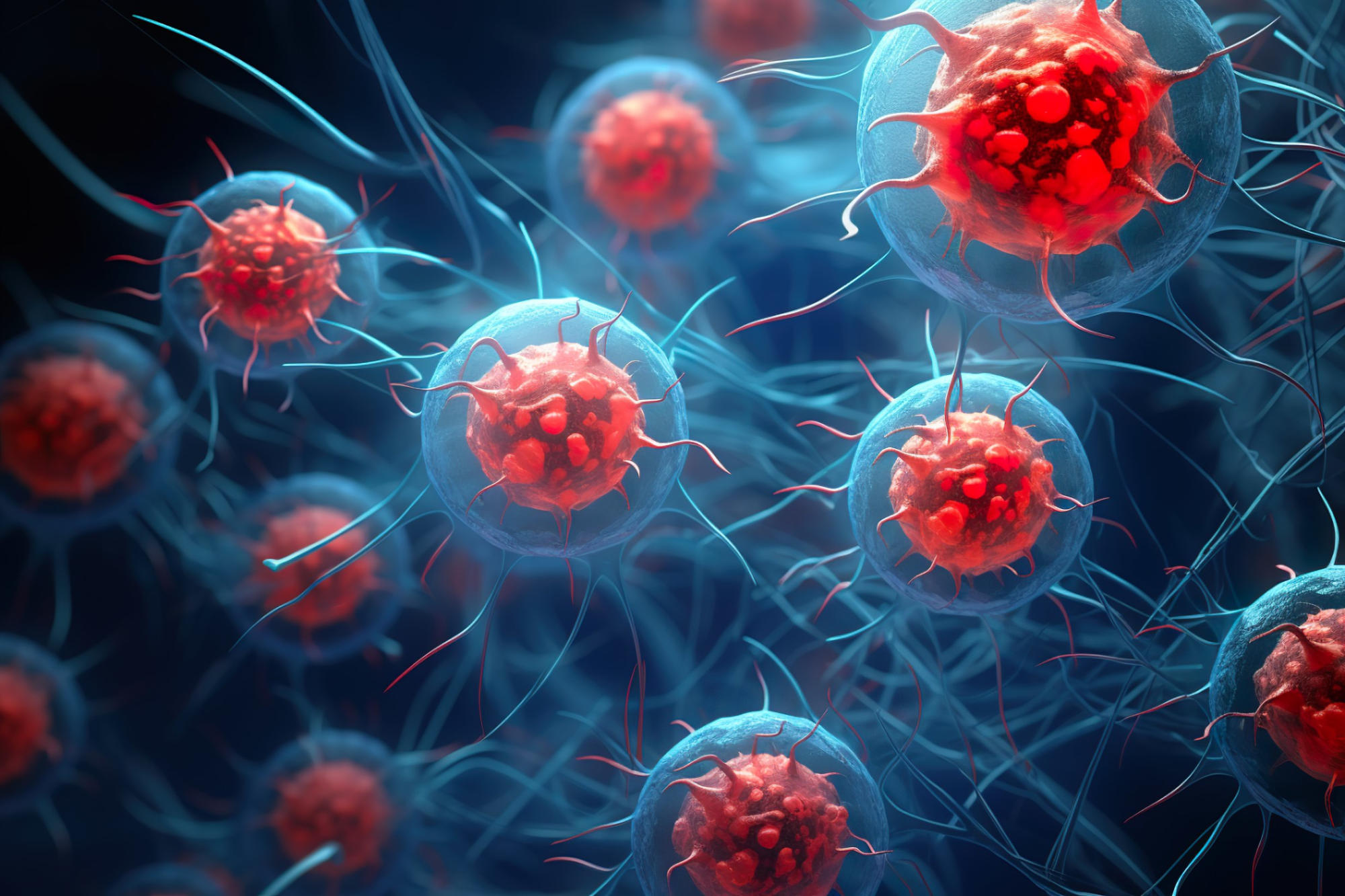
New research uncovers new insights into preventing chronic inflammation caused by aging-related zombie-like cells.
In humans and other multicellular organisms, cells multiply. This fundamental process drives growth from embryo to adulthood and supports tissue repair throughout life.
However, certain factors can disrupt this cycle, causing cells to enter a zombie-like state called senescence. In this state, cells remain alive but lose their ability to divide and generate new cells. While the body can clear out these senescent cells, they tend to accumulate with age. Over time, the immune system becomes less effective at removing them, contributing to the aging process.
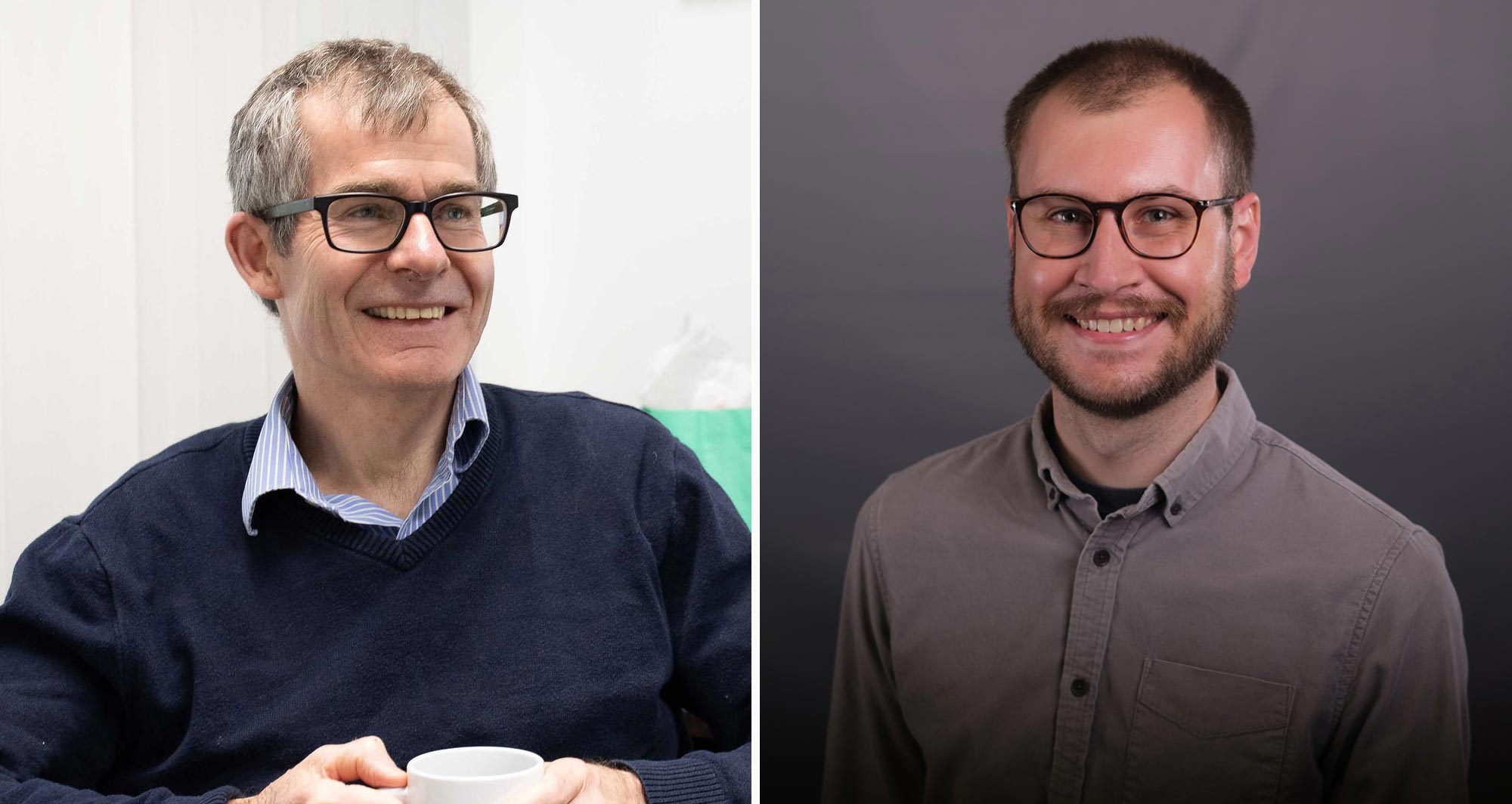
“In addition to no longer growing and proliferating, the other hallmark of senescent cells is that they have this inflammatory program causing them to secrete inflammatory molecules,” said Peter Adams, PhD, director and professor in the Cancer Genome and Epigenetics Program at Sanford Burnham Prebys and senior and co-corresponding author of the study.
Cells “running” this inflammatory program are considered to exhibit the senescence-associated secretory phenotype (SASP). Too many cells with SASP secreting inflammatory molecules can contribute to chronic inflammation in the body. This pervasive inflammation — called “inflammaging” — has been linked to many age-related diseases.
New Findings on DNA Repair and Inflammaging
Scientists at Sanford Burnham Prebys and collaborators across the country published findings March 5, 2025, in Nature Communications showing that the mitochondria powering our cells also control the ability of a DNA repair protein to suppress SASP, which may reduce or delay inflammaging.
The research team turned human cells senescent by exposing them to radiation and then used those cells to demonstrate that DNA fixer tumor protein p53 suppressed SASP and one of its triggering events, the formation of cytoplasmic chromatin fragments (CCF). These fragments are bits of damaged DNA that have been spewed from the cells’ nuclei into the gel-like cytoplasm that occupies the space in the cell between the outer membrane and the central nucleus. The presence of DNA where it does not belong can trigger the immune system and contribute to SASP.
Testing in Mice and the Role of Mitochondria
The scientists validated their findings in mice by treating them with a drug developed by cancer researchers to activate p53 as a way of suppressing tumors. In aged mice, the drug did not reduce the number of senescent cells but instead reversed the cellular signature that marks age-associated SASP, potentially stopping the inflammatory pollution that can lead to inflammaging.
In addition, the investigators discovered that senescent cells suffer from dysfunction in the mitochondria serving as cells’ primary source of energy. Stressed mitochondria can cause senescent cells to form CCF and dampen the expression of the gene carrying the blueprint for p53.
“Altogether, we’ve identified a cellular circuit capable of promoting DNA repair and genome integrity while suppressing the dangerous inflammatory feature of senescent cells that contribute to age-related diseases,” said Karl Miller, PhD, staff scientist in the Adams lab at Sanford Burnham Prebys and lead and co-corresponding author of the study.
“We also have shown that this pathway can be modified by existing drugs in cultured cells and mice, so it may be possible to one day design a treatment that targets p53 to promote healthier aging.”
Reference: “p53 enhances DNA repair and suppresses cytoplasmic chromatin fragments and inflammation in senescent cells” by Karl N. Miller, Brightany Li, Hannah R. Pierce-Hoffman, Shreeya Patel, Xue Lei, Adarsh Rajesh, Marcos G. Teneche, Aaron P. Havas, Armin Gandhi, Carolina Cano Macip, Jun Lyu, Stella G. Victorelli, Seung-Hwa Woo, Anthony B. Lagnado, Michael A. LaPorta, Tianhui Liu, Nirmalya Dasgupta, Sha Li, Andrew Davis, Anatoly Korotkov, Erik Hultenius, Zichen Gao, Yoav Altman, Rebecca A. Porritt, Guillermina Garcia, Carolin Mogler, Andrei Seluanov, Vera Gorbunova, Susan M. Kaech, Xiao Tian, Zhixun Dou, Chongyi Chen, João F. Passos and Peter D. Adams, 5 March 2025, Nature Communications.
DOI: 10.1038/s41467-025-57229-3
The study was supported by the National Institutes of Health, the National Cancer Institute, the California Institute for Regenerative Medicine and the Glenn Foundation for Medical Research.
Never miss a breakthrough: Join the SciTechDaily newsletter.
Follow us on Google and Google News.
4 Comments
“The research team turned human cells senescent by exposing them to radiation…” Radiation damages cells differently than natural aging, so this is not a good model for naturally aging cells. And a mouse model with a drug is not the same, either, and its applicability to human cells is unknown.
The term “inflammaging” sounds like some PR people were involved in this study, which is clearly looking for a drug to reverse this. ““We also have shown that this pathway can be modified by existing drugs in cultured cells and mice, so it may be possible to one day design a treatment that targets p53 to promote healthier aging.”” “SMK is a scientific advisory board member for EvolveImmune Therapeutics, Simcha Therapeutics, Siren Biotechnology, Arvinas and Affini-T, and an Academic Editor at the Journal of Experimental Medicine.”
“…….so it may be possible to one day design a treatment” Yes, decades from now. Just have to maximize shareholder value first. That’ll be the true focus.
I once saw a film of interacting cells. They were cute – almost have a personality of their own. There was one real nice little cell, it wasn’t a zombie – it was simply nice – too nice for it’s own good because there was also this scruffy-looking cell that would remind anyone of the Tazmanian Devil cartoon character, boxy with little horn-like ears – and pushing itself around. The nice little cell seemed happy to see a new friend – but Taz ate that cell. Viciously in three chomps and swallow. A regular horror show.
Maybe the good Doctors in this article need to consider counting the Tazmanian Devil cells – maybe aging is really your Taz Devil-cell count.
Yes We Can.l !
But, why bother?
You get a newly minted Body every time that the soul flees the Body.
Who wants to be a Zombie 😤😤😤.
Not me.मृत्यु, जन्म-मृत्यु और पुनर्जन्म के चक्र में एक नई शुरुआत है।मृत्युंजय मंत्र. त्र्यम्बकेम यजा महे उगंधिं पुष्टि वर्धमान, उठ्वा रुख्मिव वंदनं मृत्युओर मोक्ष यममृततः।