
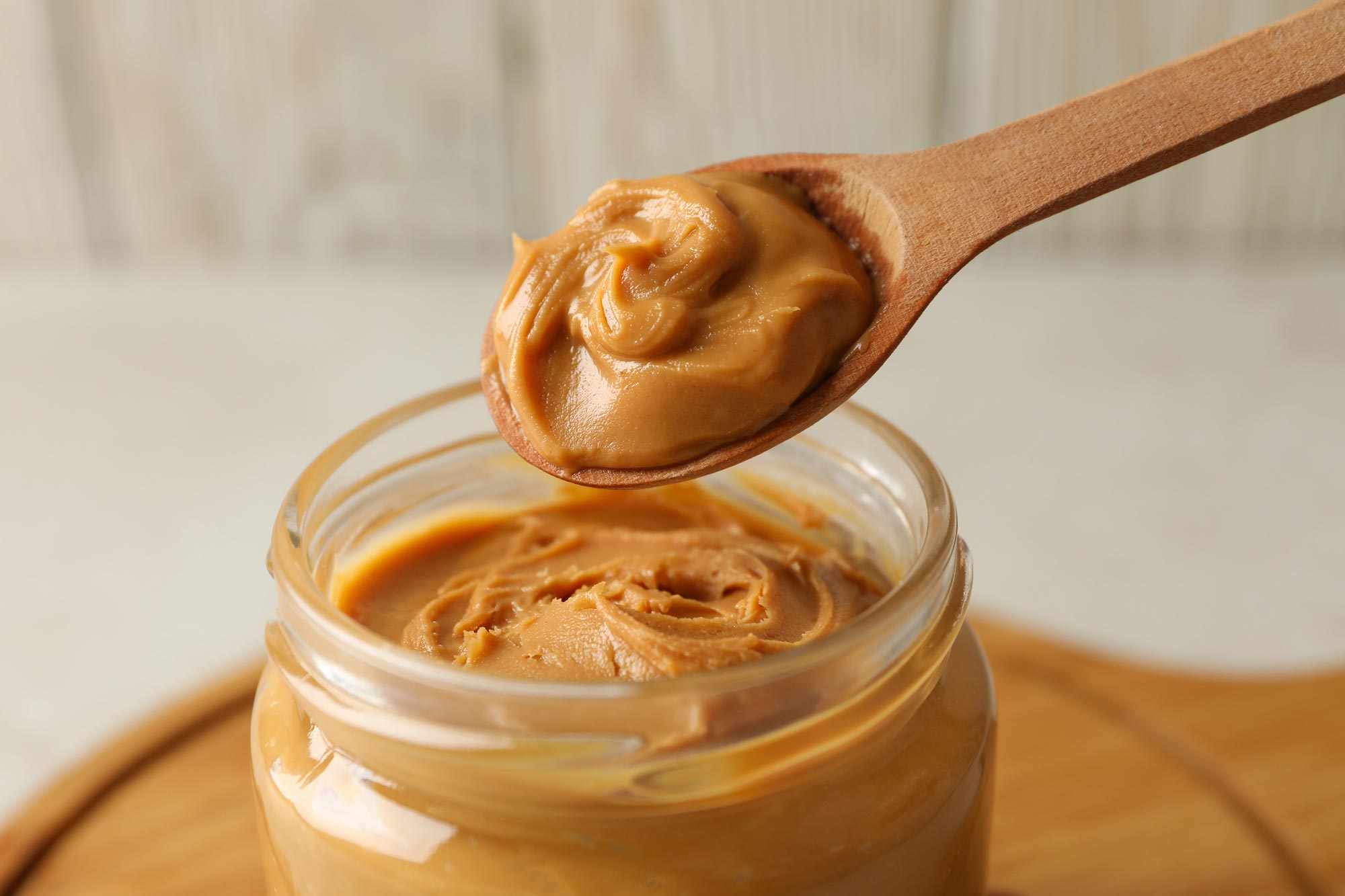
A study at Mount Sinai has shown that children with a high tolerance for peanuts can significantly increase their resistance to allergic reactions by consuming controlled, increasing amounts of peanut butter over time. This approach, safer and cheaper than current therapies, suggests a major shift towards personalized allergy treatments that could revolutionize how food allergies are managed.
Breakthrough in Peanut Allergy Treatment
Children with high-threshold peanut allergies who gradually increased their intake of store-bought peanut butter became significantly more desensitized than those who avoided peanuts, according to a new study from the Icahn School of Medicine at Mount Sinai. The study found that this approach led to higher and longer-lasting tolerance levels.
The research, funded by the National Institutes of Health’s National Institute of Allergy and Infectious Diseases, was published today in the February 10 issue of NEJM Evidence.
Safer and More Effective Allergy Management
“Our study results suggest a safe, inexpensive and effective pathway for allergists to treat children with peanut allergy who can already tolerate the equivalent of at least half a peanut, considered a high-threshold peanut allergy,” said Scott Sicherer, MD, Director of the Elliot and Roslyn Jaffe Food Allergy Institute at Mount Sinai Kravis Children’s Hospital, Chief of the Division of Allergy and Immunology in Mount Sinai’s Department of Pediatrics, and lead author of the paper. “Our findings open the gateway to personalized threshold-based treatments of food allergy and will encourage additional studies that delve deeper into peanut and other foods for this approach that might be a game-changer for the majority of people with food allergies.”
The standard approach to managing food allergies has been strict avoidance, but in recent years, peanut oral immunotherapy has emerged as an alternative. This treatment involves gradually increasing daily doses of peanut protein under medical supervision to build tolerance.
However, previous studies leading to FDA approval of peanut allergy treatments — both an injectable biologic and an oral immunotherapy — have primarily focused on individuals with extreme sensitivity, reacting to as little as half a peanut or less (classified as a low-threshold peanut allergy). In contrast, an estimated 800,000 children in the U.S. have a high-threshold peanut allergy, meaning they can tolerate at least half a peanut. This study specifically explores whether these children could benefit from a different treatment approach.
Rethinking Peanut Allergies
“Years ago, when people with milk and egg allergies were advised to undertake strict avoidance, our team initiated studies that found most people with milk and egg allergies could tolerate these foods in baked goods, which changed the global approach to these allergies,” said Julie Wang, MD, Professor of Pediatrics at the Icahn School of Medicine, clinical researcher at the Jaffe Food Allergy Institute, and co-senior author of the paper.
“The research team recognized that more than half of people with peanut allergy can tolerate half a peanut or more, and thought that this group of people might be treatable if we took a different approach to peanut oral immunotherapy. We were thrilled to find that this treatment strategy was even more successful than we had anticipated.”
To test this hypothesis, the study team recruited 73 children ages 4 to 14 years old. Study participants were assigned, at random, to either test the new treatment strategy or continue avoiding peanuts. The children in the peanut-ingestion group began with a minimum daily dose of 1/8 teaspoon of peanut butter and gradually increased their dose every eight weeks over the course of 18 months, ending at one tablespoon of peanut butter or an equivalent amount of a different peanut product. All dose increases took place under medical supervision. None of the study participants in the peanut-ingestion group had severe reactions or needed epinephrine during home dosing and only one received epinephrine during a supervised dosing visit.
Long-lasting Desensitization Success
Following the treatment regimen, children from the peanut-consuming cohort participated in a feeding test, carefully supervised by the study team, to evaluate how much peanut they could eat without an allergic reaction. All 32 children from the peanut-consuming group who participated in the feeding test could tolerate the maximum amount of nine grams of peanut protein, or three tablespoons of peanut butter. By contrast, only three of the 30 children from the avoidance group who underwent the feeding test after avoiding peanuts for the duration of the study could tolerate this amount.
Because the trial took place during the COVID-19 pandemic and some families preferred avoiding close encounters indoors, some did not return to the study site for the feeding test. Using a common statistical technique to account for the children who missed the feeding test, the team reported that 100 percent of the ingestion group and 21 percent of the avoidance group tolerated an oral food challenge that was at least two doses more than they could tolerate at the beginning of the study.
To test if the response to treatment was durable, children in the peanut-ingestion group who could tolerate nine grams of protein during the feeding test went on to consume at least two tablespoons of peanut butter weekly for 16 weeks and then avoided peanuts entirely for eight weeks. Twenty-six of the 30 treated children who participated in a final feeding test after the eight-week abstinence period continued to tolerate nine grams of peanut protein, indicating that they had achieved sustained unresponsiveness to peanuts. The three participants from the avoidance group who could eat nine grams of peanut protein without reaction at the earlier food test were considered to have developed natural tolerance to peanuts. A comprehensive analysis of data collected from all 73 study participants revealed that 68.4 percent of the peanut-ingestion group achieved sustained unresponsiveness, while only 8.6 percent of the avoidance group developed a natural tolerance.
“These study results are very exciting and a huge step forward in personalizing food allergy treatment,” concluded Dr. Sicherer, the Elliot and Roslyn Jaffe Professor in Pediatric Allergy and Immunology at Mount Sinai. “My hope is that this study will eventually change practice to help these children and encourage additional research that includes this approach for more foods.”
In addition to expanding the work to more foods and validation studies of their approach, the Mount Sinai study team aims to determine a better way of identifying individuals with higher thresholds, because the best way to do so currently requires a feeding test that is bound to cause an allergic reaction.
Reference: “Randomized trial of high dose, home measured peanut oral immunotherapy in children with high threshold peanut allergy” by Scott H. Sicherer, M.D., Supinda Bunyavanich, M.D., M.P.H., M.Phil., M. Cecilia Berin, Ph.D., Tracy Lo, R.N., Marion Groetch, M.S., R.D.N., Allison Schaible, M.S., R.D.N., Susan A. Perry, R.N., Lisa M. Wheatley, M.D., M.P.H., Patricia C. Fulkerson, M.D., Ph.D., Helena L. Chang, M.S., Mayte Suárez-Fariñas, Ph.D., Hugh A. Sampson, M.D. and Julie Wang, M.D., 10 February 2025, NEJM Evidence.
DOI: 10.1056/EVIDoa2400306
Never miss a breakthrough: Join the SciTechDaily newsletter.
Follow us on Google and Google News.
3 Comments
Can we say “vaccination” or “inoculation” ????
Someone needs to clarify the differences in allergies, allergy types, and allergen types. One specific Peanut allergy, spoken of here, isn’t the same as other forms of peanut allergy – so what’s that difference?
What is the difference in paint allergy and severe mammalian allergy? How does being allergic to a protein differ from allergy to a sugar molecule?
Why does exposure work in some cases and not others?
We need explainers or here because people with AGS are doing exposures and killing themselves. We need better explanations. Clearer language. Better knowledge to spread! Please?!
I once stuck a cracker in a jar full of peanut butter and blew it up. Never had an allergy to peanut butter again because mom refused to keep buying it. Good times.