
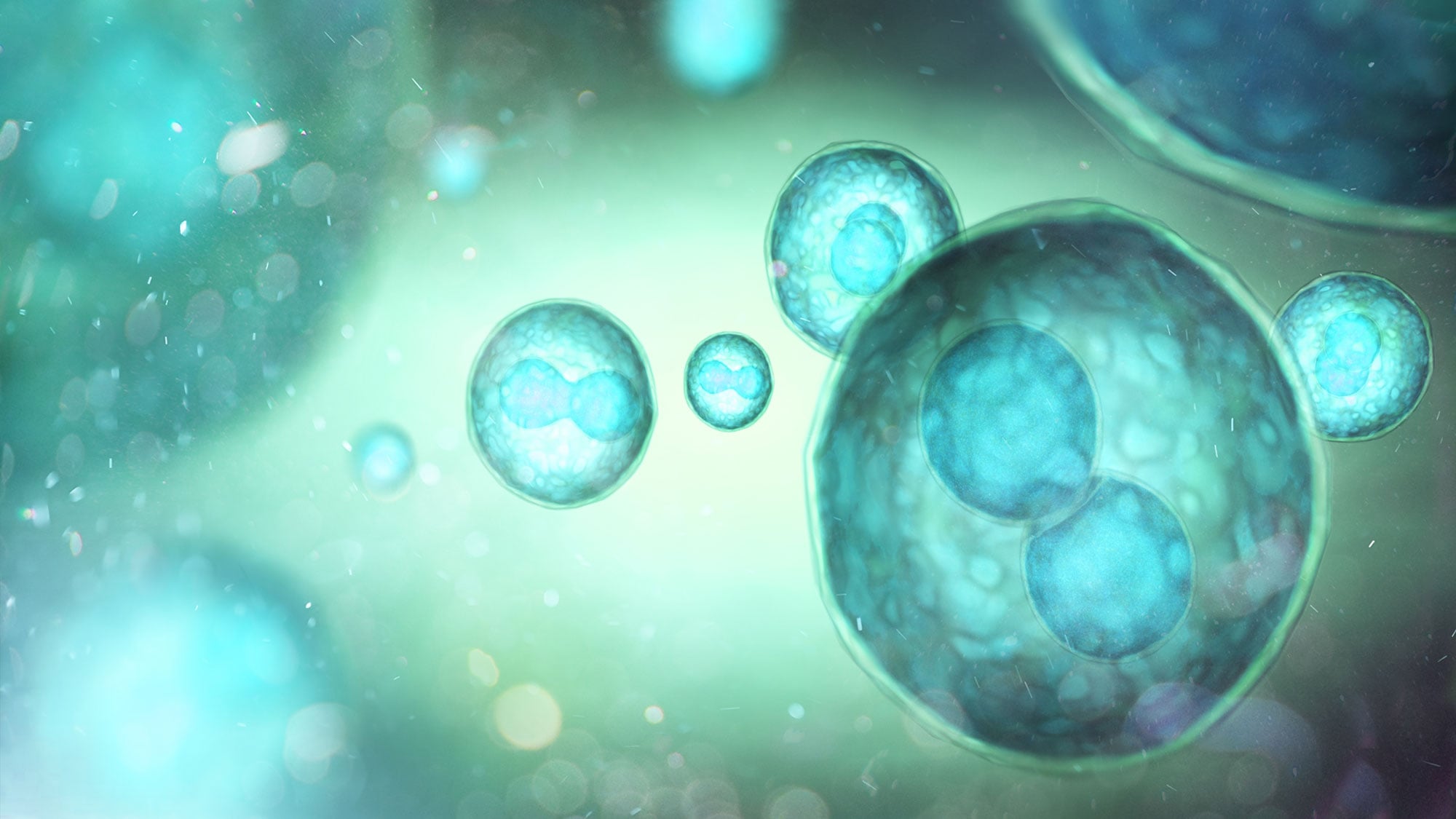
An improved stem cell method produces functional insulin cells that reverse diabetes in mice.
Scientists at Karolinska Institutet and KTH Royal Institute of Technology in Sweden have created a more reliable way to generate insulin-producing cells from human stem cells. Their findings, published in Stem Cell Reports, show that these lab-grown cells can regulate blood sugar effectively in experiments and were able to reverse diabetes in mice.
Type 1 diabetes develops when the immune system destroys the cells in the pancreas that produce insulin. Without these cells, the body cannot properly take up glucose from the bloodstream or maintain stable blood sugar levels. Replacing these lost cells is a promising treatment strategy, but earlier approaches using stem cells have often produced inconsistent results.
“We have developed a method that reliably produces high-quality insulin-producing cells from multiple human stem cell lines. This opens up opportunities for future patient-specific cell therapies, which could reduce immune rejection,” says Per-Olof Berggren, professor at the Department of Molecular Medicine and Surgery, Karolinska Institutet, and corresponding author alongside Siqin Wu, researcher at Spiber Technologies AB (formerly at Karolinska Institutet).
Optimized cell production
The improved production method generates insulin-producing cells that are both more mature and more uniform than those created using earlier techniques. In laboratory tests, these cells released insulin and showed a strong response to glucose. When transplanted into diabetic mice, the animals gradually regained control over their blood sugar levels. The researchers carried out the transplantation in the anterior chamber of the eye.
“This is a technique we use to monitor the development and function of the cells over time in a minimally invasive way,” explains Per-Olof Berggren. “We observed that the cells gradually matured after transplantation, retaining their ability to regulate blood sugar for several months, which demonstrates their potential for future treatments.”
Clinical trials are already exploring stem cell therapies for type 1 diabetes. However, previous methods have faced challenges. Stem cells can develop into a mix of intended and unintended cell types, increasing the risk of complications. In addition, the insulin-producing cells produced have often lacked the maturity needed to respond effectively to glucose.
Solving previous problems
The researchers addressed these issues by refining the culture process and allowing the cells to form three-dimensional clusters on their own. This approach reduced the presence of unwanted cell types and improved the cells’ ability to respond to glucose.
“This could solve several of the problems that have previously hindered the development of stem cell-based treatments for type 1 diabetes. Building on this, we will work towards clinical translation, aiming at treating type 1 diabetes,” says Fredrik Lanner, professor at the Department of Clinical Science, Intervention and Technology, Karolinska Institutet, and last author of the paper.
Reference: “An optimized protocol for efficient derivation of pancreatic islets from multiple human pluripotent stem cell lines” by Siqin Wu, Shivam Chandel, Galyna Bryzgalova, Paschalis Efstathopoulos, Kelly Blust, Cheng Zhao, Eda Erbil, Anna Falk, My Hedhammar, Per-Olof Berggren and Fredrik Lanner, 16 April 2026, Stem Cell Reports.
DOI: 10.1016/j.stemcr.2026.102892
The work was funded by the Swedish Research Council, STINT, the Knut and Alice Wallenberg Foundation, the Novo Nordisk Foundation, the European Research Council’s (ERC) Advanced Grant, the Erling-Persson Family Foundation, the Jonas & Christina af Jochnick Foundation, the Swedish Diabetes Association, Vinnova and Karolinska Institutet’s Strategic Research Program in Diabetes.
Never miss a breakthrough: Join the SciTechDaily newsletter.
Follow us on Google and Google News.
8 Comments
Aam sugAr Ka maeez kub is say Jan charwa sakay gah hukria
All these so called breakthroughs will come to nought. Human diseases whether they be natural or artificially created is a BILLION DOLLAR industry, why cure it. They keek us sick and keep spending our $$$ on their Meds and drugs. Thnkx 4 yr attentn to this matter!!!!
“When will ordinary diabetes patients be able to get rid of this (the disease)? Thank you.”. I believe very soon. In other countries the methods are being approved already. Write to Kennedy, to your Federal Confessionals and Senators and to the President. Also write to the FDA. (They should approve this much faster than the new type of vaccines which surely need more testing.). Research like this can reduce the medical charges the country and individuals currently have to pay. Also, people can more likely keep their vision and their legs . Be blessed. Be well .
Eat bitterguard vegetables…boiled with gooseberries (if possible). Be a vegetarian. Do Rajayoga Meditation. Sugars can be controlled. Both soul and Supreme Soul are points of light energy. Rajayoga Meditation is connection between the two. Kind regards from Brahmakumaris Spiritual Organization. Meditation is taught at all Brahmakumaris Spiritual Organization centres free of cost.
I don’t have words to say thanks so much , to all very smart research people… They make millions of peaple healthier….I wish to all of them…healthy life…and happy life… Bravo too all the research people in the world…
I don’t have words to say thanks so much , to all very smart research people… They make millions of peaple healthier….I wish to all of them…healthy life…and happy life… Bravo ….
Hi, I’m a Pensioner from S.A. I’m excited and optimistic about your recent research and hope for diabetic type 1. Sadly, my 1yr granddaughter was diagnosed with type 1 diabetes and is currently on Insulin. My fervent prayer is that that this little baby and all the others will get help from this horrible diabetes. Thank you kindly and may God bless y’all as y’all proceed ahead with greater successes. 🙏
Am so grateful to this new development as type 1 diabetic and will go a long way in restoring hope to the affected.
Hope human trials can start soon and sail through in stabilizing blood sugars as the condition is life threatening and creates hopelessness.
A big thank you to Swedish scientist and the government.