
A common sleep supplement may carry unexpected risks when used long-term.
Melatonin has long been marketed as a gentle, “natural” way to improve sleep. But new research is raising questions about what happens when people rely on it for years.
A large international analysis of more than 130,000 adults with chronic insomnia found that those who used melatonin for over a year faced significantly higher risks of serious health problems.
Compared to non-users, long-term users had about an 89–90% greater risk of developing heart failure over five years (4.6% vs. 2.7%). They were also nearly 3.5 times more likely to be hospitalized for heart failure (19.0% vs. 6.6%) and almost twice as likely to die from any cause (7.8% vs. 4.3%).
Early Findings Raise Safety Questions
The findings, presented at the American Heart Association’s Scientific Sessions 2025 in New Orleans, are preliminary and have not yet been peer-reviewed. They do not prove that melatonin causes harm, but they highlight a potential safety gap that researchers say needs urgent attention.
“Melatonin supplements may not be as harmless as commonly assumed. If our study is confirmed, this could affect how doctors counsel patients about sleep aids,” said lead researcher Ekenedilichukwu Nnadi, M.D., of SUNY Downstate/Kings County Primary Care in Brooklyn, New York.
What Melatonin Does in the Body
Melatonin itself is a hormone produced by the brain that helps regulate the body’s internal clock. Levels naturally rise in the evening and fall with daylight, signaling when it is time to sleep and wake. Supplements mimic this process and can help some people fall asleep faster, especially in cases of jet lag or short-term insomnia.
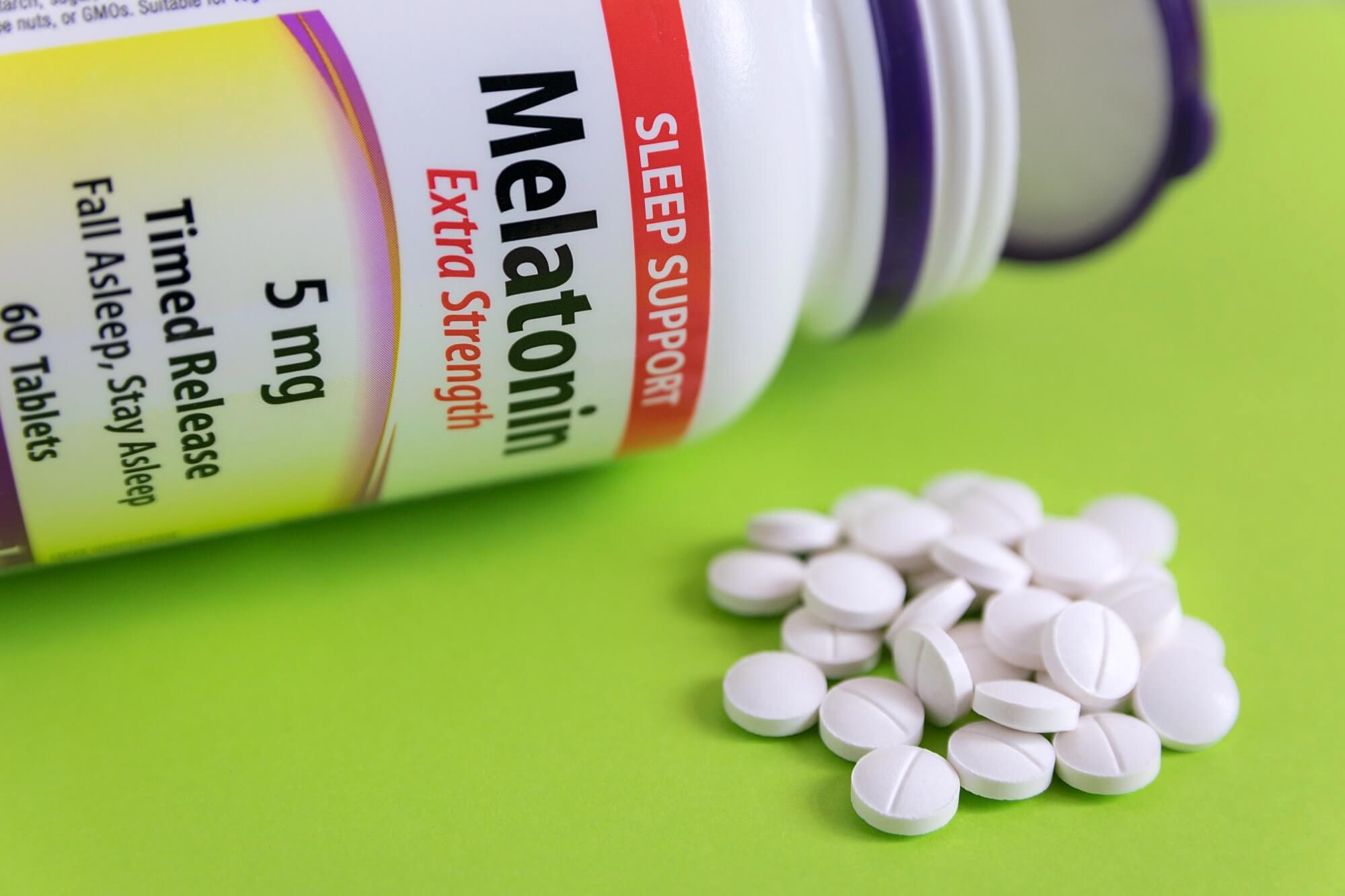
In the United States and many other countries, melatonin is sold over the counter without strict regulation. That means people can take it without medical supervision, and products may vary in dose and purity. It has become one of the most widely used sleep aids in the country, now ranking among the most popular natural products taken by adults.
Most experts agree that melatonin is generally safe for short-term use, typically up to one or two months. Beyond that, the science becomes much less clear. Despite its popularity, there are surprisingly few long-term studies examining its effects on the heart or other systems.
Researchers used the TriNetX Global Research Network to review five years of electronic health records from adults with chronic insomnia. They compared those with documented melatonin use for at least 12 months to similar patients who had no record of using the supplement. People with prior heart failure or other sleep medication use were excluded.
Consistent Signals Across Different Analyses
A separate analysis focusing on prescription records, particularly relevant in countries like the United Kingdom where melatonin requires a prescription, showed similar results. Patients with at least two prescriptions filled 90 days apart had an 82% higher risk of heart failure.
Heart failure itself is a serious condition affecting about 6.7 million adults in the United States. It occurs when the heart cannot pump enough oxygen-rich blood to meet the body’s needs, often leading to fatigue, shortness of breath, and fluid buildup.
While the results may sound alarming, researchers stress that the study shows only an association, not cause and effect. People who take melatonin long-term may differ in important ways from those who do not. For example, more severe insomnia, depression, anxiety, or the use of other medications could contribute to both melatonin use and increased heart risk.
There are also key limitations. The study relied on medical records rather than direct reports from patients, which means some people who used over-the-counter melatonin may have been misclassified as non-users. This is especially likely in countries like the United States, where supplements can be purchased without a prescription.
Expert Reactions and Ongoing Debate
Even so, some experts say the findings should not be ignored.
“These findings challenge the perception of melatonin as a benign chronic therapy and only highlight the need for a prospective trial with a control group to clarify its safety profile,” said Carlos Egea, President of the Spanish Federation of Sleep Medicine Societies, who was not involved in the research.
Other specialists also question the widespread long-term use of melatonin. “I’m surprised that physicians would prescribe melatonin for insomnia and have patients use it for more than 365 days, since melatonin, at least in the U.S., is not indicated for the treatment of insomnia,” said Marie-Pierre St-Onge, Ph.D., of Columbia University Irving Medical Center.
Short-term use is still considered low risk for most adults who are not pregnant or breastfeeding. But even then, melatonin is not completely harmless. Reports of accidental overdoses in children and inconsistent dosing across products have raised concerns about how freely the supplement is used.
Meeting: “Effect of Long-term Melatonin Supplementation on Incidence of Heart Failure in Patients with Insomnia,” 10 November 2025, American Heart Association Scientific Sessions 2025.
Never miss a breakthrough: Join the SciTechDaily newsletter.
Follow us on Google and Google News.
7 Comments
If you are already a hardcore insomniac for years then you probably already have a pre-existing medical conditions of which diabetes and heart or arteriosclerosis are very common as you try to drink sugary drinks like coffee and highly processed sugary or fat laden food to try to compensate for your sleep deprived day. Correlation does not equal causation. Let’s wait and see what the metadata says.
Thank you for the exposure of this study. Manmade chemical hormones actually could never be the same functioning as the naturally identically -secreted hormones by each individuals need in different timing/status. Human body mechanism is far far more precision than the recent so called chemical science to mimic. Besides, these chemical hormones are toxic and are major cause for liver and kidney failures due to overload in cleaning them.
synthetic insulin allows hundreds of millions to live long instead of miserably dying fast. Nobody with diabetes consumes naturally made insulin, it is man made, well it is made by GMO bacteria that carry a human gene responsible for the insulin production. Actually, a lot of people consume man made hormones every day (from synthetic L-tyroxine to estrogen) and they are fine.
Or could it be that folks who have chronic insomnia and serious health problems are more likely to take melatonin? Nothing burger.
Oh but the whack of sleeping pills linked to all sorts of side effects are okay? 😅😅😅 no longer term studies because they won’t make money off it. Don’t buy the supplement discrediting campaign. Usually in cahoots with drug companies
Yeah but…
“Melatonin as a Novel Drug to Improve Cardiac Function and Quality of Life in Heart Failure Patients: A Systematic Review and Meta-Analysis”
–Clinical Cardiology, Abolfazl Sam Daliri, et al.
“Results: As a result of analysis, increasing ejection fraction [% blood actually expelled in a contraction] …. and significant elevation of quality of life … were observed. As the effect of melatonin, fatigue, and NT-Pro BNP were reduced but on the contrary sleep quality, appetite, and FMD (Flow-Mediated Dilation) significantly increased.
Conclusion: Thus, melatonin, by increasing psychologic parameters and cardiac potency, could be advised as a novel drug for treatment and palliating heart failure patients.”
Adendum: 2025 paper.
(The SciTech article here’s paper is actually last year. The two can be considered contemporaneous.)