
Close Menu
    Facebook X (Twitter) Instagram
    SciTechDaily
    • Biology
    • Chemistry
    • Earth
    • Health
    • Physics
    • Science
    • Space
    • Technology
    Facebook X (Twitter) Pinterest YouTube RSS
    SciTechDaily
    Home»Chemistry»Fungal Enzymes Could Potential Convert Wood Biomass Into Biofuels
    Chemistry

    Fungal Enzymes Could Potential Convert Wood Biomass Into Biofuels

    By Shelley Hughes, University of YorkFebruary 16, 20181 Comment3 Mins Read
    Facebook Twitter Pinterest Telegram LinkedIn WhatsApp Email Reddit
    Share
    Facebook Twitter LinkedIn Pinterest Telegram Email Reddit
    Fungal Enzymes May Hold the Secret to Renewable Energy
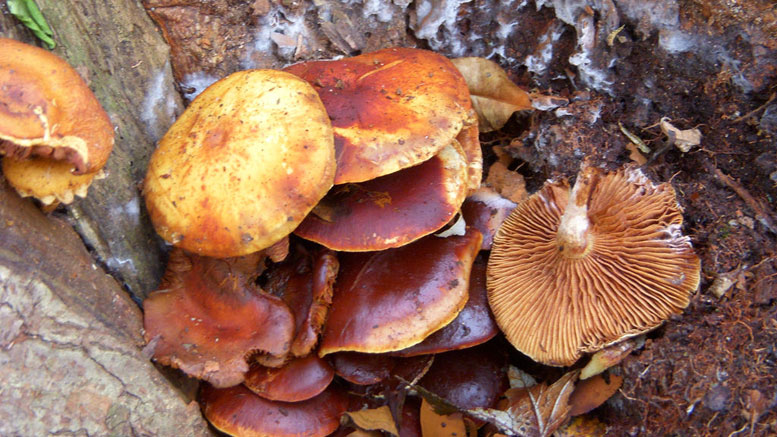
    The role fungi plays in breaking down wood within the carbon cycle inspired researchers to investigate the mechanisms that allow this process to take place.

    An international team of researchers, including scientists from the University of York, has discovered a set of enzymes found in fungi that are capable of breaking down one of the main components of wood. The enzymes could now potentially be used to sustainably convert wood biomass into valuable chemical commodities such as biofuels.

    As an alternative to coal and oil, wood is increasingly one of the more promising sources of advanced biofuels. However, despite its potential, it is a difficult material to break down.

    Current wood biorefineries have to use pre-treatment processes, making the conversion of wood into fuels and products expensive and energy-consuming. In ecosystems fungi play a significant role in breaking down wood within the carbon cycle, releasing nutrients back into the soil. This property of fungi inspired the researchers to investigate the mechanisms that allow this process to take place.

    Co-author of the paper, Professor Paul Walton from the Department of Chemistry at the University of York said: “Back in 2010 we made the key discovery that a group of enzymes found in fungi contain copper — these enzymes are now known to be an important component in the decomposition of biomass by biology. This research builds on that work by identifying further enzymes from this class that have the ability to break down wood’s challenging molecular structure.

    “These enzymes may underpin the development of improved enzyme cocktails for biorefinery applications using wood — unlocking its conversion into a wide range of valuable commodities in a sustainable way.”

    The research, reported in Nature Chemical Biology, has shown that the family of enzymes, called lytic polysaccharide monooxygenases (LPMOs), are capable of breaking down xylans — carbohydrate molecules commonly found in wood biomass that are particularly resistant to degradation.

    Working in collaboration with French researchers from the Le Centre National de la Recherche Scientifique (CNRS) Marseille, the researchers isolated the enzymes from fungi that play a vital role in the terrestrial carbon cycle and dominate wood decomposition in forests.

    Co-author of the paper Gideon Davies from the Department of Chemistry at the University of York said: “The findings advance our knowledge of the way in which woody biomass degrades in nature.

    “This discovery unlocks the key scientific challenge of how biorefineries can convert wood into biofuel in an environmental and cost-effective way, bringing us a step closer to a sustainable 21st Century.”

    Reference: “Lytic xylan oxidases from wood-decay fungi unlock biomass degradation” by Marie Couturier, Simon Ladevèze, Gerlind Sulzenbacher, Luisa Ciano, Mathieu Fanuel, Céline Moreau, Ana Villares, Bernard Cathala, Florence Chaspoul, Kristian E Frandsen, Aurore Labourel, Isabelle Herpoël-Gimbert, Sacha Grisel, Mireille Haon, Nicolas Lenfant, Hélène Rogniaux, David Ropartz, Gideon J Davies, Marie-Noëlle Rosso, Paul H Walton, Bernard Henrissat and Jean-Guy Berrin, 29 January 2018, Nature Chemical Biology.
    DOI: 10.1038/nchembio.2558

    Never miss a breakthrough: Join the SciTechDaily newsletter.
    Follow us on Google and Google News.

    Biofuel Chemical Biology Enzyme Fungi Renewable Energy Sustainability University of York
    Share. Facebook Twitter Pinterest LinkedIn Email Reddit

    Related Articles

    ‘Promiscuous’ Enzyme Turns Plant Waste into Sustainable Products

    Research Shows Advanced Biofuels Can Be Produced Extremely Efficiently

    Engineers Discover Greener and Cheaper Technique for Biofuel

    Chemists Discover a New Way to Work with Heterogeneous Catalysts

    Protonic Ceramic Fuel Cells Demonstrate Exceptional Power Density and Stability

    Scientists Create a Copper-Based Catalyst that Produces Large Quantities of Ethanol

    Newly Discovered Catalyst Could Lead to the Clean Production of Methanol

    Artificial Enzyme Reveals Never Before Seen Structure

    Searching for Better Methods of Making Biofuels from Cellulosic Biomass

    1 Comment

    1. Doug Furtek on February 16, 2018 4:10 pm

      Here’s an idea from Malaysia. Use woody biomass to cultivate edible mushrooms then pass the residue along to biorefineries.

      Reply
    Leave A Reply Cancel Reply

    • Facebook
    • Twitter
    • Pinterest
    • YouTube

    Don't Miss a Discovery

    Subscribe for the Latest in Science & Tech!

    Trending News

    JWST Finds a “Star” 100 Billion Times Brighter Than Any Star Should Be

    Scientists Find a Hidden Biological Link Across Different Forms of Autism

    Astronomers Discover a Ghostly River of Stars That Could Reveal Dark Matter

    Why Is Colorectal Cancer Rising in People Under 50? New Clues Point to the Environment

    Quantum Fluctuations Break a Crystal’s Symmetry Rules

    Why Does an Irregular Heartbeat Strike 40 Years Early in Some People?

    Scientists Reveal How ADHD Could Fuel Creative Thinking

    Scientists Find Just 3 Minutes of Sprinting Can Transform Blood Chemistry

    Follow SciTechDaily
    • Facebook
    • Twitter
    • YouTube
    • Pinterest
    • Newsletter
    • RSS
    SciTech News
    • Biology News
    • Chemistry News
    • Earth News
    • Health News
    • Physics News
    • Science News
    • Space News
    • Technology News
    Recent Posts
    • Common Vape Flavor May Disrupt Early Human Development
    • Ultra-Processed Foods Linked to 30% Higher Prostate Cancer Risk
    • More Screen Time, Better Thinking? An 8-Year Study Finds a Surprising Link
    • A Vast Clean Energy Source May Be Hiding Beneath Australia’s Red Soil
    • Scientists Uncover Signs of an Ancient Climate “Tipping Point”
    Copyright © 1998 - 2026 SciTechDaily. All Rights Reserved.
    • Science News
    • About
    • Contact
    • Editorial Board
    • Privacy Policy
    • Terms of Use

    Type above and press Enter to search. Press Esc to cancel.