
Close Menu
    Facebook X (Twitter) Instagram
    SciTechDaily
    • Biology
    • Chemistry
    • Earth
    • Health
    • Physics
    • Science
    • Space
    • Technology
    Facebook X (Twitter) Pinterest YouTube RSS
    SciTechDaily
    Home»Technology»Engineers Discover Greener and Cheaper Technique for Biofuel
    Technology

    Engineers Discover Greener and Cheaper Technique for Biofuel

    By Goh Yu Chong, National University of SingaporeApril 6, 2018No Comments3 Mins Read
    Facebook Twitter Pinterest Telegram LinkedIn WhatsApp Email Reddit
    Share
    Facebook Twitter LinkedIn Pinterest Telegram Email Reddit
    Engineers Pioneer Greener and Cheaper Technique for Biofuel
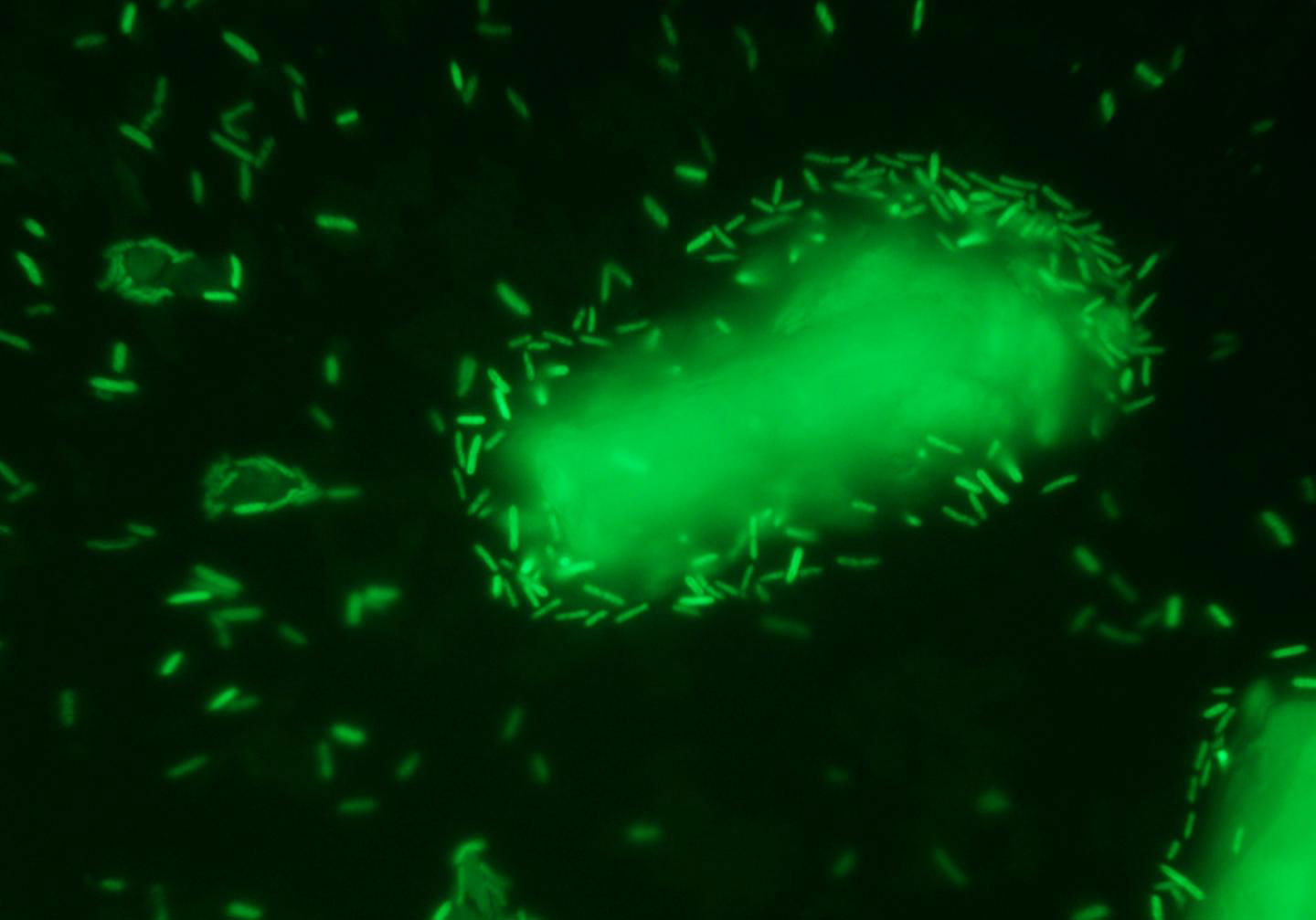
    The adhesion of Thermoanaerobacterium thermosaccharolyticum TG57 cells to cellulose particles — a fundamental stress adaption for such microorganisms — facilitates the efficient utilisation of cellulose for biobutanol production. The unique genome of the TG57 strain enables the bacterium to produce enzymes that enhances the synthesis of biobutanol. National University of Singapore

    Natural bacterium isolated from mushroom crop residue converts plant-based material to butanol directly.

    A team of engineers from the National University of Singapore (NUS) recently discovered that a naturally occurring bacterium, Thermoanaerobacterium thermosaccharolyticum TG57, isolated from waste generated after harvesting mushrooms, is capable of directly converting cellulose, a plant-based material, to biobutanol.

    A research team led by Associate Professor He Jianzhong from the Department of Civil and Environmental Engineering at NUS Faculty of Engineering first discovered the novel TG57 strain in 2015. They went on to culture the strain to examine its properties.

    Assoc Prof He explained, “The production of biofuels using non-food feedstocks can improve sustainability and reduce costs greatly. In our study, we demonstrated a novel method of directly converting cellulose to biobutanol using the novel TG57 strain. This is a major breakthrough in metabolic engineering and exhibits a foundational milestone in sustainable and cost-effective production of renewable biofuels and chemicals.”

    Biobutanol – An attractive biofuel

    Traditional biofuels are produced from food crops. This approach is highly costly and competes with food production in the use of land, water, energy, and other environmental resources.

    Biofuels produced from unprocessed cellulosic materials such as plant biomass, as well as agriculture, horticultural, and organic waste, are expected to meet growing energy demands without increasing greenhouse gas emissions resulting from the burning of fossil fuels. These cellulosic materials are in great abundance, environmentally friendly, and economically sustainable.

    Among various types of biofuels, biobutanol offers a great promise as a petrol substitute because of its high energy density and superior properties. It can directly replace gasoline in car engines without any modification. However, commercial production of biobutanol has been hampered by the lack of potent microbes capable of converting cellulosic biomass into biofuels. The current technique is costly and also requires complicated chemical pre-treatment.

    Producing biofuel the green way

    The novel technique developed by the NUS team could potentially be a game-changing technology for cost-effective and sustainable biofuel production.

    Spent mushroom compost – typically composed of wheat straw and sawdust – is the residual compost waste generated by mushroom farming. The microorganisms in the waste are left to evolve naturally for more than two years to obtain the unique TG57 strain.

    The fermentation process is simple, and no complicated pre-treatment or genetic modification of the microorganisms is required. When cellulose is added, the bacterium simply digests it to produce butanol as the main product.

    Moving forward, the research team will continue to optimize the performance of the TG57 strain, and further engineer it to enhance biobutanol ratio and yield using molecular genetic tools.

    The team published the findings of the study in the scientific journal Science Advances on 23 March 2018.

    Reference: “Unique genetic cassettes in a Thermoanaerobacterium contribute to simultaneous conversion of cellulose and monosugars into butanol” by Tinggang Li, Chen Zhang, Kun-Lin Yang and Jianzhong He, 23 Mar 2018, Science Advances.
    DOI: 10.1126/sciadv.1701475

    Never miss a breakthrough: Join the SciTechDaily newsletter.
    Follow us on Google and Google News.

    Biofuel Biotechnology Green Technology National University of Singapore Renewable Energy Sustainability
    Share. Facebook Twitter Pinterest LinkedIn Email Reddit

    Related Articles

    Published Study Shows Algae Using Raw Plants as a Carbon Energy Source

    Research Shows Advanced Biofuels Can Be Produced Extremely Efficiently

    Deriving Power Directly from Evaporation

    New Type of Fuel Cell Produces Electricity Directly from Biomass

    Engineers Convert Yeast Cells into Biofuel

    Scripps Researchers Develop New Method for Enhancing Biofuel Production

    New Approach Improves Biomass-to-Fuel Process

    Discovery May Lead to the Creation of Biofuel From CO2 in the Atmosphere

    Fermentation Process for Making Explosives Helps Boost Biofuel Production

    Leave A Reply Cancel Reply

    • Facebook
    • Twitter
    • Pinterest
    • YouTube

    Don't Miss a Discovery

    Subscribe for the Latest in Science & Tech!

    Trending News

    Scientists Uncover Potential Brain Risks of Popular Fish Oil Supplements

    Scientists Discover a Surprising Way To Make Bread Healthier and More Nutritious

    After 60 Years, Scientists Uncover Unexpected Brain Effects of Popular Diabetes Drug Metformin

    New Research Uncovers Hidden Side Effects of Popular Weight-Loss Drugs

    Scientists Rethink Extreme Warming After Surprising Ocean Discovery

    Landmark Study Links Never Marrying to Significantly Higher Cancer Risk

    Researchers Discover Unknown Beetle Species Just Steps From Their Lab

    Largest-Ever Study Finds Medicinal Cannabis Ineffective for Anxiety, Depression, PTSD

    Follow SciTechDaily
    • Facebook
    • Twitter
    • YouTube
    • Pinterest
    • Newsletter
    • RSS
    SciTech News
    • Biology News
    • Chemistry News
    • Earth News
    • Health News
    • Physics News
    • Science News
    • Space News
    • Technology News
    Recent Posts
    • Not Just Alzheimer’s: Scientists Uncover Clues to a Second, Overlooked Disorder
    • Scientists Uncover Dangerous Connection Between Serotonin and Heart Valve Disease
    • Scientists Discover a “Protector” Protein That Could Help Reverse Hair Loss
    • Powerful Lasers Reveal How Matter Becomes Plasma in Trillionths of a Second
    • A Simpler Path to Super-Resolution: Scientists Reinvent Microscopy
    Copyright © 1998 - 2026 SciTechDaily. All Rights Reserved.
    • Science News
    • About
    • Contact
    • Editorial Board
    • Privacy Policy
    • Terms of Use

    Type above and press Enter to search. Press Esc to cancel.