
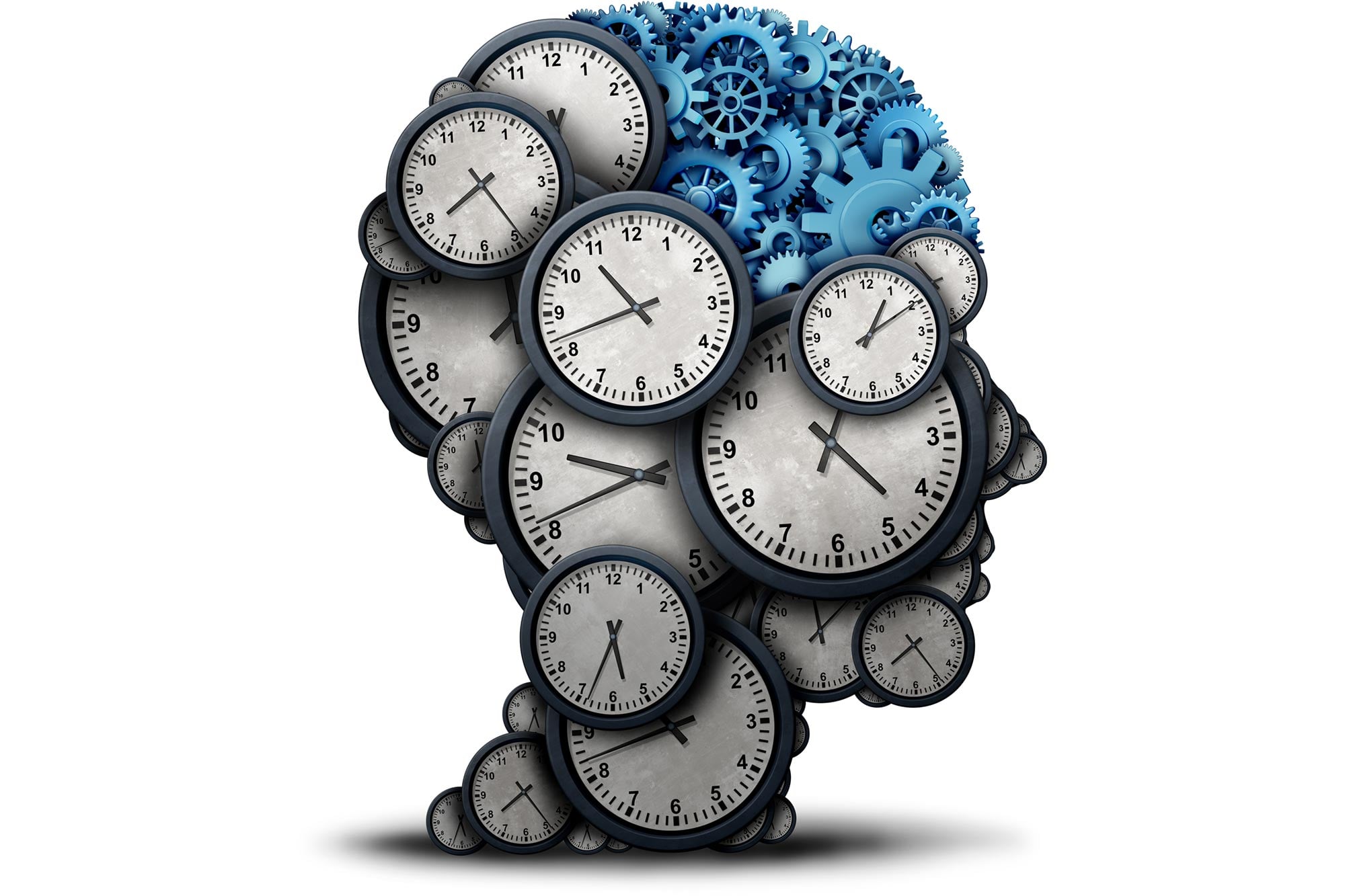
Your brain’s internal timing system may help determine how quickly and efficiently you think.
The human brain is constantly managing streams of information that move at very different speeds. Some signals require immediate responses to sudden changes in the environment, while others involve slower forms of thinking, such as interpreting meaning, context, or complex situations.
A new study from Rutgers Health, published in Nature Communications, examined how the brain combines these fast and slow forms of processing through its network of white matter connections. Researchers say this coordination is essential for cognition, behavior, and the ability to respond effectively to the world around us.
Different parts of the brain are tuned to process information over specific time ranges. Scientists refer to these patterns as intrinsic neural timescales, or INTs.
“To affect our environment through action, our brains must combine information processed over different timescales,” said Linden Parkes, assistant professor of Psychiatry at Rutgers Health and the senior author of the study. “The brain achieves this by leveraging its white matter connectivity to share information across regions, and this integration is crucial for human behavior.”
Mapping the Brain’s Communication Networks
To explore how this system works, Parkes and his colleagues analyzed multimodal brain imaging data from 960 people. The team created detailed maps of each participant’s brain connections, known as connectomes, and used mathematical models designed to track how complex systems evolve over time. This allowed the researchers to study how information travels through the brain’s communication pathways.
“Our work probes the mechanisms underlying this process in humans by directly modeling regions’ INTs from their connectivity,” said Parkes, a core member of the Rutgers Brain Health Institute and the Center for Advanced Human Brain Imaging Research. “This draws a direct link between how brain regions process information locally and how that processing is shared across the brain to produce behavior.”
Brain Speed and Cognitive Ability
The study found that the arrangement of neural timescales across the cortex strongly influences how efficiently the brain transitions between large-scale activity patterns linked to behavior. Researchers also found that this organization differs from person to person.
“We found that differences in how the brain processes information at different speeds help explain why people vary in their cognitive abilities,” Parkes said.
The team also discovered connections between these timing patterns and the genetic, molecular, and cellular properties of brain regions. Similar patterns were identified in mice, suggesting these mechanisms may be shared across species.
“Our work highlights a fundamental link between the brain’s white matter connectivity and its local computational properties,” Parkes said. “People whose brain wiring is better matched to the way different regions handle fast and slow information tend to show higher cognitive capacity.”
Implications for Mental Health Disorders
The researchers are now expanding this work to investigate neuropsychiatric disorders including schizophrenia, bipolar disorder, and depression. They hope to better understand how changes in brain connectivity may disrupt the processing of information over time.
Reference: “Inferring intrinsic neural timescales using optimal control theory” by Jason Z. Kim, Richard F. Betzel, Ahmad Beyh, Amber Howell, Amy Kuceyeski, Bart Larsen, Caio Seguin, Xi-Han Zhang, Avram Holmes and Linden Parkes, 26 November 2025, Nature Communications.
DOI: 10.1038/s41467-025-66542-w
The study was conducted in collaboration with Avram Holmes, an associate professor of psychiatry and a core member of the Rutgers Brain Health Institute and the Center for Advanced Human Brain Imaging Research, along with postdoctoral researchers Ahmad Beyh and Amber Howell, as well as Jason Z. Kim from Cornell University.
Never miss a breakthrough: Join the SciTechDaily newsletter.
Follow us on Google and Google News.
1 Comment
It is informative