

A new long-read DNA test improves rare disease diagnosis, replaces multiple existing tests, and could become the preferred global standard for genetic diagnostics.
A new DNA test is providing a far more detailed view of the genome than current standard diagnostic methods, helping doctors identify rare genetic disorders more often. The test can replace up to 15 existing diagnostic procedures, making the process faster and more efficient. In the New England Journal of Medicine, researchers from Radboud University Medical Center recommend adopting this approach worldwide as the first-line test for rare genetic diseases.
A disease is classified as rare when it affects fewer than one in 2,000 people. Even so, more than 7,000 rare diseases have been identified, affecting as many as 400 million people globally. About 80% of these conditions are caused by genetic changes. For many patients, obtaining a diagnosis can take years. A confirmed diagnosis can provide answers about a condition, help predict future health outcomes, connect patients with others facing similar challenges, and inform family planning decisions.
Researchers at Radboudumc and Maastricht UMC+ are collaborating to improve the diagnosis of genetic disorders. In a study involving 1,000 patients, they compared standard diagnostic approaches, which often require multiple tests, with a new DNA analysis method.
“We showed that the new test yields three percent more diagnoses. It can also replace fifteen other tests. We recommend using this test worldwide as the first choice,” said Professor of Translational Genomics Lisenka Vissers.
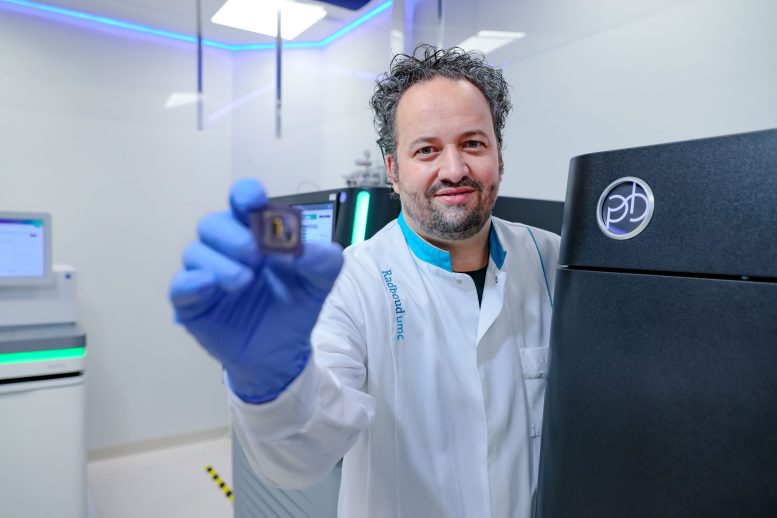
More Complete DNA Analysis With Fewer Tests
The technology relies on long-read genome sequencing. To identify genetic abnormalities, doctors analyze a person’s entire DNA sequence. Current methods typically read DNA in fragments of about 300 building blocks before assembling them into a complete sequence.
The new approach can read stretches of up to 20,000 building blocks at a time. Like completing a jigsaw puzzle with larger pieces, this makes it much easier to assemble the genome accurately and creates a more complete picture of a person’s DNA.
The test also captures chemical modifications attached to DNA, in addition to reading its genetic code. These modifications can turn genes on or off and may contribute to rare diseases.
“Therefore, it’s important that we measure those as well,” explained Professor of Genome Bioinformatics Christian Gilissen. “With current diagnostics, this requires additional specialized tests, but with long reads, we capture these modifications as a bonus, two in one.”
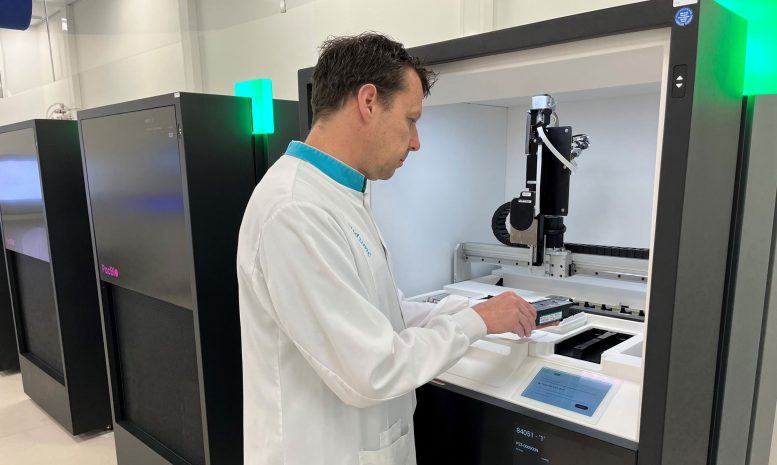
Expanding Genetic Knowledge and Future Diagnoses
According to Professor of Genomic Technologies Alexander Hoischen, the number of diagnoses is likely to continue increasing. His team has previously connected genetic abnormalities to a variety of disorders.
“Thanks to long reads, we obtain an even more complete view of DNA and can detect complex and hard-to-find abnormalities. We then link these to specific conditions. In this way, our knowledge grows, and we can make more diagnoses.”
Long-read sequencing also played a key role at the recent Undiagnosed Hackathon in Nijmegen, organized by UMCNL.
Nearly 150 specialists from Dutch university medical centers worked together to find answers for 33 families still seeking diagnoses. The new test provided detailed DNA maps for all participating families, and when combined with the expertise of the specialists, led to five new diagnoses.
Reference: “Clinical Long-Read Genome Sequencing for Rare-Disease Diagnostics” by Tessa J.J. de Bitter, Bart van der Sanden, Lydia Sagath, Wolfram Höps, Peer Arts, Michelle de Groot, Marjan M. Weiss, Ronny Derks, Amber den Ouden, Simone van den Heuvel, Raoul G.J. Timmermans, Timon van Leeuwen, Jordi Corominas Galbany, Jos G.A. Smits, Lot Snijders Blok, Tom Hofste, Marloes Steehouwer, Nick Zomer, Quentin Sabbagh, Erik-Jan Kamsteeg, Dorien Lugtenberg, Ermanno A. Bosgoed, Richard J. Rodenburg, Su Ming Sun, Arjen R. Mensenkamp, Marjolijn J.L. Ligtenberg, Nicole de Leeuw, Debby M.E.I. Hellebrekers, Alexander P.A. Stegmann, Aimée D.C. Paulussen, Marinus J. Blok, Wendy A.G. van Zelst-Stams, Arthur van den Wijngaard, Helger G. Yntema, Christian Gilissen, Alexander Hoischen and Lisenka E.L.M. Vissers, 12 June 2026, New England Journal of Medicine.
DOI: 10.1056/NEJMc2602512
Never miss a breakthrough: Join the SciTechDaily newsletter.
Follow us on Google and Google News.