
Close Menu
    Facebook X (Twitter) Instagram
    SciTechDaily
    • Biology
    • Chemistry
    • Earth
    • Health
    • Physics
    • Science
    • Space
    • Technology
    Facebook X (Twitter) Pinterest YouTube RSS
    SciTechDaily
    Home»Biology»Genome Studies Indicate That “Junk” DNA Holds Clues to Common Diseases
    Biology

    Genome Studies Indicate That “Junk” DNA Holds Clues to Common Diseases

    By SciTechDailySeptember 6, 20121 Comment2 Mins Read
    Facebook Twitter Pinterest Telegram LinkedIn WhatsApp Email Reddit
    Share
    Facebook Twitter LinkedIn Pinterest Telegram Email Reddit
    junk-dna-helix
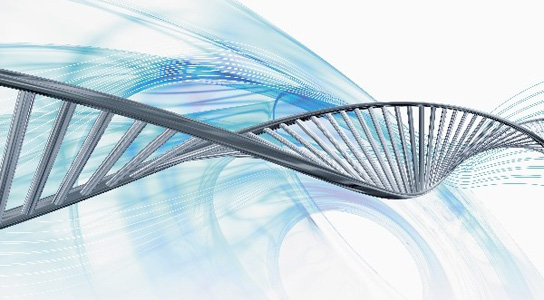
    The Encyclopedia of DNA Elements (ENCODE) is focused on understanding the elements of the genome and how they work together. The overall complexity of human biology resides not only in the number of genes, but in the regulatory switches. ENCODE data may help uncover common genetic switches and functions across diseases.

    Twelve years after the first draft of the human genome was published, back in 2000, geneticists have discovered that very few diseases are linked to changes in the genes themselves. Genome-wide studies searching for the genetic components of common diseases, such as lung cancer or autism, have pointed to regions between protein-inducing genes, areas where there is “junk” DNA.

    An international consortium of scientists has published their findings in 30 linked papers in the journal Nature. The Encyclopedia of DNA Elements (ENCODE) is focused on understanding the elements of the genome and how they work together. The overall complexity of human biology resides not only in the number of genes, but in the regulatory switches. More than 1,600 experiments have been performed, as well as an analysis of more than 140 cell types. This resulted in massive amounts of data and the scientists have discovered about 4 million of these switches, and can now assign functions to almost 80% of them.
    dna-helix

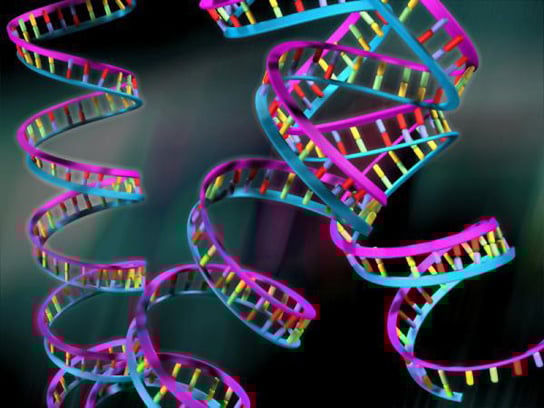
    These switches can activate and deactivate genes, but also control how much of each protein gets made and when it is released. The new data might improve the understanding of many common diseases, including cardiovascular ones. 95% of the information from the studies point to regions of the genome that don’t make proteins. Thanks to the ENCODE data, they might be able to start deciphering what genetic switches and functions might be common within diseases.

    It will take some time before these discoveries are part of new clinical trials.

    Never miss a breakthrough: Join the SciTechDaily newsletter.
    Follow us on Google and Google News.

    Disease DNA Genetics Genome
    Share. Facebook Twitter Pinterest LinkedIn Email Reddit

    Related Articles

    Genome Study Links Paternal Age to Conditions Such As Autism

    A Step Toward Developing Sight-Saving Gene Therapy

    Genomic Analysis of Colon Cancer Reveals New Potential Drug Targets

    Molecular and Statistical Tools Analyze Complex Differences Between Genomes

    The Tomato Genomics Consortium Sequences the Tomato Genome

    Cdt1 Protein Has a Role in DNA Replication and Mitosis

    Faster and Cheaper Genomics Technique Ready for Takeoff

    3-D Image Shows How DNA Packs Itself into a “Fractal Globule”

    Researchers Complete Genome Sequence of a Denisovan Human Finger Bone

    1 Comment

    1. Madanagopal.V.C on September 8, 2012 6:50 am

      An excellent discovery indeed on junk DNA. Out of 100000 genes of humans only about 11000 genomes are executable, the balance being reduntant and junk DNA. Here also many single genomes can execute different tasks based on switches they receive for multiple tasks so as to read the genetic code contained ACTGCAT… etc at different points to get different RNA threads for function. These switches should be there only in junk DNA as explained in the article for the following reasons. If the junk DNA gives the evolutionary history of humans at various stages till the present form is assumed, it suggests that only these switches puts off getting tails or suppressing animal like hairs all over the body for the present stage of the living being brushing aside earlier species from which it came. Even embryonic development apoptosis suggests this like suppression of tails and finger webs.Hence nothing is junk in God`s creation. We need to probe further for strengthening science. Thank You.

      Reply
    Leave A Reply Cancel Reply

    • Facebook
    • Twitter
    • Pinterest
    • YouTube

    Don't Miss a Discovery

    Subscribe for the Latest in Science & Tech!

    Trending News

    Beyond Pain Relief: Scientists Discover a Protein That Could Stop Osteoarthritis in Its Tracks

    Scientists Discover Why Alcohol Prevents the Liver From Healing, Even After You Quit

    Scientists Stunned As Volcano Removes Methane From the Air

    Scientists Discover Signs Africa May Be Splitting Apart Beneath Zambia

    Common Blood Pressure Drug Supercharges Cancer Treatment in Surprising New Study

    540-Million-Year-Old Fossils Reveal a Huge Surprise About Early Life on Earth

    Scientists Reverse Stroke Damage Using Stem Cells in Breakthrough Study

    Eating One Egg a Day Could Cut Alzheimer’s Risk by 27%

    Follow SciTechDaily
    • Facebook
    • Twitter
    • YouTube
    • Pinterest
    • Newsletter
    • RSS
    SciTech News
    • Biology News
    • Chemistry News
    • Earth News
    • Health News
    • Physics News
    • Science News
    • Space News
    • Technology News
    Recent Posts
    • Too Much Sleep May Age Your Body Faster, New Study Warns
    • Scientists Uncover Promising New Strategy To Stop Parkinson’s in Its Tracks
    • New Study Reveals How Vitamin D Could Calm Gut Inflammation
    • Experts Reveal the Surprising Cancer Link Behind a Common Vitamin
    • NASA’s Roman Space Telescope Could Finally Find the Milky Way’s Missing Neutron Stars
    Copyright © 1998 - 2026 SciTechDaily. All Rights Reserved.
    • Science News
    • About
    • Contact
    • Editorial Board
    • Privacy Policy
    • Terms of Use

    Type above and press Enter to search. Press Esc to cancel.