
Close Menu
    Facebook X (Twitter) Instagram
    SciTechDaily
    • Biology
    • Chemistry
    • Earth
    • Health
    • Physics
    • Science
    • Space
    • Technology
    Facebook X (Twitter) Pinterest YouTube RSS
    SciTechDaily
    Home»Earth»New Soil Test Could Improve Our Understanding of a Vital but Limited Nutrient
    Earth

    New Soil Test Could Improve Our Understanding of a Vital but Limited Nutrient

    By Sultan Qaboos UniversityAugust 22, 2026No Comments3 Mins Read
    Facebook Twitter Pinterest Telegram LinkedIn WhatsApp Email Reddit
    Share
    Facebook Twitter LinkedIn Pinterest Telegram Email Reddit
    Hand Holding Fertilizer Organic Farming
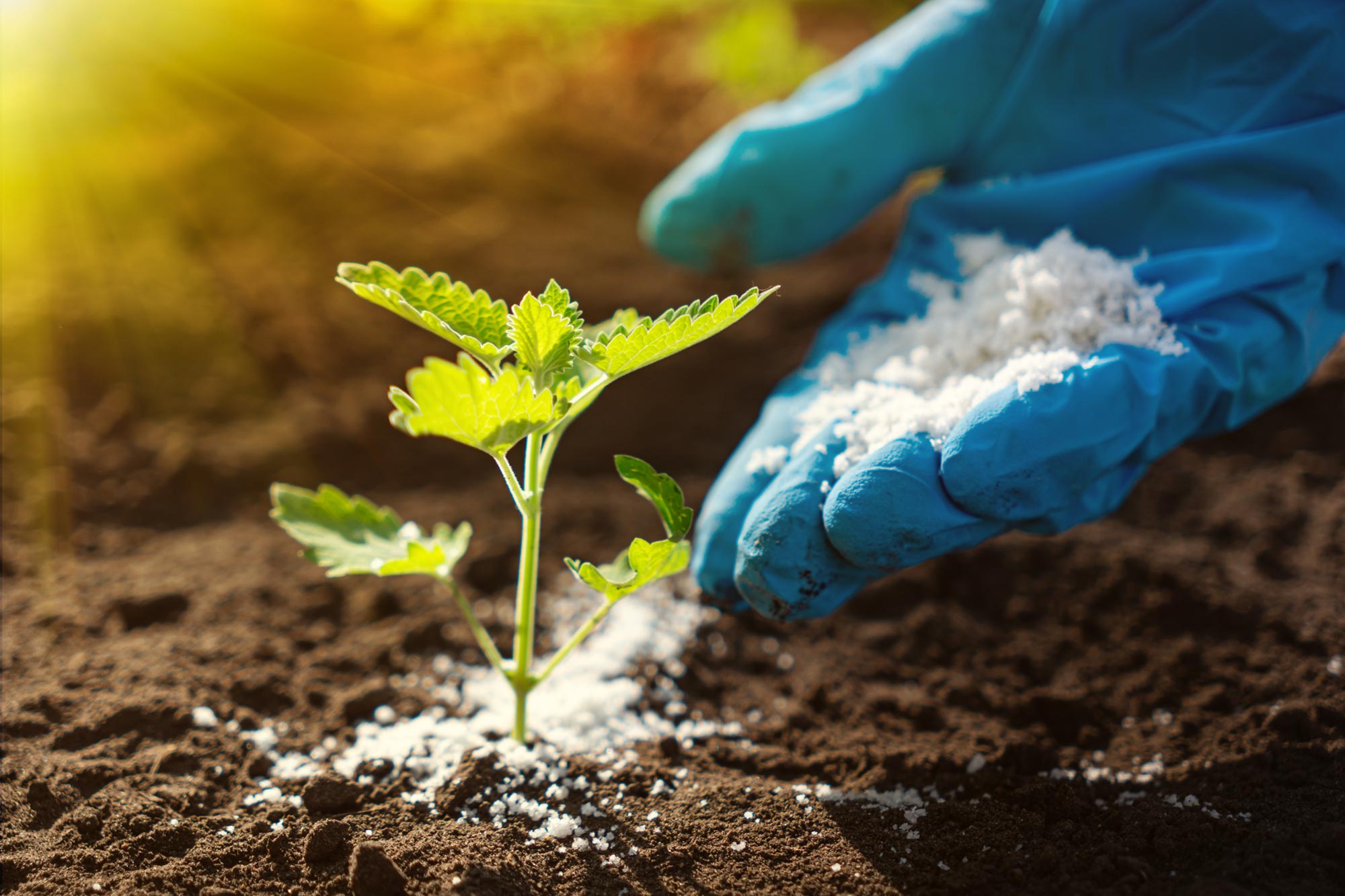
    Researchers have streamlined a technique for tracking DNA-bound phosphorus, a small but biologically active component of soil phosphorus linked to microbial life. Credit: Shutterstock

    A simpler method for measuring DNA-bound phosphorus could improve understanding of soil microbes and nutrient cycling.

    Scientists have created a simpler, more cost-effective way to measure a biologically important form of phosphorus in soil. The method offers a clearer view of how nutrients move through soils and could help guide more sustainable farming practices.

    Phosphorus is vital for plant growth and food production around the world, but the natural sources used to make phosphorus fertilizers are limited. To protect soil fertility and reduce environmental harm, scientists need to understand how phosphorus is stored in soil, how it changes form, and how it becomes available to crops.

    Measuring active soil phosphorus

    In a study published in the Journal of Agricultural and Marine Sciences, an international group that included scientists from Sultan Qaboos University, James Hutton Institute, the Environment Authority of Oman and other institutions improved a laboratory method for measuring DNA-bound phosphorus (DNA-P) in soils. DNA-bound phosphorus is part of the organic phosphorus pool linked to living microorganisms, making it important for understanding how nutrients cycle through soil.

    The group tested and refined an existing analytical procedure, then used the improved method on 32 soil types from across the United Kingdom. The revised process was easier to carry out, less expensive, and still precise and sensitive enough for reliable measurement.
    Conceptual Interpretation of Soil DNA Phosphorus (DNA P) as a Biologically Active Phosphorus Pool
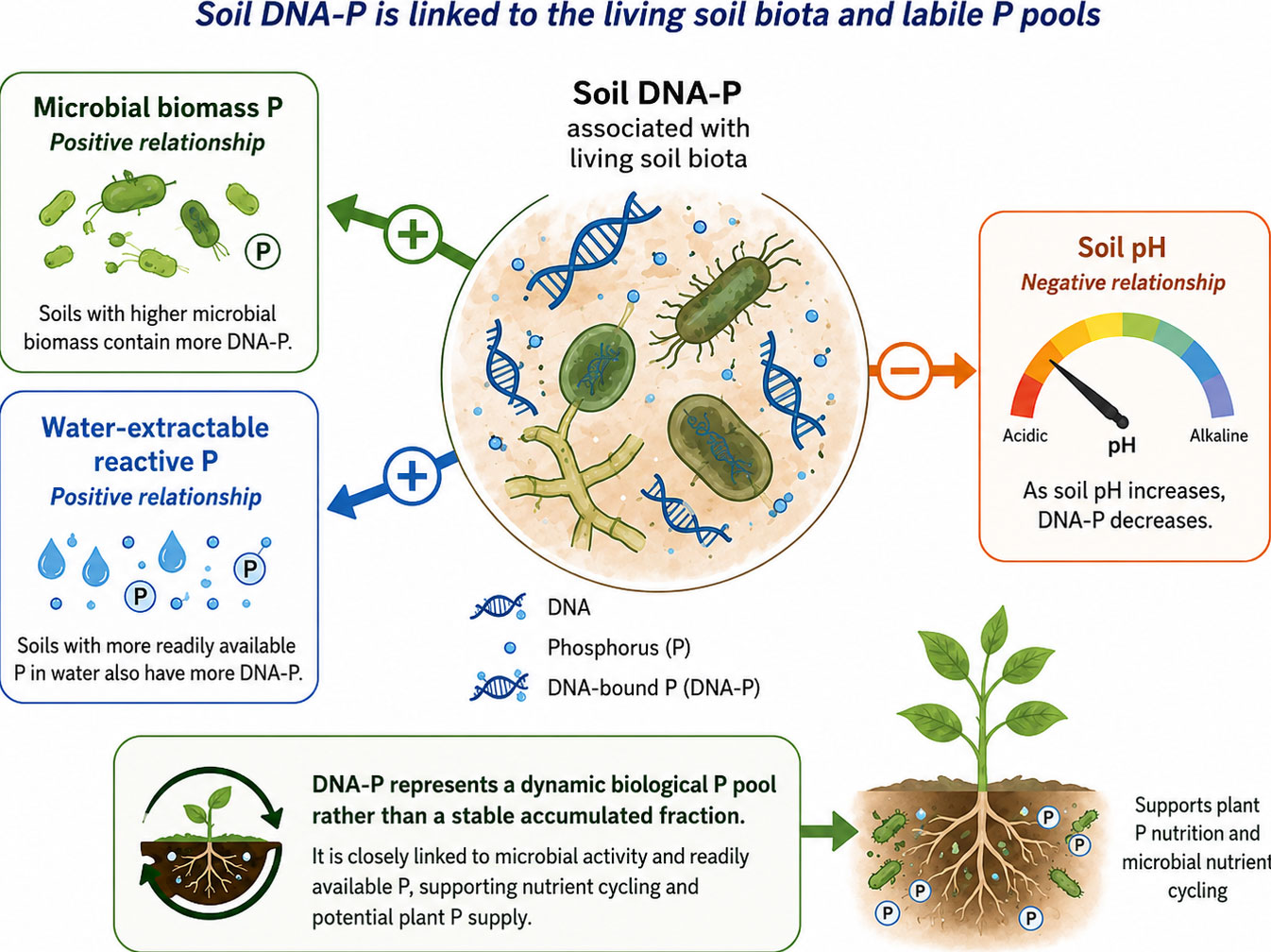
    Conceptual interpretation of soil DNA-phosphorus (DNA-P) as a biologically active phosphorus pool. Credit: Sultan Qaboos University, College of Agriculture and Marine Sciences

    The results showed that enzyme treatments included in the earlier method were not needed, which reduced both cost and complexity. An ultrafiltration step, however, remained necessary because it accurately separated DNA-bound phosphorus from other compounds that also contain phosphorus.

    Microbes shape phosphorus availability

    DNA-bound phosphorus made up only a small share of total organic phosphorus in the soils, but its levels were strongly connected with soil pH, microbial biomass phosphorus, organic matter, and phosphorus dissolved in soil water. Those links suggest that DNA-bound phosphorus is closely tied to living soil microorganisms rather than to phosphorus stored in more stable, long-term reserves.

    Better tools for sustainable farming

    The improved method gives scientists a better way to study biologically active phosphorus in soils. It also creates new opportunities to examine how soil microbes help make nutrients available to plants.

    As agriculture faces growing pressure to use phosphorus more efficiently, this method could support future work on soil fertility, nutrient management, and more sustainable food production.

    Reference: “Soil DNA-Phosphorus: Method Optimization and Application Across UK Soils” by Margaret Massam, Daniel Menezes-Blackburn, Mohammed Al Kasbi, Catherine Wearing, Marc Stutter, Courtney D. Giles, Tegan D. Darch, Timothy S. George, Charles Shand, David Lumsdon, Martin Blackwell, Hao Zhang, Patricia Cooper, Renate Brown, Lawrie Brown and Philip M. Haygarth, 22 May 2026, Journal of Agricultural and Marine Sciences.
    DOI: 10.53541/2410-1079.1356

    Never miss a breakthrough: Join the SciTechDaily newsletter.
    Follow us on Google and Google News.

    Agriculture Environmental Science Phosphorous Plant Science Soil
    Share. Facebook Twitter Pinterest LinkedIn Email Reddit

    Related Articles

    U.S. Waste Holds $5.7 Billion Worth of Crop Nutrients

    The World’s Food Supply Is at Risk: Modern Agriculture Is Destroying the Soil Beneath Our Feet

    Agriculture Threatens Permanent Loss of Plant Diversity

    Fiji: How Humans Brought Change to a Tropical Paradise

    “Postcode Lottery” of Nutrient Intake From Crops Revealed – Dietary Micronutrients Vary Substantially With Location

    64% of Farmland at Risk of Pesticide Pollution – Revealed in Global Map of Agricultural Land Across 168 Countries

    Insatiable Demand for Cannabis Has Created a Massive Carbon Footprint

    Reduce, Reuse, Recycle: The Future of Phosphorus in Agriculture

    How Diet Changes Can Sustain The World’s Food Production

    Leave A Reply Cancel Reply

    • Facebook
    • Twitter
    • Pinterest
    • YouTube

    Don't Miss a Discovery

    Subscribe for the Latest in Science & Tech!

    Trending News

    Quantum Fluctuations Break a Crystal’s Symmetry Rules

    Why Does an Irregular Heartbeat Strike 40 Years Early in Some People?

    Scientists Reveal How ADHD Could Fuel Creative Thinking

    Scientists Find Just 3 Minutes of Sprinting Can Transform Blood Chemistry

    Have We Found Alien Life? Here’s What Scientists Really Think

    Neuroscientist Challenges the Idea That Your Brain “Makes” Decisions

    Quitting Alcohol Can Change the Brain in Surprising Ways, Mouse Study Finds

    FDA-Approved Drug Shows Promise for Reversing Osteoarthritis Damage

    Follow SciTechDaily
    • Facebook
    • Twitter
    • YouTube
    • Pinterest
    • Newsletter
    • RSS
    SciTech News
    • Biology News
    • Chemistry News
    • Earth News
    • Health News
    • Physics News
    • Science News
    • Space News
    • Technology News
    Recent Posts
    • New Soil Test Could Improve Our Understanding of a Vital but Limited Nutrient
    • A Manhattan-Sized Ice Island Just Broke Off Greenland
    • 30 Years of Hurricane Data Reveal 4 Warning Signs Before Storms Strengthen
    • Natural Compound in Broccoli Could Help Treat a Rare, Incurable Neurological Disease
    • Common Supplements Show Antibiotic-Like Benefits Against Severe Gum Disease
    Copyright © 1998 - 2026 SciTechDaily. All Rights Reserved.
    • Science News
    • About
    • Contact
    • Editorial Board
    • Privacy Policy
    • Terms of Use

    Type above and press Enter to search. Press Esc to cancel.