
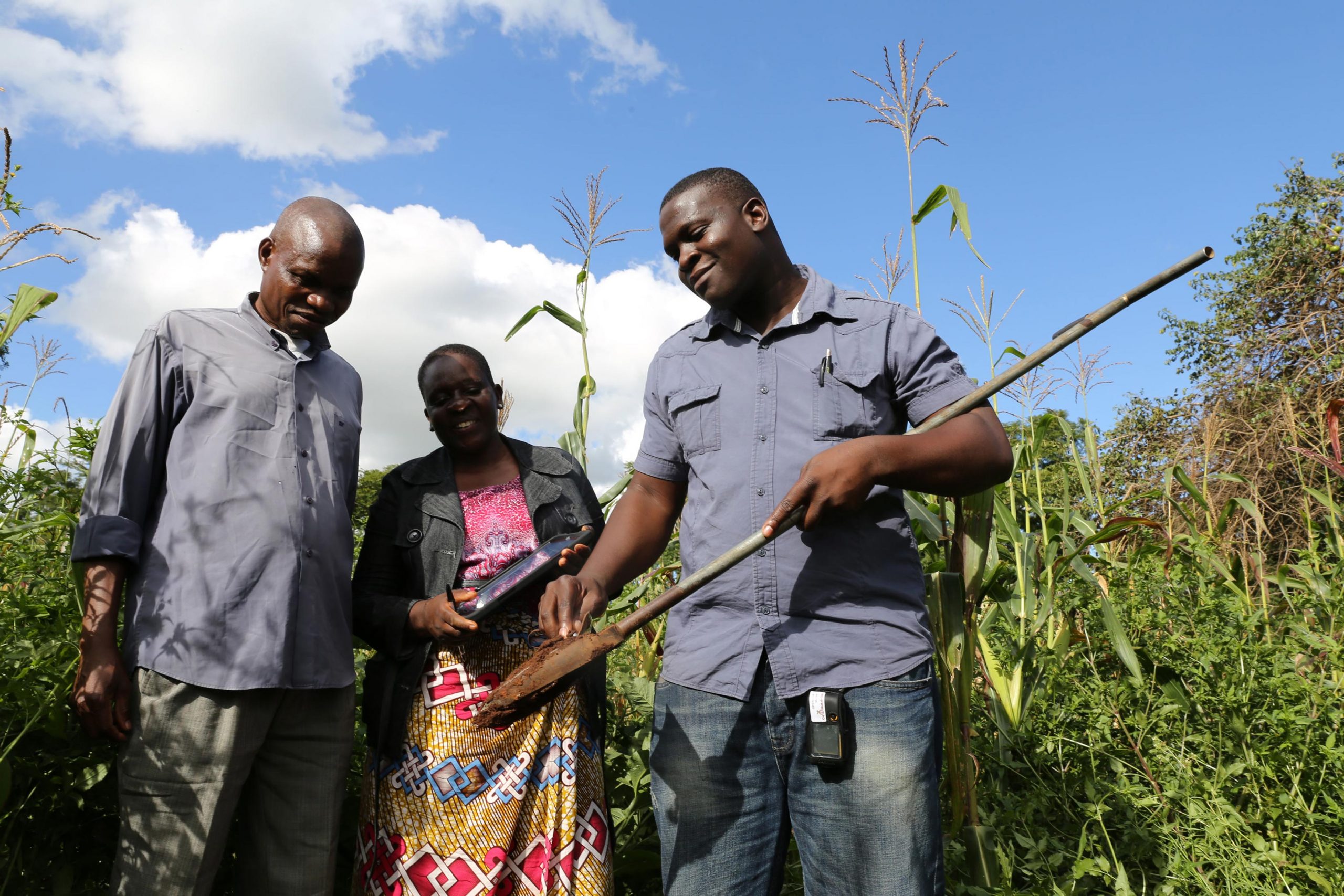
A major study has revealed that the nutrient content of staple crops varies widely by region in Ethiopia and Malawi, affecting rural diets and increasing hidden hunger risks. Soil and crop types are key factors in micronutrient availability, influencing public health and farming practices.
The amount of nutrients people get from the crops that they eat is a type of “postcode lottery,” according to new research that has analyzed thousands of cereal grains and soils as part of a project to tackle hidden hunger in Malawi and Ethiopia.
A global team led by the University of Nottingham and its Future Food Beacon including academics and researchers from Addis Ababa University (AAU) in Ethiopia and Lilongwe University of Agriculture and Natural Resources (LUANAR) in Malawi, working on the GeoNutrition project, have discovered more about the relation between soils, crops and micronutrient deficiencies among people living there. Their findings have been published today (May 19, 2021) in the journal Nature.
The team analyzed the grain of more than 3000 cereal crop samples from farmers’ fields in Ethiopia and Malawi. They found that the amount of the dietary micronutrients calcium, iron, selenium, and zinc in the cereal grain varied substantially with location, with some areas showing much lower levels of micronutrients than others. Some cereal types, such as millets, are more nutritious than others, such as maize. However, whether deficiencies are likely in an area also depends on its soils and landscapes.
Micronutrients include the vitamins and minerals which the body requires from the diet in small quantities, for a range of functions. Micronutrient deficiencies, also known as hidden hunger, are common globally, affecting more than half of children younger than 5 years of age, especially where access to sufficient food from plant and animal sources that are rich in micronutrients is limited for socioeconomic reasons. Micronutrient deficiencies pose a serious risk to human health, including the growth and cognitive development of children and susceptibility to infectious and non-communicable diseases.
Geographic Influence on Nutrition
This research shows that location is intrinsically linked to the nutritional quality of diets. Getting enough micronutrients is a type of ‘postcode lottery’ with nutritional value varying by location. This will particularly affect rural households that consume locally sourced food, including many smallholder farming communities where the location may even be the largest influencing factor in determining the dietary intake of micronutrients.
The project was funded primarily by the Bill & Melinda Gates Foundation, led by Martin Broadley, Professor of Plant Nutrition in the School of Biosciences and a contributor to the Future Food Beacon. He said: “It is important to have good quality evidence on the nutritional quality of diets if we are going to support public health and agriculture policies to improve peoples’ health and wellbeing. Mapping the quality of diets is an important part of this evidence.”
The co-lead authors of the paper are Dr. Dawd Gashu, working in the Centre for Food Science and Nutrition at AAU, and Dr. Patson Nalivata, in the Department of Crop and Soil Science at LUANAR. Dr. Gashu said, “Nutritional surveillance work on the quality of staple cereals is an important part of wider public health policies to address micronutrient deficiencies and we hope that this type of work is now adopted in more countries.” Dr. Nalivata said, “By learning more about how the nutritional quality of cereal grains is linked to soil types and landscapes, as we have in this study, we are now better able to advise farmers how to choose and cultivate more nutritious crops.”
Reference: “The nutritional quality of cereals varies geospatially in Ethiopia and Malawi” by D. Gashu, P. C. Nalivata, T. Amede, E. L. Ander, E. H. Bailey, L. Botoman, C. Chagumaira, S. Gameda, S. M. Haefele, K. Hailu, E. J. M. Joy, A. A. Kalimbira, D. B. Kumssa, R. M. Lark, I. S. Ligowe, S. P. McGrath, A. E. Milne, A. W. Mossa, M. Munthali, E. K. Towett, M. G. Walsh, L. Wilson, S. D. Young and M. R. Broadley, 19 May 2021, Nature.
DOI: 10.1038/s41586-021-03559-3
Other partners in this project include agricultural scientists, nutritionists, statisticians, ethicists, and economists from the London School of Hygiene & Tropical Medicine (LSHTM), Rothamsted Research, and British Geological Survey (BGS) in the UK. International partners include College of Medicine (University of Malawi), International Maize and Wheat Improvement Centre (CIMMYT), International Crops Research Institute for the Semi-Arid Tropics (ICRISAT), and the World Agroforestry Centre (ICRAF).
The investment from the Gates Foundation was supported by projects funded by the UK Government via the UKRI’s Global Challenges Research Fund (GCRF), the Royal Society, the Foreign, Commonwealth and Development Office (FCDO), and the Biotechnology and Biological Sciences Research Council (BBSRC).
Never miss a breakthrough: Join the SciTechDaily newsletter.
Follow us on Google and Google News.