
Global Pesticide Use Is Set to Increase
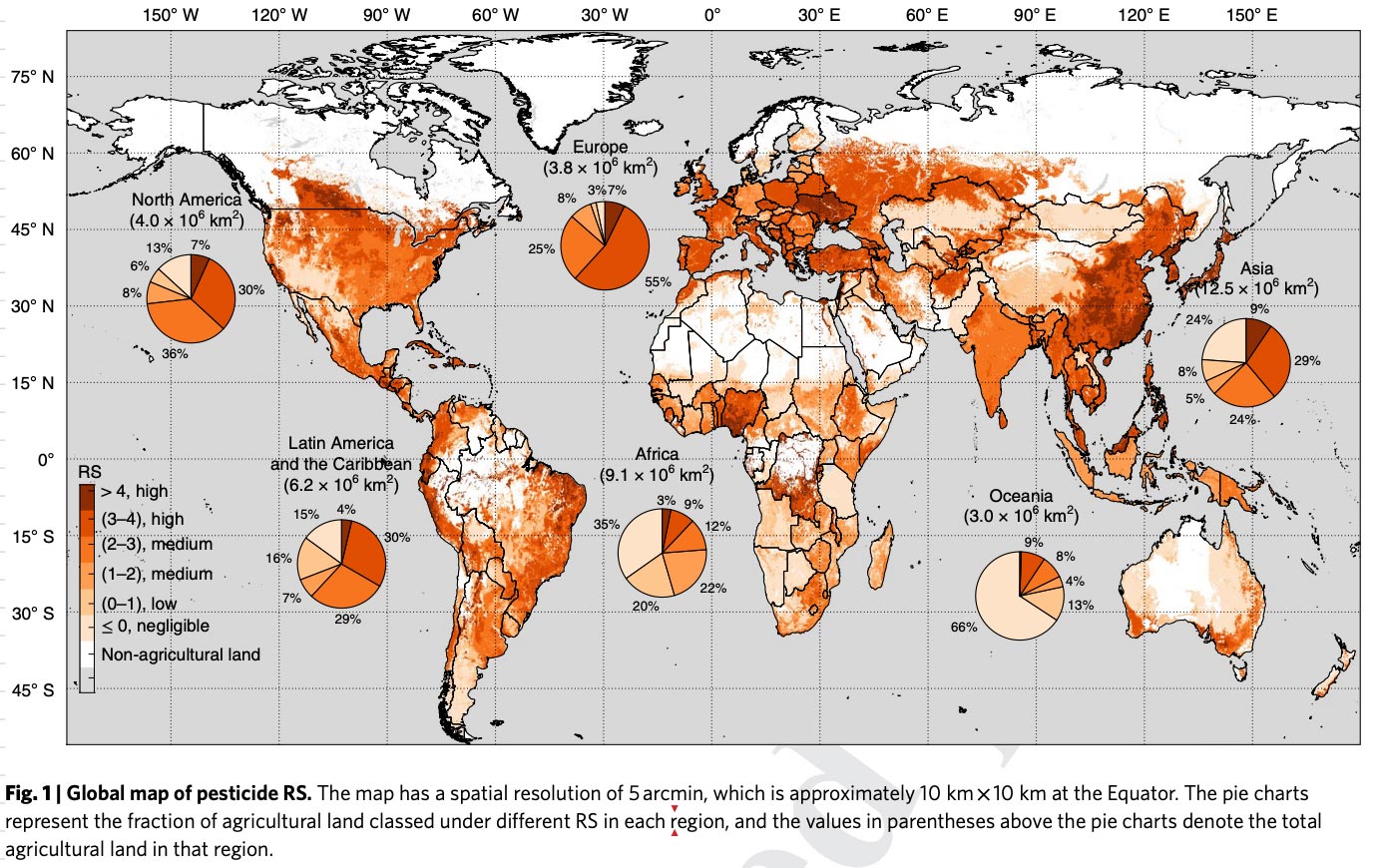
A global map of agricultural land across 168 countries has revealed that 64 percent of land used for agriculture and food crops is at risk of pesticide pollution. Almost a third of these areas are considered to be at high-risk.
The study, published in Nature Geoscience, produced a global model mapping pollution risk caused by 92 chemicals commonly used in agricultural pesticides in 168 countries.
The study examined risk to soil, the atmosphere, and surface and ground water.
The map also revealed Asia houses the largest land areas at high risk of pollution, with China, Japan, Malaysia, and the Philippines at highest risk. Some of these areas are considered “food bowl” nations, feeding a large portion of the world’s population.
University of Sydney Research Associate and the study’s lead author, Dr. Fiona Tang, said the widespread use of pesticides in agriculture – while boosting productivity – could have potential implications for the environment, human and animal health.
“Our study has revealed 64 percent of the world’s arable land is at risk of pesticide pollution. This is important because the wider scientific literature has found that pesticide pollution can have adverse impacts on human health and the environment,” said Dr. Tang.
Pesticides can be transported to surface waters and groundwater through runoff and infiltration, polluting water bodies, thereby reducing the usability of water resources.
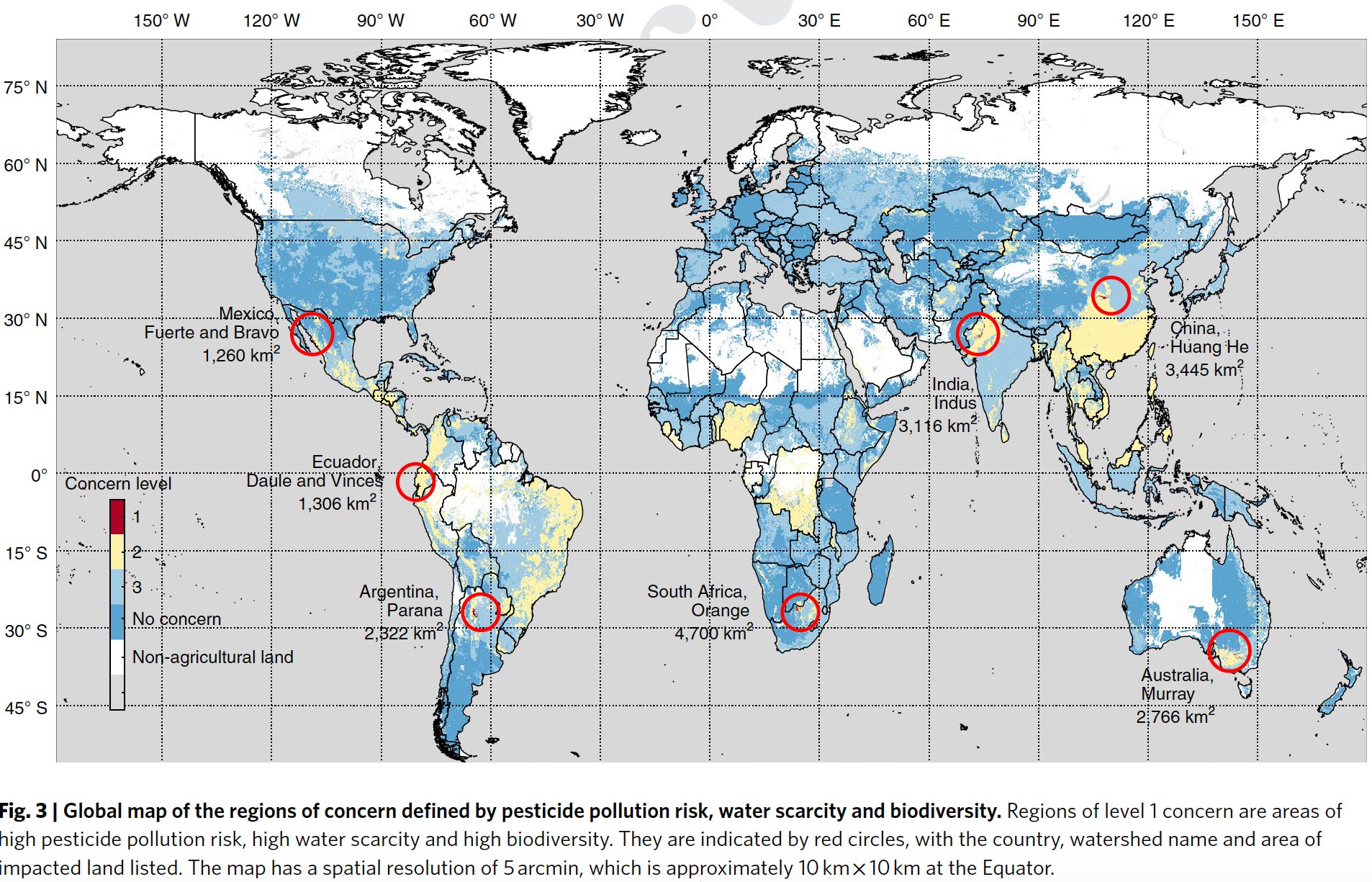
“Although the agricultural land in Oceania shows the lowest pesticide pollution risk, Australia’s Murray-Darling basin is considered a high-concern region both due to its water scarcity issues, and its high biodiversity,” said co-author Associate Professor Federico Maggi from the School of Civil Engineering and the Sydney Institute of Agriculture.
“Globally, our work shows that 34 percent of the high-risk areas are in high-biodiversity regions, 19 percent in low- and lower-middle-income nations, and five percent in water-scarce areas,” said Dr. Tang.
There is concern that overuse of pesticides will tip the balance, destabilize ecosystems, and degrade the quality of water sources that humans and animals rely on to survive.
The Future Outlook
Global pesticide use is expected to increase as the global population heads towards an expected 8.5 billion by 2030.
“In a warmer climate, as the global population grows, the use of pesticides is expected to increase to combat the possible rise in pest invasions and to feed more people,” said Associate Professor Maggi.
Dr. Tang said: “Although protecting food production is essential for human development, reducing pesticide pollution is equivalently crucial to protect the biodiversity that maintains soil health and functions, contributing towards food security.”
Co-author Professor Alex McBratney, Director of the Sydney Institute of Agriculture at the University of Sydney, said: “This study shows it will be important to carefully monitor residues on an annual basis to detect trends in order to manage and mitigate risks from pesticide use.”
“We recommend a global strategy to transition towards a sustainable, global agricultural model that reduces food wastage while reducing the use of pesticides,” said the authors of the paper.
Reference: “Risk of pesticide pollution at the global scale” by Fiona H. M. Tang, Manfred Lenzen, Alexander McBratney and Federico Maggi, 29 March 2021, Nature Geoscience.
DOI: 10.1038/s41561-021-00712-5
This research was supported by the University of Sydney’s EnviroSphere research program. The authors have no conflicts of interest to declare.
Never miss a breakthrough: Join the SciTechDaily newsletter.
Follow us on Google and Google News.