
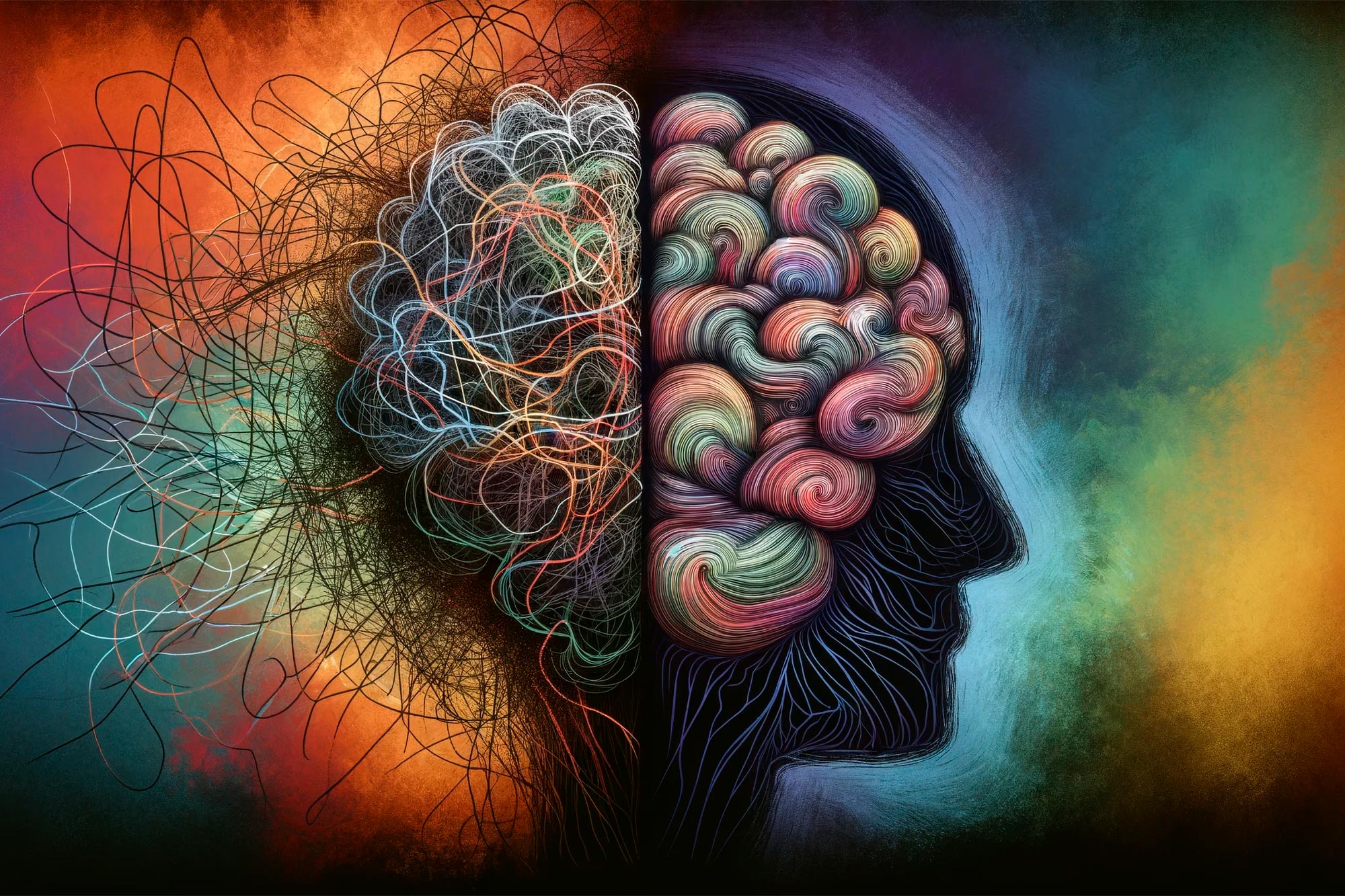
A study reveals that PTSD affects how the brain processes traumatic memories differently from sad memories, offering insights for targeted treatments.
A new analysis of the brain activity of people with post-traumatic stress disorder (PTSD) is the first to reveal that traumatic memories are represented in the brain in an entirely different way than sad autobiographical memories.
This finding supports the notion that traumatic memories in PTSD are an alternate cognitive entity that deviates from regular memory, and may provide a biological explanation for why the recall of traumatic memories often displays as intrusions that differ profoundly from “regular” negative memories for patients with PTSD.
Linking Personal Experience to Brain Function
The study, conducted by researchers at the Icahn School of Medicine at Mount Sinai and Yale University and published today (November 30) in the journal Nature Neuroscience, was also the first to examine people’s real-life personal memories rather than looking at basic cognitive mechanisms, in order to link personal experience to brain function.
“For people with PTSD, recalling traumatic memories often displays as intrusions that differ profoundly from processing of ‘regular’ negative memories, yet until now, the neurobiological reasons for this qualitative difference have been poorly understood,” said Daniela Schiller, PhD, Professor of Psychiatry, and Neuroscience, at Icahn Mount Sinai and senior author of the paper. “Our data show that the brain does not treat traumatic memories as regular memories, or perhaps even as memories at all. We observed that brain regions known to be involved in memory are not activated when recalling a traumatic experience. This finding provides a neural target and focuses the goals of returning traumatic memories into a brain state akin to regular memory processing.”
Memory Processing in PTSD
Previous research has established that the brain region known as the hippocampus governs the formation and retrieval of episode memories. PTSD is associated with structural abnormalities (predominantly a reduction of volume) of the hippocampus, and impairments to hippocampal processes are focal to PTSD pathophysiology. The posterior cingulate cortex (PCC) has been demonstrated to be heavily involved in both narrative comprehension and autobiographical processing and, particularly, in emotional memory imagery. Alterations in PCC function and connectivity are specifically focal to PTSD.
Study Methodology and Findings
To examine whether and how the hippocampus and posterior cingulate cortex differentiate traumatic autobiographical memories from sad ones, 28 participants diagnosed with PTSD underwent reactivation of autobiographical memory through script-driven imagery while undergoing functional magnetic resonance imaging (fMRI).
First, to generate stimuli based on participants’ individual autobiographical memories, the researchers used an imagery development procedure. Participants elaborated on three types of autobiographical memories: the “PTSD” condition: the traumatic memory associated with their PTSD (e.g., combat, sexual assault, domestic violence), the “sad” condition: a sad, meaningful, but non-traumatizing experience (e.g., death of a family member or pet), the “calm” condition: a positive, calm event (e.g., memorable outdoor activities).
These highly personal depictions of autobiographical memory were then systematically arranged into an audio clip approximately 120 seconds long, narrated by a member of the research staff. Notably, the PTSD and sad narratives were scripted to maximize their structural similarity to each other, to control for content and arousal. Participants listened to this novel rendition of their own memories for the first time while undergoing functional magnetic resonance imaging.
The team hypothesized that across PTSD participants, semantic similarity would correspond to neural similarity: if the personal memories of two participants are semantically close, their patterns of neural responses while listening to audio recordings of these memories should be similar as well. If traumatic and sad memories are just different cases of autobiographical memories, the researchers expected to observe semantic-to-neural correspondence across pairs of traumatic memories and pairs of sad memories alike. However, if traumatic autobiographical memories depart from—rather than being a version of—sad autobiographical memories, then they would observe the semantic-to-neural relationship only for sad, but not traumatic, memories.
Differentiating Traumatic and Sad Memories
The research team was intrigued to find that patterns in the hippocampus showed a differentiation in semantic representation by narrative type. In the hippocampus, sad scripts that were semantically similar across participants elicited similar neural representations on fMRI. Conversely, thematically similar traumatic autobiographical memories did not elicit similar representations.
Importantly, the researchers also found a positive relationship between semantic content and neural patterns of the traumatic narratives in the PCC, a brain region that was recently conceptualized as a cognitive bridge between the world events and representation of the self.
Implications for PTSD Treatment
The study identifies a neural basis of the different subjective experience of recalling a traumatic memory as opposed to a regular memory. The data suggests that a treatment target aimed at “returning” the traumatic memory representation into a typical hippocampal representation may be beneficial.
Reference: “Neural patterns differentiate traumatic from sad autobiographical memories in PTSD” by Ofer Perl, Or Duek, Kaustubh R. Kulkarni, Charles Gordon, John H. Krystal, Ifat Levy, Ilan Harpaz-Rotem and Daniela Schiller, 30 November 2023, Nature Neuroscience.
DOI: 10.1038/s41593-023-01483-5
NIH/National Institutes of Health, Brain and Behavior Research Foundation, National Center for PTSD
Never miss a breakthrough: Join the SciTechDaily newsletter.
Follow us on Google and Google News.