
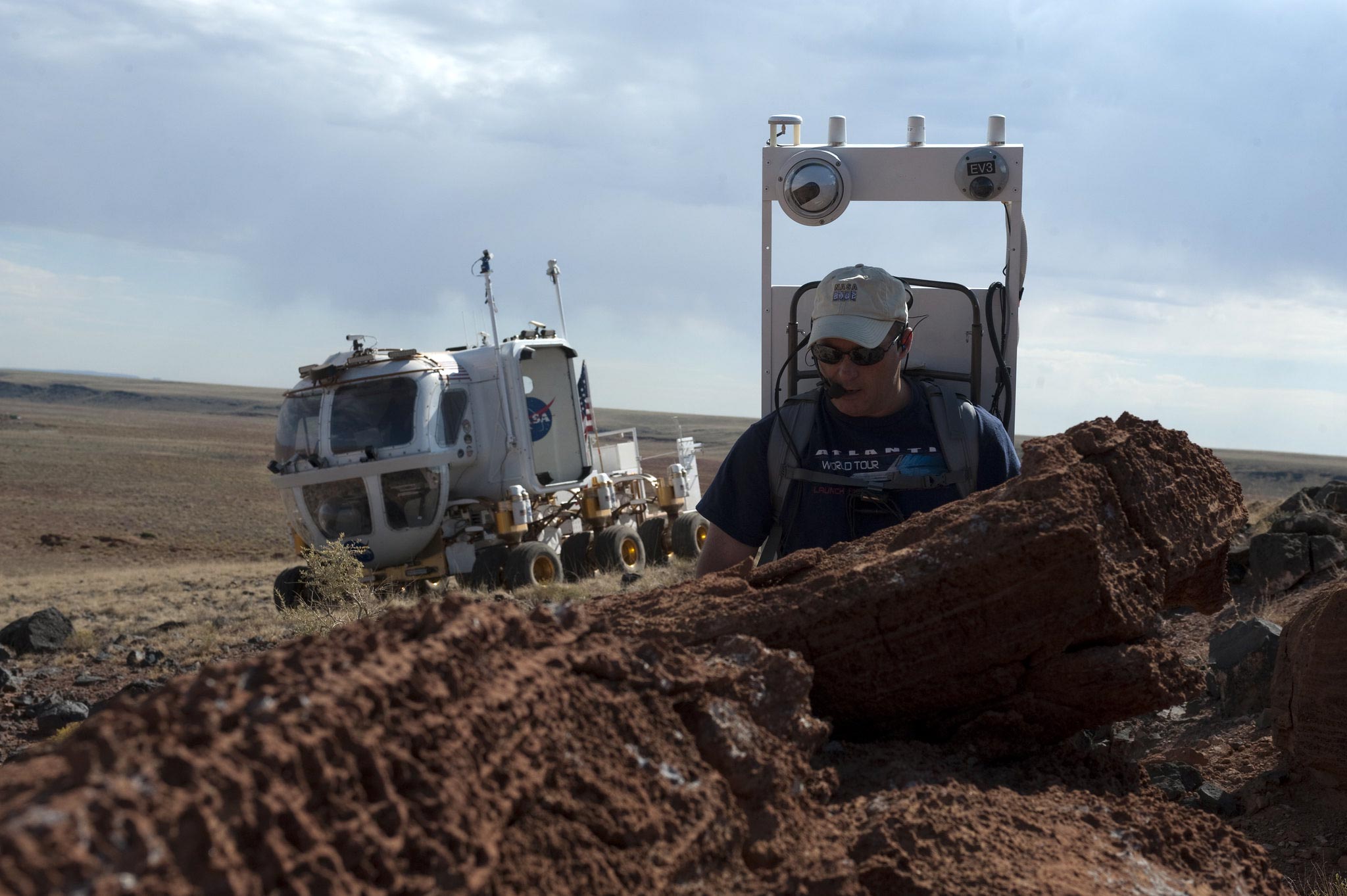
NASA is getting ready for the Artemis era of research performed on the surface of the Moon. As part of the preparations, NASA is conducting two, multi-week field tests near Flagstaff, Arizona with astronauts, engineers, and scientists. They will practice mission scenarios for Artemis astronauts in a simulated lunar surface environment.
The Arizona desert possesses many characteristics that are analogous to a lunar environment. These include challenging terrain, interesting geology, and minimal communications infrastructure, all of which astronauts will experience near the lunar South Pole during Artemis missions.
The Joint Extravehicular Activity and Human Surface Mobility Program Test Team (JETT) Field Test #3 and Desert Research and Technology Studies (D-RATS) are the two analog missions taking place in October 2022. They will provide crucial data and lessons learned as teams conduct operations in a simulated lunar environment to practice for the real event.
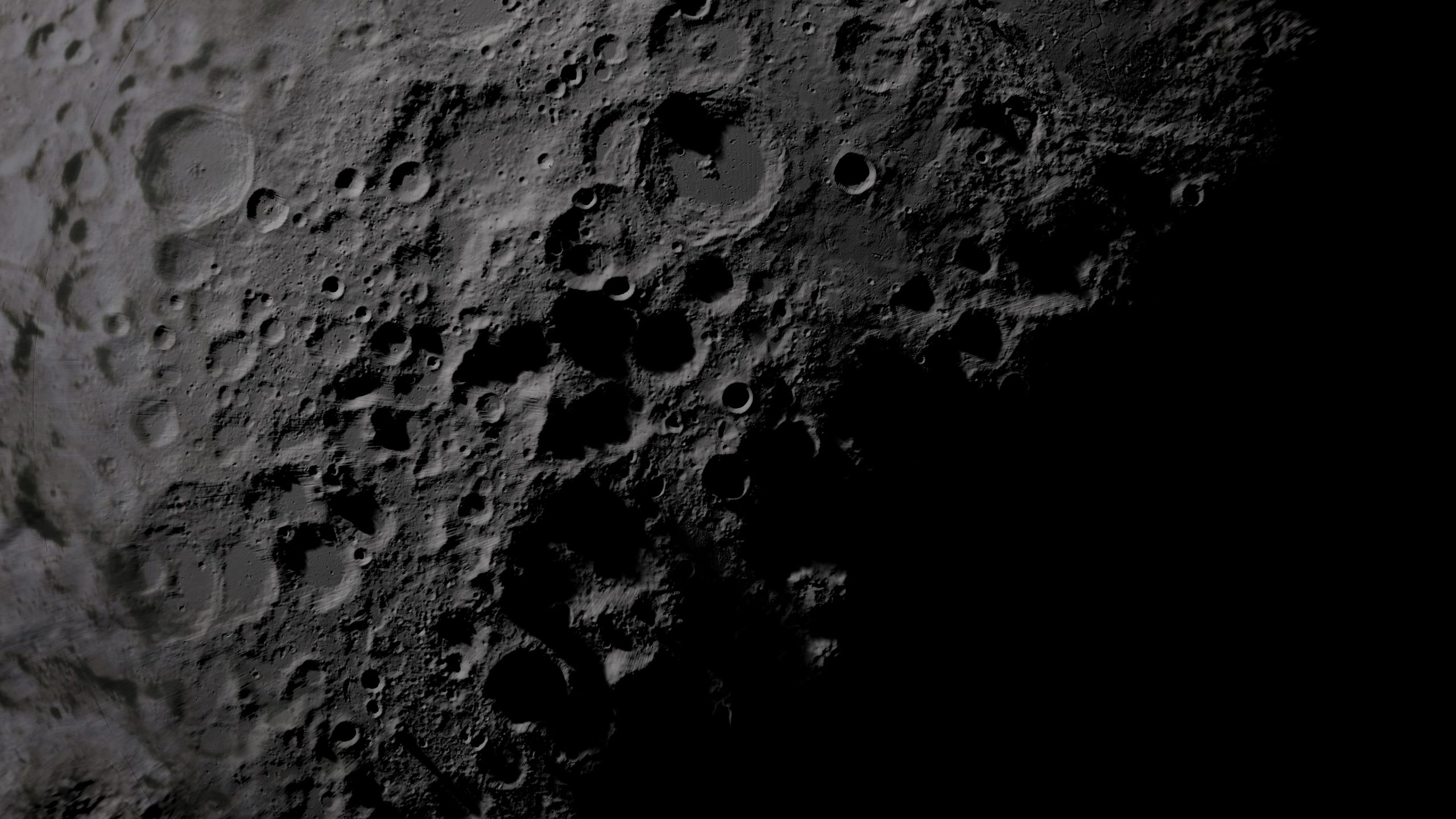
JETT3: Understanding Lunar South Pole Lighting Conditions for Moonwalks
JETT3 is the first in the series of missions. It will consist of four simulated moonwalks that follow operations planned for Artemis III, the first of the Artemis missions to land astronauts on the surface of the Moon. The primary focus of this analog mission is to help NASA gain an understanding of the requirements for the unique lighting conditions at the lunar South Pole region.
The mission took place October 4-9 near the S P Crater, a cinder cone volcano located about 25 miles (40 km) North of Flagstaff, Arizona. JETT3 is the final test in the 2022 JETT series, which is a broader mission-scale test to ensure successful surface operations and technology development for Artemis III.
To replicate the proper lighting conditions, the JETT3 simulated moonwalks occurred at night, using a simulated sun to produce lighting and shadows in the field.
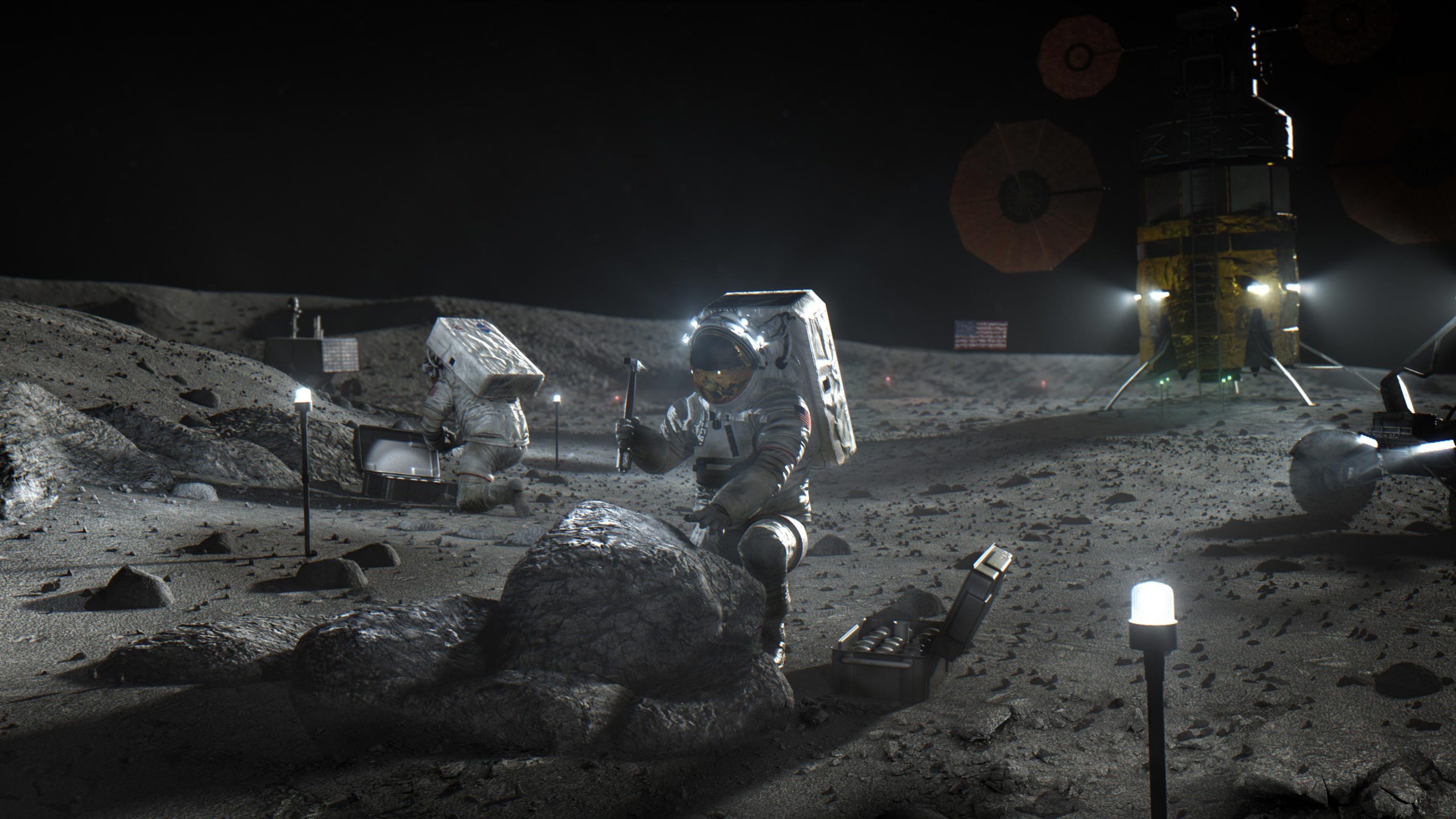
Two NASA astronauts, Drew Feustel and Zena Cardman, served as the crewmembers for all four moonwalks and traversed within an approximate one-mile circle wearing mockup spacesuit systems. While wearing the mockups that simulate fully pressurized spacesuits, they utilized a variety of moonwalking tools and techniques to collect samples including raking, hammering, and coring.
A flight control team led the simulated moonwalks from the Mission Control Center at NASA’s Johnson Space Center in Houston, Texas, and was joined by a science team that analyzed the astronauts’ simulated moonwalks in real-time.
At the end of each day and at the conclusion of the simulated mission, the science team, flight control team, crewmembers, and field experts come together to discuss and record lessons learned. NASA will take these lessons and apply them to developing technologies and planning operations for Artemis missions.
D-RATS: Testing Pressurized Rovers
D-RATS will practice operations for future missions beyond Artemis III and will consist of three mission runs scheduled for October 11-22 at Black Point Lava Flow, near S P Crater. This area was originally identified as a candidate lunar analog site during the Apollo era. The mission will primarily focus on conducting pressurized rover operations, which is a key element of future Artemis missions starting with Artemis VII in 2030.
Pressurized rovers are like recreational vehicles, commonly known as RVs, safely housing astronauts for weeks at a time, complete with all the air, water, food, hygiene equipment, and tools they need on their trek across the lunar surface. Astronauts can live and work comfortably inside the rover, exiting the vehicle to collect samples or deploy experiments.
Japan Aerospace Exploration Agency (JAXA) will join NASA for D-RATS as part of a study agreement that supports JAXA’s ability to potentially provide a pressurized rover for Artemis. JAXA astronauts and engineers will have an opportunity to experience living and working from within NASA’s prototype pressurized rover in an operational environment.
JAXA astronauts Akihiko Hoshide and Norishige Kanai, and JAXA expert Naofumi Ikeda will join NASA astronauts Jessica Meir and Stan Love and NASA engineer Sarah Shull, in driving a pressurized rover over the course of three days. Crews of two will rotate through living and operating out of the pressurized rover, including conducting simulated moonwalks.
Throughout D-RATS, NASA and JAXA will gather data about the pressurized rover’s design, cabin configuration, driving modes, timeline constraints, and mission operations to support potential design concepts for future pressurized rovers.
A team of NASA and JAXA flight controllers, astronauts, and scientists will lead the analog mission from the Mission Control Center. This team, together with crewmembers and field experts, will work together to record data for potential technology and operations development for a pressurized rover.
Through Artemis, NASA will land the first woman and the first person of color on the Moon, paving the way for a long-term, sustainable lunar presence and serving as a steppingstone for future astronaut missions to Mars. Analog missions help prepare humans for the challenges of deep space exploration and journeying farther into the cosmos.
Never miss a breakthrough: Join the SciTechDaily newsletter.
Follow us on Google and Google News.