
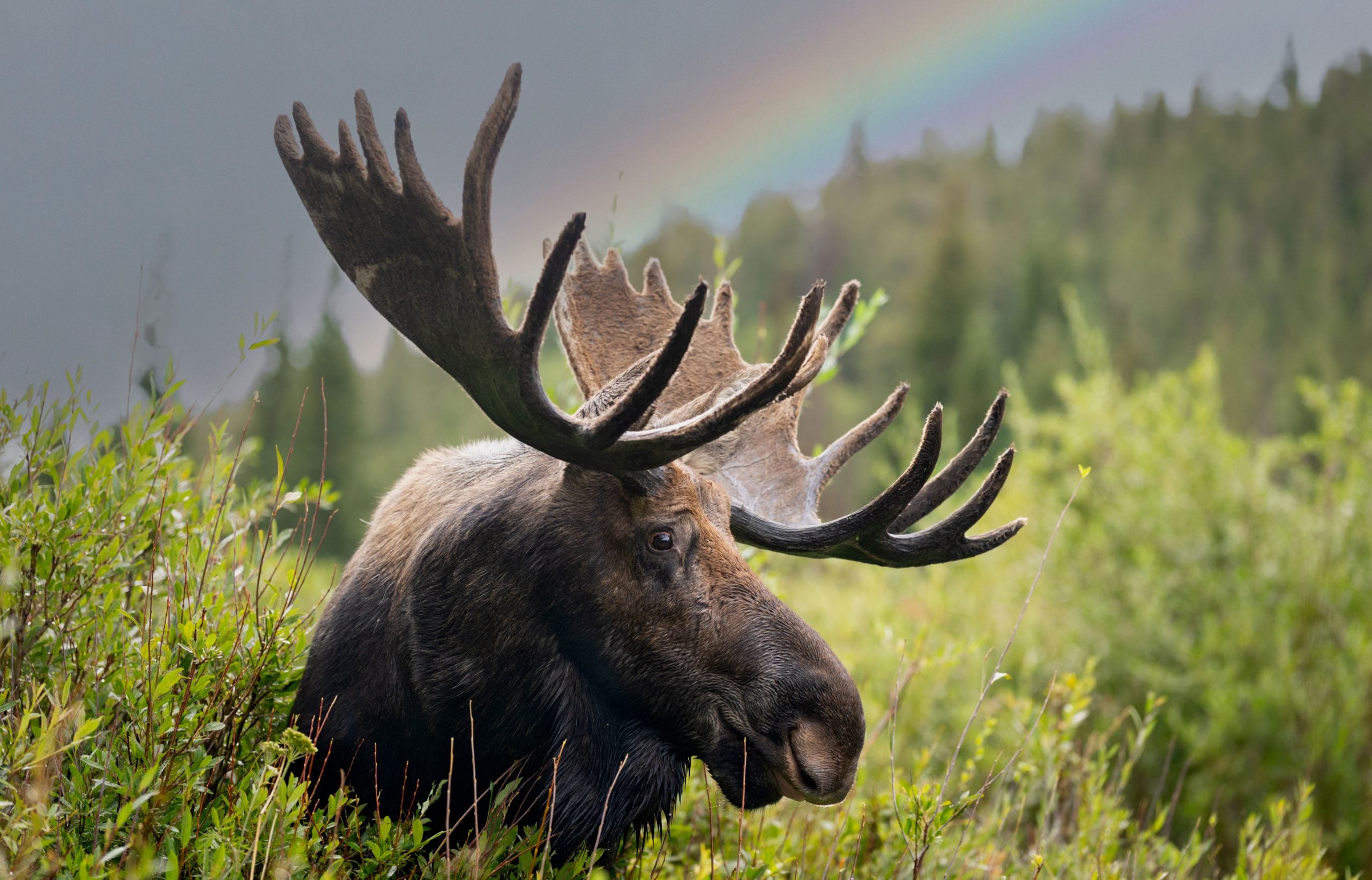
Evidence from archaeology, archives and Indigenous knowledge shows moose have a much longer history in Colorado than modern reintroductions suggest.
Long before wildlife officials moved moose into Colorado in the late 1970s, the animals may already have been part of the state’s ecological and cultural landscape.
That possibility complicates a familiar origin story. Because modern moose populations expanded after state-led translocations, and because earlier written sightings were sparse, the species has often been treated as a recent arrival. In Rocky Mountain National Park, where moose now thrive, concerns about browsing, vegetation loss, and broader ecosystem change have reinforced debates over how to manage an animal frequently labeled “non-native.”
A new study by scientists, archivists, and Tribal cultural heritage leaders challenges that assumption. Drawing on archaeological evidence, historical records, museum collections, and Indigenous knowledge, the researchers argue that moose lived in Colorado centuries before modern reintroduction efforts, and perhaps for thousands of years.
To reconstruct that deeper history, the researchers looked across several kinds of evidence rather than relying on one archive or one scientific field. They examined newspapers, archaeological site reports, scientific publications, museum collections, and photo archives to track moose in Colorado before the mid 1900s. Lead author William Taylor, a University of Colorado Boulder associate professor of anthropology and CU Museum curator of archaeology, also emphasized the importance of Indigenous histories. That search found that moose were familiar to Native people in the southern Rockies and were woven into traditional knowledge.
Crystal C’Bearing, a study co-author and Northern Arapaho Tribal historic preservation officer, notes that among the Northern Arapaho, “the moose is considered a valued commodity among the Tribe.” She adds that societies within the Northern Arapaho “utilize many animals, including moose, in their clothing, society items, and regalia. This tradition continues today.”
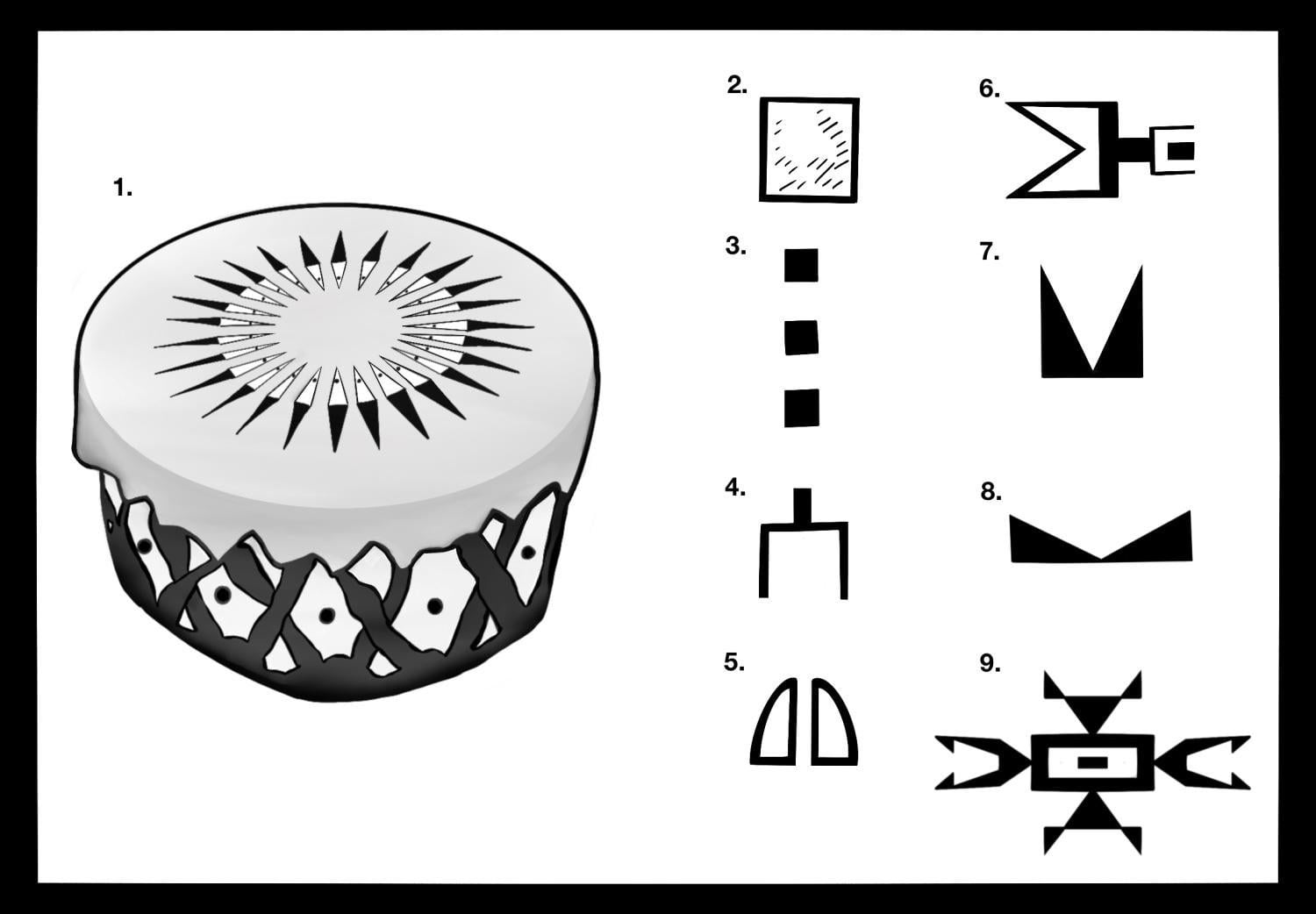
The power of the work came from bringing those sources together. Archaeology could extend the timeline. Historical accounts could show where people encountered moose more recently. Indigenous knowledge could preserve relationships and observations not always recorded in scientific databases.
The scholarly approach of joining Indigenous knowledge with historical accounts, archaeology, and paleontology, “shows the power of multiple independent lines of evidence converging on the conclusion that moose were part of southern Rocky Mountain ecosystems long before modern reintroductions,” says study co-author Jonathan Dombrosky of Crow Canyon Archaeological Center and the University of Alabama. “More broadly, the study demonstrates how historical sciences can help us better understand the origins of modern ecosystems and make more informed decisions about their future.”
Delving into the archaeological record
The project began with Taylor’s close look through the CU Museum’s archaeological collections after he arrived in 2019. Museum collections can hold clues that remain overlooked for decades, especially when older findings are separated from modern wildlife debates.
“One of the things I’ve done with my time here is try to familiarize myself with and understand our own collections, which are among the more significant archaeological collections in the whole region,” Taylor says. “In the process of curating our collections, I became more and more familiar with what’s in those and the publications that are out there in the world that pertain to them.
“One of the oldest and most significant is the Jurgens collection, which is from a site in Colorado and related to a really early, deep chapter of Colorado’s pre-history, and that collection was analyzed by (one of) my predecessor(s), Dr. Joe Ben Wheat. He analyzed this collection decades ago and identified several specimens of moose in northwest Colorado dating back thousands of years, to the early Holocene.”
Those specimens mattered because they did not fit easily with public descriptions of moose as outsiders. When Rocky Mountain National Park officials later raised concerns about moose management, Taylor noticed that many conversations framed the animals as recent ecological intruders.
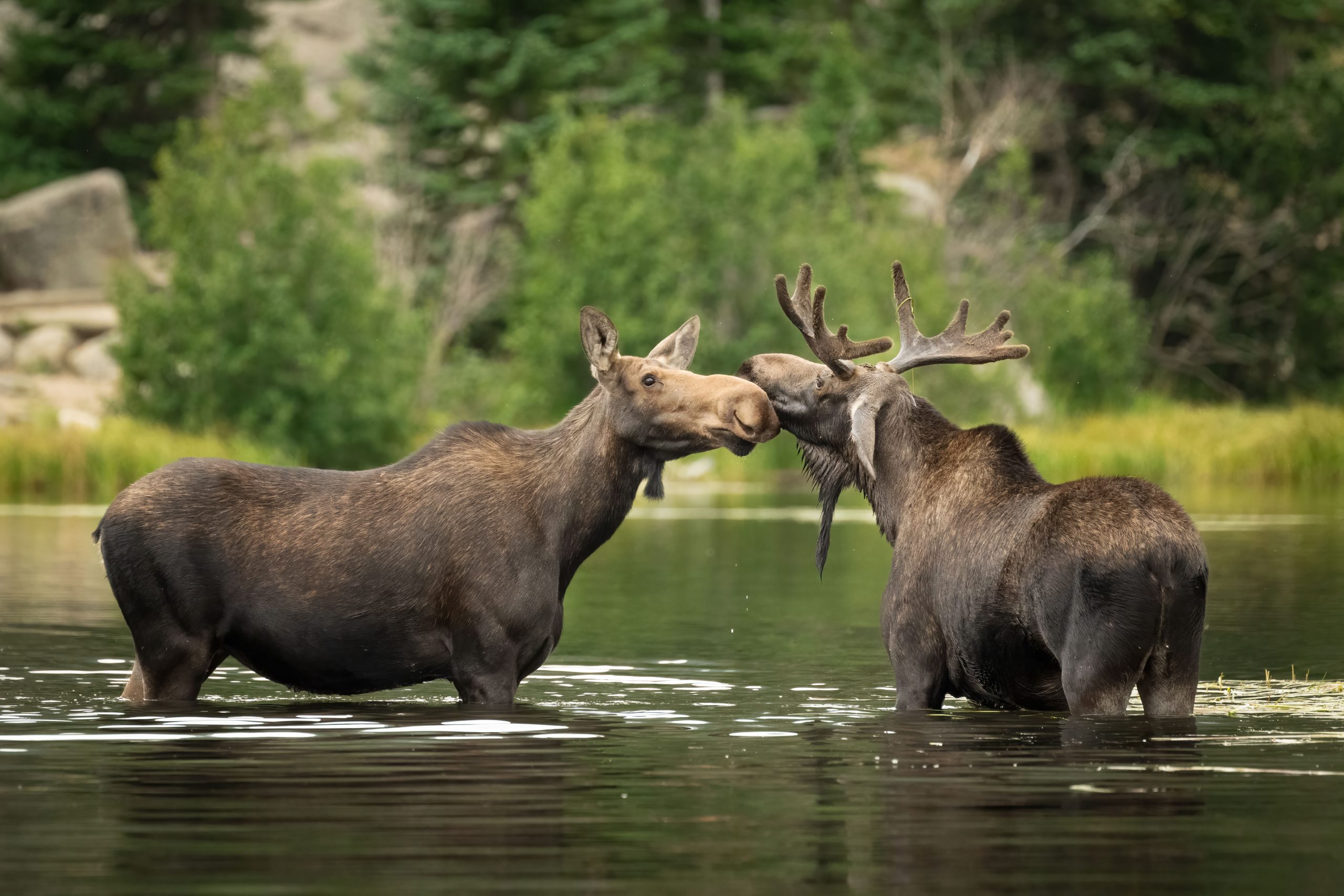
That fact was on Taylor’s mind a few years ago when Rocky Mountain National Park officials began broadly publicizing moose management issues and the discussions that were happening about them. In many of those discussions, Taylor recalls, the messaging frequently labeled moose as “invasive,” “non-native” or “outsiders,” which doesn’t align with the archaeological record and “some of the basic facts I know from my role here working as curator,” he says.
The concern grew when Taylor saw claims about Native people and moose that seemed to rest on weak evidence. If those claims shaped management policy, he reasoned, the historical record needed closer attention.
“I also started to see some media narratives, based on secondhand accounts, suggesting that Native people in the Rockies didn’t know about moose. Things like that just started to rub me the wrong way and raised my spidey senses —I decided that there needs to be serious engagement with the archaeological record. We needed to take a closer look at these things that are trickling into the discourse—particularly characterizations of Indigenous perspectives and the historic record, because that’s going to shape what happens to moose in the future.”
Taylor then reached out to Tribal partners and colleagues at universities and other institutions to ask a basic question: what did they know about the history of moose in the southern Rockies? Those conversations led to a broader investigation built to test the assumption that Colorado moose were simply modern arrivals.
The work started in CU Museum archives and expanded with help from other museum staff. One major source was Colorado’s roughly 160 years of digitized newspapers. By mapping documented moose sightings and reported human interactions with moose, the researchers found evidence that moose had been noted in the region since the earliest days of colonial settlement.
Seeking Indigenous histories
The archaeological search was more difficult. Instead of a single searchable record, Colorado’s archaeological evidence is scattered across old reports, partial publications, manuscripts and institutional files. That made the work less like checking a database and more like piecing together a fragmented historical map.
The more challenging task was crawling through Colorado’s sprawling archaeological record. “Like many western states and many parts of the world, the archaeological record isn’t a neatly organized database,” Taylor explains. “It’s often a chaotic compilation of dusty old books, partially published white papers, just a lot of resources kind of floating around out there, so you have to turn over a lot of rocks to find what you need.”
The researchers followed those scattered clues through emails, interlibrary loan requests, undigitized manuscripts, professional contacts, and personal networks. They also searched municipal photo archives along the Front Range and museum databases containing vertebrate zoology collections. Each source was incomplete on its own, but together they added depth to the picture.
From this research, they wove a rich tapestry of findings showing that “even though it’s very, very hard to get a comprehensive picture of when an animal was or wasn’t in a given place at a given time in the ancient world, when you take this multi-methodological approach and really get curious rather than starting from assumptions, you uncover a really fascinating picture,” Taylor says.
For Taylor, one of the most important parts of the project was connecting those archival and archaeological records with Indigenous histories, including oral traditions involving moose. One colleague pointed to a 19th-century Jicarilla Apache record from northern New Mexico describing moose in the southernmost southern Rocky Mountains, and noting that they had recently disappeared from that area.
Taken together, the evidence reframed the animal’s story in Colorado. Moose were not simply newcomers placed into an unfamiliar landscape. They were longtime residents whose history had become harder to see.
Supporting future management
That finding does not mean moose impacts should be dismissed. Taylor and colleagues argue instead that management decisions should begin with a more accurate understanding of ecological history. In national parks especially, many forces that once helped regulate large herbivores, including predators, habitat shifts, and human hunting, have been altered or reduced.
“Rocky Mountain National Park is dealing with ecological impacts from moose, but treating moose as a non-native species changes which management responses seem justified,” says study co-author John Wendt of New Mexico State University, noting that large mammals and the landscapes they inhabit have never been static, and large herbivores like moose have historically been controlled by things like predators, habitat change and human hunting.
“When modern park systems operate without these regulating processes, high impacts don’t necessarily mean that an animal is ecologically out of place,” Wendt adds. Instead, “they may be a sign that our management frameworks themselves should be reconsidered.”
The research may also affect how wildlife managers think about ecosystems changed by the last two centuries, including the removal of natural predators. C’Bearing says Tribal communities could have an important role in future solutions: “Tribal people were part of the natural ecosystem in terms of hunting and wildlife management. It would be beneficial not only to the Tribes to utilize the moose again for cultural practices, but to assist in the co-management of moose in Colorado and the Southern Rockies.”
Taylor also sees the approach as useful beyond moose. Many species are managed using recent survey data that capture only a short slice of their history. Looking further back can reveal whether an animal truly is new to a place, returning after absence or responding to landscapes humans have changed.
“The veil of time is often our biggest obstacle in understanding wildlife,” said Joshua Miller, a study co-author from the University of Cincinnati. “Compared to the thousands of years that a species can live in a particular place, data from wildlife surveys might only extend a few decades into the past. We can learn a lot from those data, but some questions require more expansive time horizons. Weaving together different threads of historical evidence can fill important knowledge gaps, and help us develop strategies for managing and conserving plants and animals from around the world.”
Reference: “Understanding Ancient Moose Populations in the Southern Rocky Mountains” by William T. T. Taylor, John A. F. Wendt, Jonathan Dombrosky, Crystal C’Bearing, Mikayla Costales, Isaac A. Hart, Journey LeBeau, Adrian Johnson, Elena Lompe, Russell W. Graham, Chance Ward, Emily Lena Jones and Joshua H. Miller, 12 June 2026, Journal of Biogeography.
DOI: 10.1111/jbi.70279
Never miss a breakthrough: Join the SciTechDaily newsletter.
Follow us on Google and Google News.