
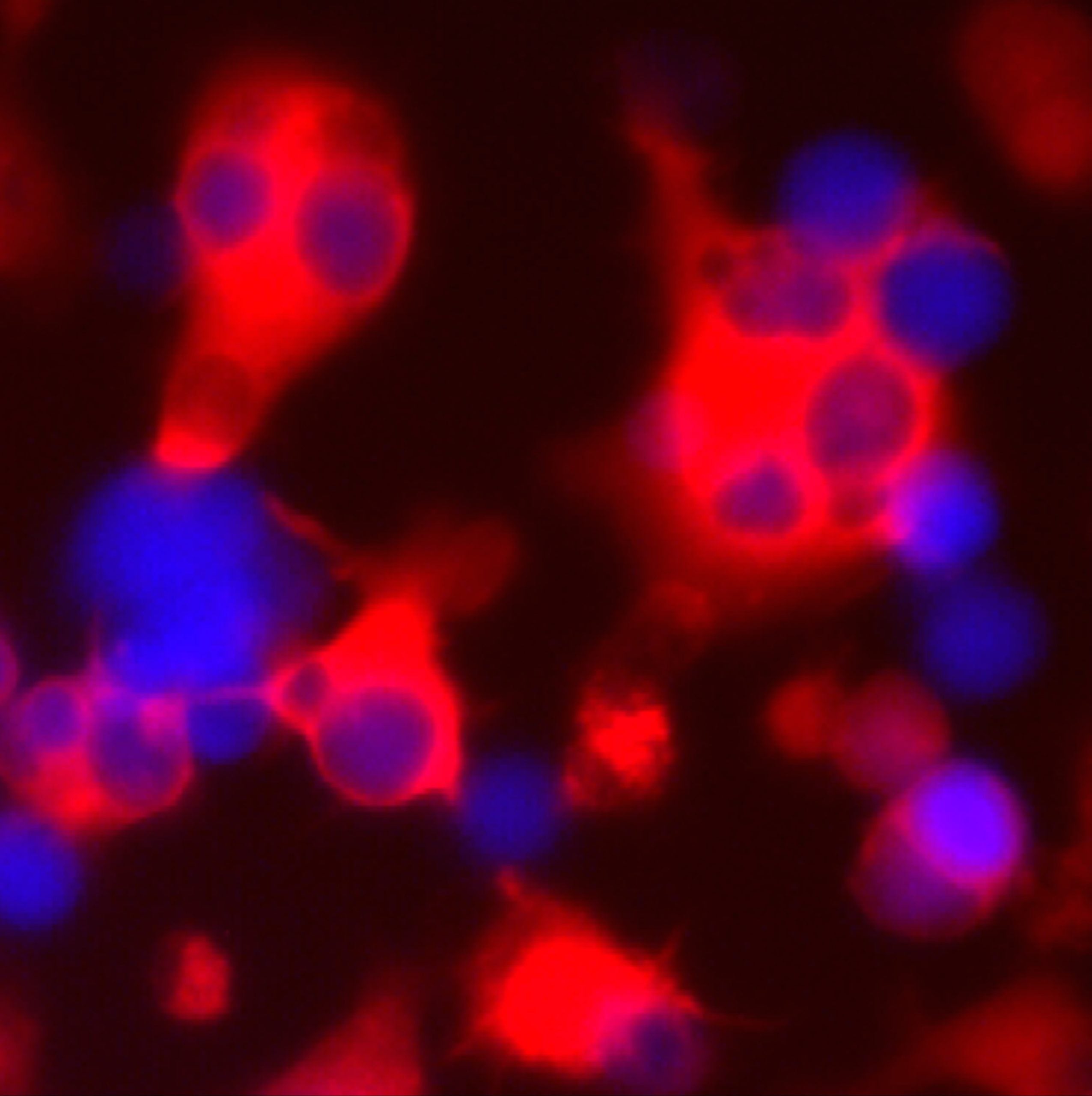
Researchers have developed a way to grow and genetically engineer progenitor cells that produce macrophages, first responder immune cells with potential for new immunotherapies against cancer and other diseases.
Macrophages look almost built for the hardest parts of cancer therapy. They can push into tumors, swallow dangerous cells, and help alert the wider immune system. Yet the same cells have been difficult to turn into reliable treatments because mature macrophages are hard to grow in large numbers, difficult to engineer, fragile during storage, and often do not spread through the body as needed.
A USC Stem Cell-led team has now reported a possible workaround: do not start with the mature cells. Start one step earlier.
In a paper published in Cell, the researchers describe a way to generate a renewable and expandable supply of granulocyte-monocyte progenitors (GMPs), the precursor cells that produce macrophages and other related immune cells. The team showed that these cells can be grown long term in the laboratory, genetically engineered to recognize cancer markers, and used to help stimulate broader immune responses.
“The study establishes a scalable and engineerable GMP platform for cellular immunotherapy and introduces concepts that we believe could have broad implications for both cancer immunotherapy and stem cell biology,” said the paper’s corresponding author Qi-Long Ying, MD, PhD, professor of stem cell biology and regenerative medicine at the Keck School of Medicine of USC.
The finding also raises a deeper question about how flexible blood and immune cell development can be. Self-renewal, the ability to keep dividing while preserving identity, is usually treated as a defining feature of stem cells. GMPs are more specialized progenitor cells that are already committed to producing macrophages and closely related immune cells. The new study suggests that, under the right laboratory conditions, these progenitors can also keep renewing themselves while retaining their function.
“The prevailing view has been that long-term self-renewal in the blood system is primarily a property of the hematopoietic stem cells that can generate any type of blood or immune cell,” said Ying. “We found that, under the right conditions, GMPs can also self-renew, dividing extensively while keeping their identity and ability to produce functional immune cells. That gives us a scalable starting point for engineering cell therapies for cancer, infectious disease and potentially many other conditions.”
Straight to the source
Macrophages are appealing for cancer immunotherapy because they are naturally suited to entering tumors, engulfing harmful cells, and coordinating immune activity. That makes them especially interesting for solid tumors, where many cell therapies have had less success than they have in blood cancers.
The manufacturing problem has been difficult to solve. Mature macrophages do not expand easily outside the body, are challenging to genetically modify, and can be damaged during freezing and storage. Once infused, they also tend to accumulate in organs such as the lungs and liver rather than distributing widely.
First author Shi Yue, MD, from the Ying Lab, and collaborators took a different route. Instead of trying to manufacture mature macrophages directly, they focused on GMPs, the upstream progenitor cells that give rise to macrophages and other immune cells.
The scientists used a defined chemical cocktail to keep GMPs growing in the laboratory without pushing them too quickly into more mature cell types. Even after long-term growth, the cells kept their cellular and molecular identity and remained able to produce functional macrophages and other immune cells.
The platform was also tested independently. Collaborators in the laboratory of Ravi Majeti, MD, PhD, at Stanford University reproduced the long-term maintenance and genetic engineering of GMPs, supporting the robustness of the approach for future cell therapy research.
Majeti, Director of the Institute for Stem Cell Biology and Regenerative Medicine at Stanford University, noted: “This method for the expansion and engineering of GMPs opens the door to numerous translational applications, much like T cell expansion and engineering. We have already demonstrated engineering of these cells to drive multiple potent functions, and there is a lot more to be explored.”
Engineering a GMP immunotherapy
The researchers then tested whether GMPs could be turned into therapeutic cells. They engineered them with a chimeric antigen receptor, or CAR, which helps immune cells recognize a specific marker on cancer cells. Some GMPs were also given an additional immune-activating signal designed to recruit nearby immune cells, activate tumor-fighting T cells, and amplify the body’s natural defenses.
That added signal worked even when donor cells and recipients were immunologically mismatched. This could matter for future treatment design because it suggests the cells might be manufactured in advance from donors and used as an off-the-shelf therapy, rather than produced separately from each patient’s own cells.
After culturing and engineering mouse and human GMPs, the team tested them in mice. The injected GMPs engrafted in bone marrow and other blood-forming niches, where they generated engineered macrophages and other immune cells. Because the GMPs continued producing new immune cells from those niches, they avoided the rapid clearance that has limited therapies based on mature macrophages, including in recent clinical trials.
In mouse models of blood cancer and solid tumors, CAR-engineered GMPs delayed disease progression. GMPs carrying both CARs and the added immune-activating signal produced an even greater benefit.
A broader use for progenitor cells
The same strategy may have uses beyond cancer. In mice with chronic granulomatous disease, an inherited immune deficiency that weakens the ability to fight certain bacterial infections, the GMPs restored antibacterial defense.
The results suggest that the success of future immunotherapies may depend not only on what genetic instructions are added to immune cells, but also on which stage of cell development researchers choose as the starting point. A renewable progenitor cell could offer a more durable and manufacturable foundation than a mature immune cell that is difficult to expand and short-lived after infusion.
“Our study suggests that the future of immunotherapy may depend not only on designing better CAR receptors, but also on choosing the right developmental stage of the cell,” said Ying.
Reference: “Expansion and CAR engineering of granulocyte-monocyte progenitors for cellular immunotherapy” by Shi Yue, Zheng Guo, Crystal Pan, Xueyuan A. Jing, Litao Tao, Tai Nguyen, Jiaqi Tang, Yanpui Chan, Humberto Contreras-Trujillo, Du Jiang, Xue Yan, Hang Xiang, Xugeng Liu, Celia Bloom, Asiri Ediriwickrema, Sebastian Koschade, Xiao Wang, Ziyuan Wang, Natalie Shu, Yingxiao Shi, Daniel B. McKim, Rong Lu, Ravindra Majeti, Chao Zhang and Qi-Long Ying, 19 June 2026, Cell.
DOI: 10.1016/j.cell.2026.05.043
This work was supported by the Chen Yong Foundation of the Zhongmei Group, a sponsored research project from Myelogene Inc., the L.K. Whittier Foundation, the Eli and Edythe Broad Innovation Award, the Ming Hsieh Institute for Research on Engineering Medicine for Cancer Award, the USC SBIR/STTR Planning Award, the Xia Research Fund, and the Wu & Jiang Research Fund. Majeti reports support from the Ludwig Institute for Cancer Research, and Guo was supported by the California Institute for Regenerative Medicine Predoctoral Training Fellowship.
Disclosure: Ying, Yue, Jing, Guo, Majeti, Zhang, Nguyen and Tang are co-inventors on patents related to this study, filed by USC and licensed to Myelogene Inc. Ying, Yue, Zhang and Majeti are co-founders of Myelogene Inc. Majeti is on the Advisory Boards of Kodikaz Therapeutic Solutions, Pheast Therapeutics, Prelude Therapeutics, Mubadala Capital, Aculeus Therapeutics, Sequentify, BMS and Bectas Therapeutics. Majeti is also a co-founder and equity holder of Pheast Therapeutics.
Never miss a breakthrough: Join the SciTechDaily newsletter.
Follow us on Google and Google News.